
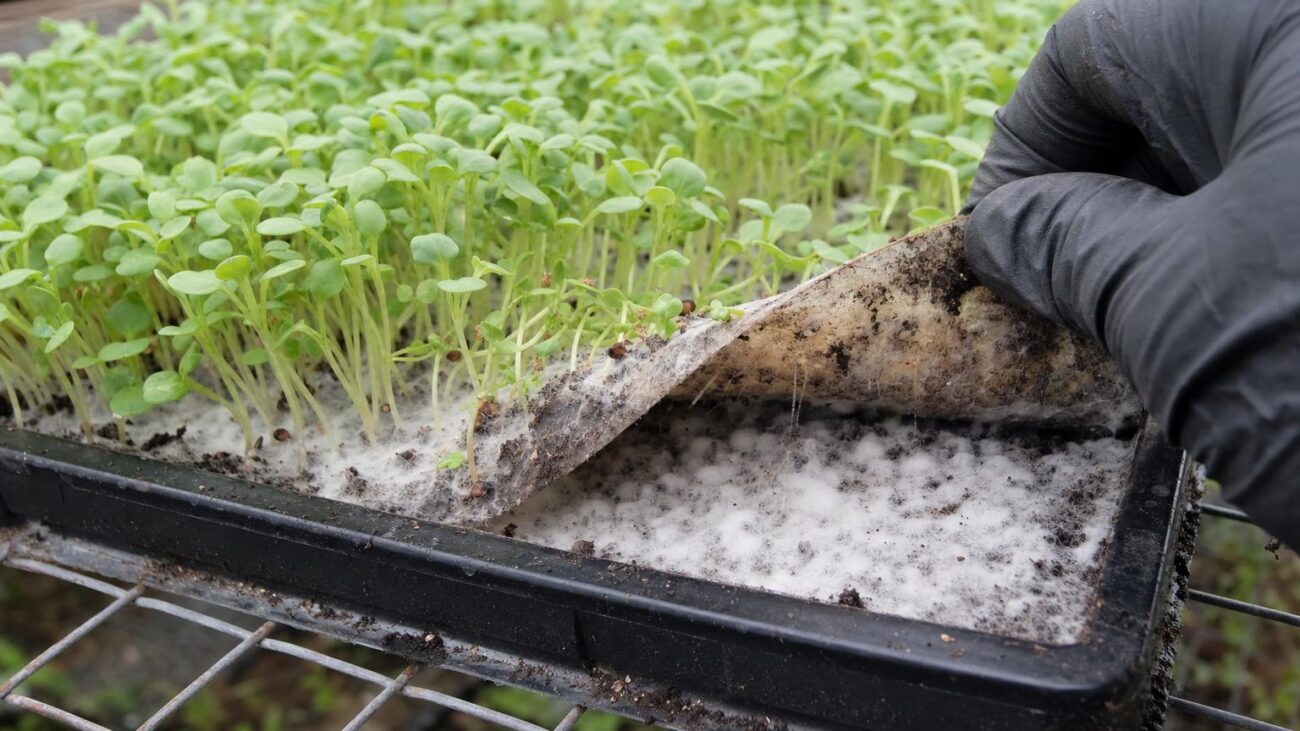
When the same white fuzz returns, the tray is telling a story.
A tray gets dumped, the lid gets scrubbed, fresh seed goes down—and three days later the same pale webbing creeps back along the corners. That pattern can feel personal, as if one small step keeps getting botched.
Usually, though, repeat mold is less about a single mistake and more about a reliable set of conditions: extra surface moisture, still air, dense sowing, or damp tray edges that never quite dry. Recurring fuzz is a system signal—evidence that the environment is quietly recreating the same problem each round.
- The trigger often repeats during blackout, misting, or first watering.
- Corners and tray rims often stay wetter than the center.
Mold or root hairs?
Often root hairs.
Tidy halos at roots.
Mold sprawls, may smell.
It bridges soil.
Fuzzy tray clues
Donny Greens helps tell mold from root hairs before changing anything.
The tray is repeating the same recipe
Mold spores are a normal part of indoor growing. They drift through the air, cling to seed coats, and land on damp soil all the time. Their presence alone does not mean a tray is doomed.
What drives repeat outbreaks is the same set of conditions being rebuilt each round. A covered tray, heavy watering, dense seeding, and weak airflow can create a tiny humid chamber. If that space stays warm and wet just a little too long, spores get the same opening again.
That is why surface cleanups often disappoint. Wiping away fuzz or treating one patch may make a tray look better, but it does not remove the triggers that helped it spread.
A more useful reset usually comes from changing the environment itself:
- a little less water
- earlier airflow
- shorter blackout or lighter stacking
- better drainage
- less crowding at sowing
Small shifts in that chain often matter more than one dramatic fix.
If mold keeps showing up at the same point—often during germination or blackout—that pattern is a clue. The problem is commonly environmental timing, not a one-off contamination event.
Dry the whole setup
Even a spotless tray can be reseeded by the rest of the setup. Humidity domes, bottom-watering bins, scissors, spray bottles, shelf liners, and wire rack edges can stay damp long after harvest. That thin film of moisture can carry spores into the next batch.
A quick reset often helps more than tray scrubbing alone:
- Empty standing water from catch trays and shelf corners.
- Wash accessories that touched seed, soil, or runoff.
- Let domes, tools, and shelves dry fully before reuse.
- Replace soggy mats, cardboard, or liners that never quite dry.
Why drying matters
Washing removes residue, but drying interrupts the wet cycle mold tends to like. A clean dome stored while still damp can quietly bring the same issue back. In a small grow area, a little extra spacing or gentle airflow can help surfaces dry faster.
If one spot keeps having trouble, the shelf itself may be the clue. Drips from the tray above, pooled runoff, or a damp wall behind the rack can keep that area mold-friendly without looking obviously dirty.
Where mold gets its head start
-
Start with a moderate soak
An extra-long soak can leave seeds swollen and leaking moisture before they ever touch the tray. That heavy start often pairs badly with the damp, covered conditions of germination.
-
Keep seed density reasonable
When seed is scattered too thickly, sprouts knit into a mat before air can move between them. Crowding also keeps the surface shaded and wet, which gives mold an easier place to spread.
-
Aim for damp, not glossy
The top layer only needs enough moisture to wake seeds up. If the surface looks slick or puddled, stems and hulls stay wet longer than necessary.
-
Let excess water escape fully
A tray that drains poorly can stay humid from below even if the top looks fine. Standing water under inserts or in corners quietly feeds the same problem day after day.
-
Use blackout only as long as needed
Blackout helps seeds root and push upward, but stretching it too long traps warmth and moisture right when growth is densest. If combined with heavy soaking, thick sowing, and a wet surface, it can tip the tray toward mold fast.
These early choices rarely fail one at a time; they usually stack together in the first 48 to 72 hours.
Fresh soil and washed equipment help, but they do not cancel out a soggy germination setup. Mold usually gets its opening from a combination of small choices:
seeds soaked a bit too long sowing packed too tightly a surface kept visibly wet water trapped under the tray blackout extended past the early push-up stageEach one raises humidity a little. Together, they can create a sealed-in microclimate before the greens ever see light.
Once the tray is uncovered, room air takes over
A tray can look clean at uncovering and still run into trouble a day later if the room air barely moves. Moisture rising from the mix and stems hangs just above the surface, forming a thin warm pocket. Even a fairly tidy grow area can stay damp at tray level for longer than expected.
A fan can help, but the aim is gentle movement, not a hard blast. Air moving across the room or just above shelf height often works better than direct wind into the tray. If leaves only tremble a little, the airflow is usually in a safer range; if edges turn dry or stems lean hard, it may be too much.
Three small adjustments often do more than extra scrubbing:
- Spacing: a little gap between trays lets humid air escape instead of pooling wall to wall.
- Watering: bottom watering after germination usually leaves less surface moisture than repeated misting.
- Timing: watering earlier in the light period gives the tray more time to dry back before cooler, damper hours.
A glossy surface, condensation, or a shelf that smells stale usually points to the same issue: the tray is staying wet in still air. Breaking that damp pocket is often what finally interrupts the repeat cycle.
When one crop keeps causing trouble
Sometimes the room is not the main problem. A few crops, such as sunflower, pea, beet, chard, and cilantro, tend to carry more hulls, surface debris, or natural fuzz, so they can become repeat offenders while radish or broccoli stays clean.
If mold keeps showing up on one variety, a side-by-side check can reveal a lot:
- sow a small tray from the current bag
- sow a small tray from a different lot or supplier
- keep soak time, density, and blackout the same
If only one bag keeps failing, the weak link may be the seed lot rather than the shelf, fan, or lights. That is often a sign to test in smaller batches and try a better source before reworking the whole grow area.
Run one clean reset tray
-
Hold the crop steady
Use the same seed, tray size, and room so only the suspected cause changes.
-
Change one layer
Adjust just one factor for the next tray: soak time, seed density, cover weight, blackout length, or watering style.
-
Track the full window
Write down soak length, sow time, first watering, cover-on hours, and uncover time. Simple notes fit broader microgreens troubleshooting steps better than memory.
-
Check on a schedule
Look at the tray at the same times each day and note smell, surface wetness, and any fuzzy spread.
-
Treat heavy mold as a stop sign
If growth is racing across the surface or smelling musty, discarding the tray can be the cleaner reset than trying to save it.
A discarded tray is often useful evidence. When one change helps, the pattern becomes clearer; when it does not, the notes narrow the search without guessing.
- Patterns usually show up between soak and uncovering, not just at harvest.
- Single-variable tests make recurring causes easier to spot.
A fresh tray works best as a small experiment, not a full reboot. One controlled change at a time makes repeat mold easier to trace.
If trays keep failing, the answer is usually in the whole chain—seed, soak, density, moisture, blackout, and room air—not in random bad luck.

I appreciate the article not acting like bleach is some magic ending to the story. I was washing trays like crazy but leaving the shelf liners damp and guess what… mold came right back next round.
Drying the whole area, including the little puddles under the trays, helped more than extra scrubbing did.
The “once uncovered, room air takes over” section hit home. I was so focused on germination that I ignored what happened after stacking/blackout. My trays looked okay at uncover, then the surface stayed humid because the room was basically dead air.
I added a small fan nearby, not blasting directly at them, and spaced trays so they weren’t packed together. Also started bottom watering earlier instead of misting forever. That combo helped more than any sanitizer I tried.
The clean reset tray idea sounds boring but it works. I wrote down soak time, blackout length, when I switched to bottom watering, and whether there was standing water under the tray.
Turns out my issue was not mysterious at all 🙃 I was crowding one variety, leaving it covered too long, and reusing a damp mat because I was in a hurry. Once I changed one variable at a time, the pattern was embarrassingly obvious.
Maybe I’m the outlier here, but I still think some guides overstate airflow and understate just plain over-soaking. Every time I get lazy and leave seeds sitting too long, I pay for it.
That said, the “same recipe every tray” point is dead on. It really does repeat because we repeat it.
I don’t think that’s an outlier view at all. Over-soaking is often the first push that creates the damp, low-oxygen conditions mold exploits.
Airflow matters most after that point because it determines whether the tray dries back into a healthier balance or stays stuck in that humid pocket.
I agree with this. My failures usually start with me being “extra careful” aka making everything way too wet.
The root hairs vs mold part was honestly the biggest lightbulb for me. I kept trashing pea trays because I thought the fuzzy white ring meant game over, but it was just those neat little halos on the roots.
My actual mold issue was different because it crept across the surface and had that gross basement smell. Once I cut back the blackout time and stopped keeping the trays so soaked, the repeat outbreaks dropped a lot.
That distinction saves a lot of perfectly healthy trays. The musty smell and spread across the medium are usually the better clues that it’s true mold rather than normal root hairs.
Shorter blackout and less surface moisture are both strong fixes because they change the conditions mold likes most.
Same here. I misdiagnosed root hairs for months 😅 peas and radish especially fooled me.
For me the repeating problem was sunflower, every single time. Broccoli, radish, cabbage = mostly fine. Sunflower = fuzzy horror movie by day 3.
I finally did the side-by-side test you mentioned with two seed lots and one clearly failed worse under the same setup. That was annoying because I wanted the answer to be “do X with airflow” and be done with it, but sometimes the seed really is part of the story.
That’s exactly why side-by-side testing is so useful. When one crop or one lot repeatedly breaks pattern while everything else behaves, it points away from the room alone and toward the seed as a contributing factor.
Sunflower is also less forgiving during germination, so small differences can show up fast.
Yep, sunflower is my drama queen crop too. I can baby it the same way as everything else and it still finds a new way to be gross lol.