
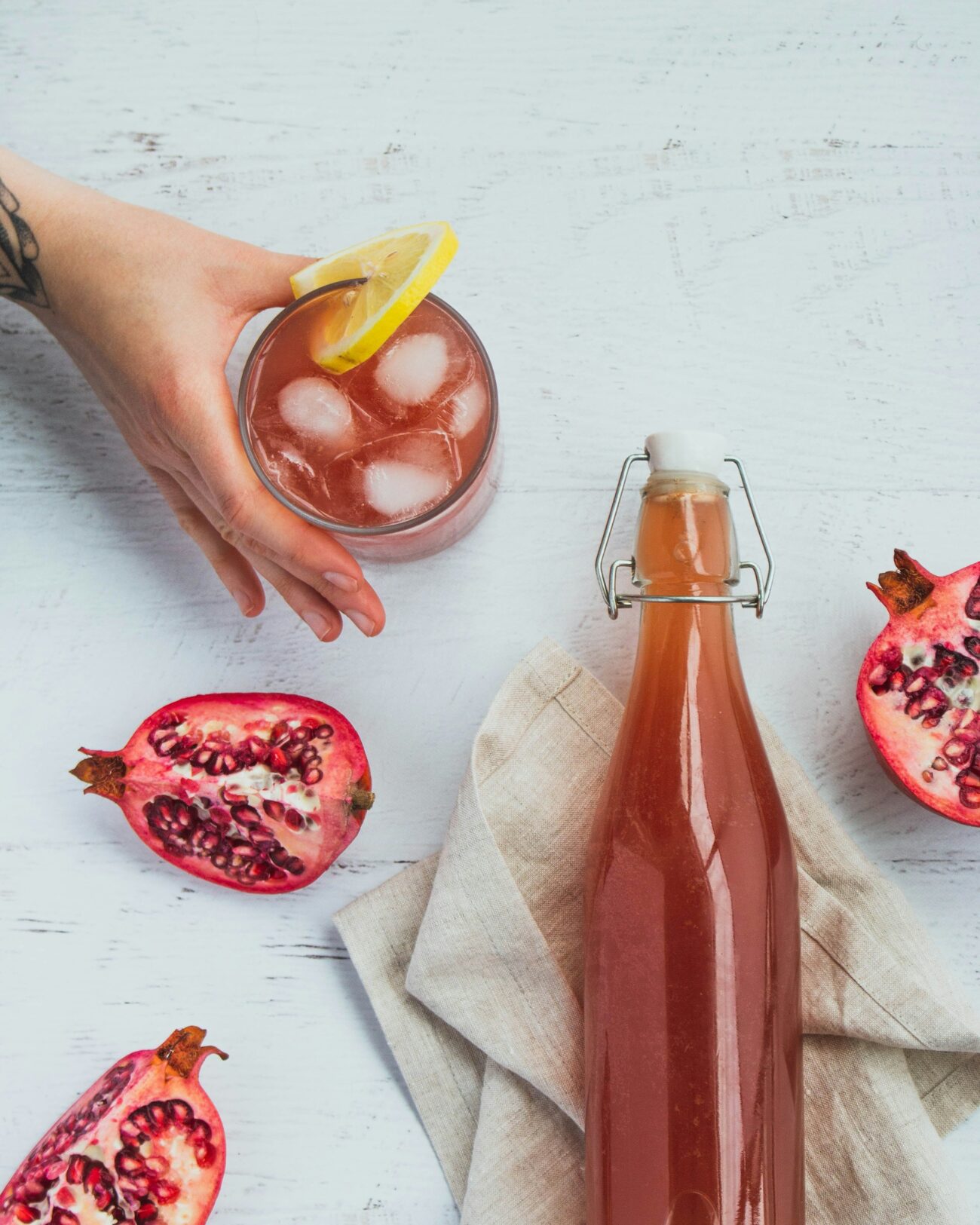
Kombucha is less intimidating once the first jar becomes practice, not performance.
A first jar of kombucha can feel oddly high-stakes: sweet tea goes in, a rubbery SCOBY floats around, and a week later the kitchen smells faintly like vinegar and apples. That does not mean anything has gone wrong. Fermentation is visible, changeable, and a little strange by nature.
The useful goal for batch one is not café-style fizz or a perfect flavor. It is learning what normal looks and smells like in a clean jar: the tea lightening, a tangy aroma building, and a new pale layer forming on top. Treated as a small, controlled learning run, the process becomes much calmer. If it turns out pleasant, great. If it turns out too sweet or too sharp, that is still useful information for the next jar.
- Plain black tea and white sugar are common beginner choices because they ferment predictably.
- A 1-quart or 1-liter jar keeps the first attempt low-commitment.
- Fizz usually develops later, during bottling, not in the open fermentation jar.
What Is Happening in the Jar
- Sweet tea
The batch begins as brewed black or green tea with sugar dissolved in it. The sugar is not there mainly for sweetness at the end; it gives the culture something to work on.
- Starter liquid
This is already-fermented kombucha added to the fresh tea. It makes the jar acidic enough to give the culture a safer, familiar place to begin fermenting.
- SCOBY
The SCOBY is the rubbery-looking culture that floats, sinks, or lounges sideways in the jar. It works together with the starter liquid, though the liquid does much of the heavy lifting.
- First fermentation
This is the main jar stage, when sweet tea slowly turns tangy at room temperature. Over several days, the flavor moves from mild and sweet toward sharper, more vinegary kombucha.
- Second fermentation
This happens after the SCOBY is removed and the kombucha is bottled, often with fruit, juice, ginger, or herbs. The closed bottle can build more fizz and flavor, while the first fermentation is mainly about creating the base kombucha.
Supplies That Make the First Batch Easier
-
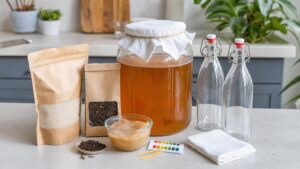
A clean glass jar with airflow
Glass is easy to clean, does not react with the acidic brew, and makes it simple to watch changes. A breathable cover keeps dust and fruit flies out while still letting the culture breathe.
Look forA wide-mouth glass jar covered with tightly woven cloth, paper towel, or a coffee filter secured with a band.AvoidMetal containers, airtight lids during first fermentation, or loose mesh that insects can slip through. -
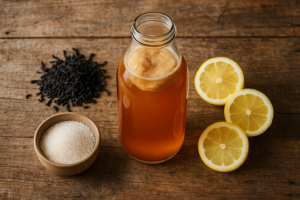
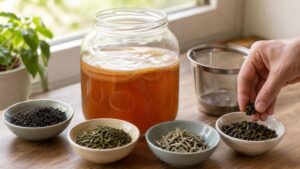
Plain tea and plain sugar
Black tea is a forgiving starting point because the culture tends to handle it well. Regular white cane sugar dissolves cleanly and gives the microbes predictable food.
Look forUnflavored black tea or a simple black-green blend with plain white sugar.AvoidOily flavored teas, herbal-only tea, raw honey, sugar substitutes, or anything with added fragrance. -
Enough strong starter liquid
Starter liquid is not just leftover kombucha; it helps acidify the sweet tea early, which supports a safer, more stable fermentation. A sharp, tangy starter is usually more useful than a large, pretty SCOBY with weak liquid.
Look forMature, unflavored kombucha that smells pleasantly sour and comes with the culture.AvoidTiny splashes of mild starter, sweet bottled kombucha, or flavored liquid as the main starter. -
A healthy culture, kit or no kit
Starter kits can be convenient because the jar, cover, SCOBY, and starter are bundled together. They are not required if each piece is checked with the same care.
Look forA moist SCOBY packed with plenty of starter liquid from a reliable source.AvoidDry, moldy, foul-smelling, or barely moist cultures with no usable liquid.
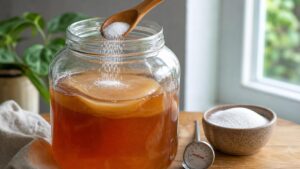
Safe First Ferment
-
Clean jar, hands, and tools
-
Brew sweet tea
-
Cool tea completely
Hot tea can damage the culture.
-
Add enough starter, then SCOBY
Weak acidity gives mold a better chance.
-
Cover with cloth, not a lid
First fermentation needs airflow.
-
Let it sit undisturbed
Overhandling raises contamination risk.
Hot tea, too little starter, airtight sealing, and constant poking are the common first-batch spoilers.
First-batch kombucha basics
Mary’s Nest offers a beginner-friendly walkthrough of home kombucha, helpful for seeing the setup before starting.
Let Taste Decide When It Is Ready
A first ferment is often described as taking 7 to 10 days, but that range is only a starting point. Kombucha changes speed depending on the room, the ingredients, and the culture itself. A warm kitchen can make the same recipe taste sharp days earlier than a cool one.
Temperature is usually the biggest swing factor. Around a comfortable room temperature, fermentation tends to move steadily; in a chilly kitchen, it may stay sweet for longer. Very warm conditions can push the brew toward a stronger vinegar-like bite sooner.
Starter liquid matters too. A strong, tart starter lowers the pH faster and helps the batch get moving. Weak starter, too little starter, or very diluted tea can leave the jar tasting flat and sweet past the expected date.
Tea strength and personal taste also change the finish line. A stronger tea may give a fuller flavor, while a lighter brew can taste thinner even when it is fermenting normally. Some people like kombucha mildly tangy; others prefer a sharper sip.
How to taste without overthinking it
Start tasting around day 5 or 6 for a small batch in a warm room, or later if the kitchen runs cool. Use a clean straw, spoon, or ladle, and avoid stirring up the SCOBY more than needed.
A pleasant first ferment usually tastes:
- Less sugary than the starting tea
- Lightly tart, not harsh
- Balanced, with tea flavor still present
- A little lively, though not necessarily fizzy yet
If it tastes like sweet tea, give it more time. If it tastes too sour for sipping, it can still be useful as strong starter liquid for the next batch.
Scary-looking kombucha signs that are usually normal
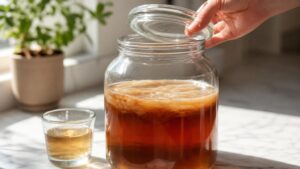
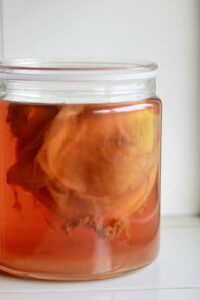
A young pellicle often looks patchy, pale, wrinkled, lumpy, or uneven before it thickens.
The culture forms where liquid meets air, so bubbles, jar shape, and tiny surface movements can make the new layer look odd without meaning the batch is spoiled.
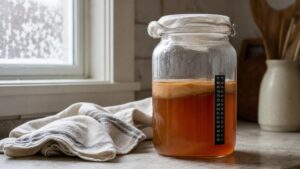
Brown strands, dangling clumps, and dark sediment are usually yeast, especially near the bottom of the jar.
Yeast collects as fermentation progresses. It can look dramatic, but it is common in active kombucha and often increases in warmer kitchens.
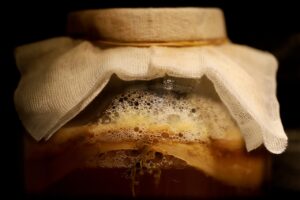
Small bubbles, a floating pellicle, or a layer that tilts upward usually point to carbon dioxide being produced.
Fermentation makes gas. That gas can get trapped under the pellicle and push it into strange shapes.
Dry, fuzzy spots in green, blue, black, pink, or bright white are treated as mold, and the batch is commonly discarded.
Mold grows on the exposed surface and can spread beyond the visible patch. Saving the SCOBY is not considered worth the risk for a home brewer.
Mold is usually dry-looking, fuzzy, and on the surface. Normal kombucha weirdness is usually wet, beige to tan, brown, stringy, bubbly, or cloudy.
When a jar shows fuzzy colored growth, the cautious move is to discard the liquid and SCOBY, wash the vessel thoroughly, and start again with fresh starter and a healthy culture.
Deciding Whether to Bottle or Wait
At the end of the first ferment, the question is simple: does the kombucha taste balanced enough to drink? A good first-batch target is often pleasantly tart with some sweetness left, like lightly sour tea rather than candy or vinegar. It does not need to taste perfect before bottling; it just needs to be moving in the right direction.
If it tastes very sweet, the culture probably needs more time. A cooler kitchen can slow fermentation, so another day or two in a slightly warmer spot may make a noticeable difference. The jar can stay covered with its cloth or paper filter, away from direct sun, while the acids build.
If it tastes sharply vinegary, it has gone further than many people enjoy drinking plain. That does not automatically make it useless. Strong, sour kombucha can be saved as starter liquid for the next batch, where its acidity helps the fresh sweet tea begin on safer footing.
Before bottling anything, set aside enough plain kombucha for the next round. Many home brewers keep about 1–2 cups of starter per gallon of new sweet tea, plus the SCOBY if using one. Saving starter first prevents the common mistake of flavoring or drinking the whole batch and having nothing strong enough to continue.
The first batch succeeds when it teaches the sourness curve: sweet tea becomes tangy, then tart, then vinegary. Even an imperfect-tasting batch can be useful if enough strong starter is saved for the next one.
Bottling for Fizz Without Making It the Whole Goal
A finished first ferment can be poured over ice, chilled in a jar, or saved partly as starter for the next batch. Bottling is optional; it mainly adds carbonation and flavor. A batch can be successful even if it is only lightly fizzy.
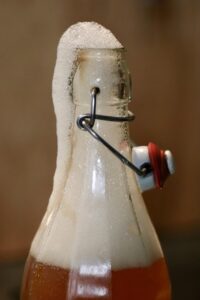
For anyone choosing to bottle, the container matters more than the flavor idea. Use pressure-rated swing-top bottles or reused commercial kombucha bottles in good condition. Decorative glass, square bottles, mason jars, and thin juice bottles are not made for trapped carbonation.
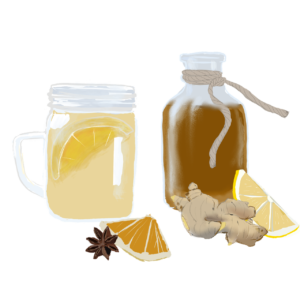
Keep additions modest at first. A small splash of juice, a few pieces of fruit, or a little grated ginger is usually enough to feed carbonation without turning the bottle into a foam cannon. Leave about 1 inch of headspace so gas has room to collect.
A simple first try looks like this:
- Fill clean pressure-safe bottles with strained kombucha.
- Add a small amount of flavoring, if desired.
- Seal and leave at room temperature for 1–3 days.
- Move bottles to the refrigerator once carbonation seems active.
- Open chilled bottles slowly, over the sink.
Warm rooms, sweet fruit, and longer bottling time all increase pressure. Refrigeration slows the activity and makes opening calmer, though it does not erase pressure already built up.
Carbonated kombucha can gush unexpectedly. Chilling first, covering the cap with a towel, and easing the lid open slowly can help prevent sticky counters and sudden spray.

Keep the Next Batch Boring on Purpose
- A small notebook entry can save a lot of guessing: date brewed, room temperature, tasting day, and what changed.
- A strong starter reserve is more useful than an extra bottle of finished kombucha.
A reliable kombucha habit usually comes from repetition, not clever tweaks. Saving enough strong, tart starter for the next jar, using the same basic tea-sugar-starter ratio, and noting the room temperature and number of days gives each batch a familiar baseline. From there, changes become easier to understand: a warmer shelf may explain faster tartness, while a little more starter may shorten the next ferment.
When something needs adjusting, changing one thing at a time keeps the process readable. Try a different tea, a longer ferment, or a new bottle flavor on separate rounds instead of all at once. After a few calm batch brews, curious brewers may enjoy learning how continuous brew changes the routine, but there is no rush. A plain jar of sweet tea, strong starter, and patience can carry the practice for a long time.

The advice to keep the next batch boring is probably what I needed to hear. I immediately wanted to do ginger peach lavender something-or-other because apparently I cannot leave a hobby alone for 10 minutes.
For tracking conditions, do you literally write down tea amount, sugar, room temp, and days? Or is that overkill for home brewing?
That’s exactly the kind of simple tracking I’d suggest, and it doesn’t need to be fancy. Tea amount, sugar amount, starter amount, approximate room temperature, start date, and when it tasted ready are enough.
The goal isn’t to turn kombucha into homework. It’s just to help you notice patterns, like “this takes 9 days in summer but 14 in winter” or “less starter made the batch sluggish.” Once your rhythm is predictable, you can loosen up.
I wish more recipes said the first batch is practice. Mine came out kind of vinegary and I assumed I failed, so I dumped it. Sounds like I could’ve saved some as starter instead 😭
This was actually reassuring. I keep seeing photos of SCOBYs online that look like science fair accidents, so the “scary but normal” section helped 😂
One question: if the new growth is kind of patchy and translucent on day 4, is that still normal? It’s not fuzzy or colored, just uneven.
Yes, patchy and translucent growth is very common early on. A new SCOBY layer often starts as thin, shiny islands or a film before it connects into something more solid-looking.
The main red flags are dry, fuzzy growth on the surface, especially if it’s green, blue, black, or pink. Wet, beige/tan, jelly-like weirdness is usually just kombucha being kombucha.
Not gonna lie, the bottling part still makes me nervous. Every tutorial is like “yay fizz!” and then casually mentions exploding glass like that’s normal kitchen behavior.
If I skip second fermentation completely, am I just making flat kombucha? Is that still worth drinking?
Totally worth drinking IMO. I skipped bottling for my first few batches and just drank it over ice with a little juice added. Less glamorous, but also less chance of turning your pantry into a sticky crime scene.
Can you use any glass jar as long as it’s clean? I have an old pickle jar that’s big enough, but I’m worried the smell might hang around and make dill kombucha, which feels illegal.
I appreciate the “taste beats fixed day counts” point, but I’m still confused on what I’m tasting for. Like… how sour is too sour? Mine tastes like sweet tea with a tiny tang after 7 days and my kitchen is around 68F.
At 68F, 7 days can still be pretty early, especially if the starter wasn’t very strong. You’re looking for a balance where it still has some tea flavor and light sweetness, but the tang is clearly present.
If it tastes mostly like sweet tea with a small tang, I’d give it a few more days and taste daily. “Too sour” is partly preference, but if it makes you think of vinegar more than a drink, it’s probably past the point you’d want to bottle for drinking. That said, very tart kombucha is great starter for the next batch.