
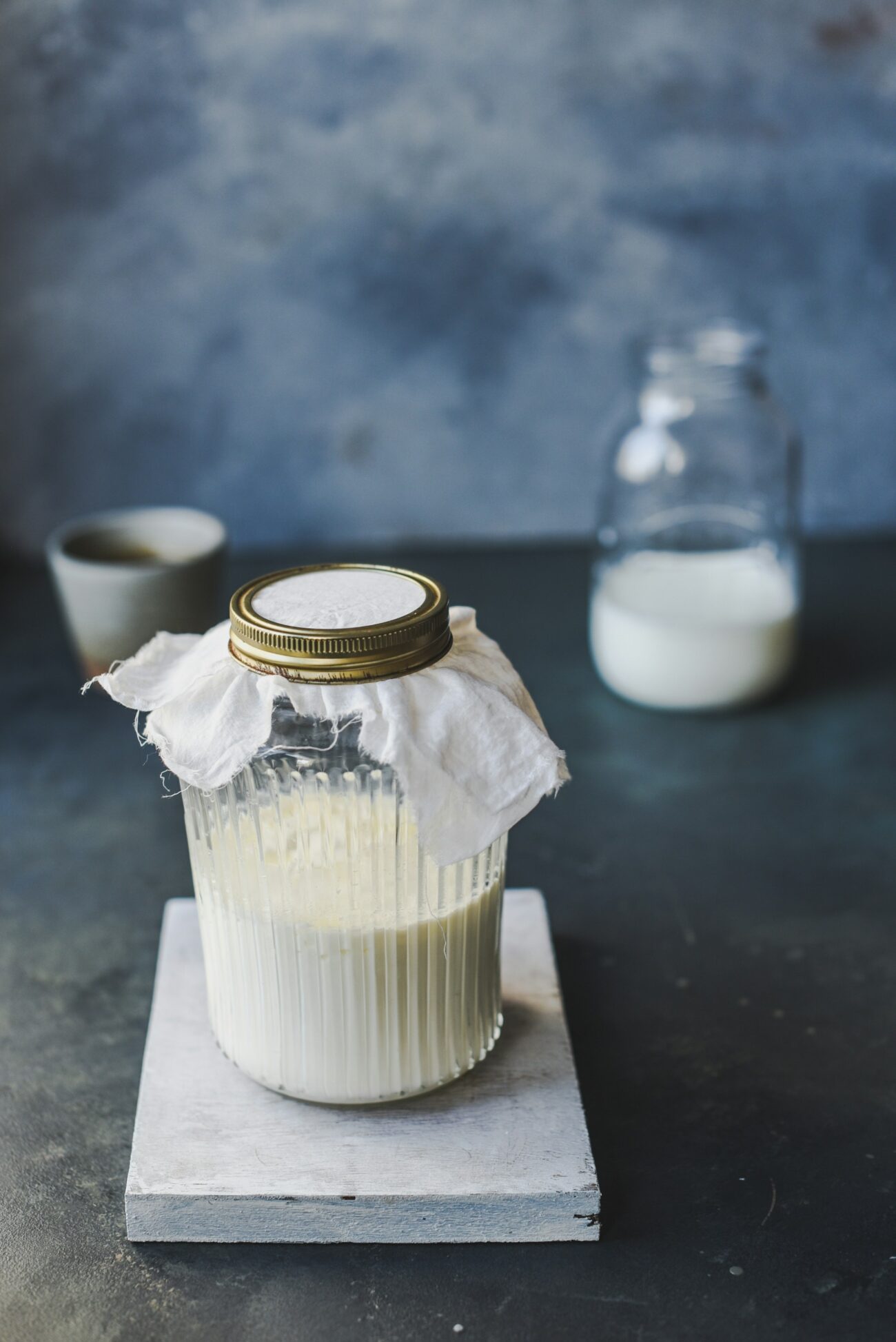
The first batch does not need to be perfect; it only needs to be readable.
A new jar of milk kefir can look suspicious after a day on the counter: a sharp, yeasty smell, tiny bubbles at the glass, a thin watery layer, or grains that seem to be doing absolutely nothing. That awkward stage is normal enough that many beginners mistake activity for failure and throw out milk that was simply fermenting unevenly.
A small starter run makes the process feel less like a gamble. Using a modest amount of milk gives the grains room to wake up, limits waste, and creates a low-pressure sample for learning the signs: slight thickening, a tangy aroma, gentle separation, and grains that look plumper after feeding. The aim is not a flawless drink on day one. It is a controlled first jar that shows what living culture looks, smells, and behaves like.
- Start with about 1 tablespoon of grains in 1 cup of milk for an easy-to-watch test batch.
- Check at 12 hours, then again around 24 hours; timing often shifts with room temperature.
- Mild separation can be stirred back together, while strong rotten or moldy smells are a reason to discard.
Choose the culture before choosing the recipe
The first real decision is not jar size or fermentation time. It is the type of culture going into the jar. Milk kefir and water kefir are related in spirit, but they are not interchangeable: milk kefir grains feed on dairy sugars, while water kefir grains need sweetened water and minerals. A quick look at which style fits the kitchen routine can prevent pouring the right starter into the wrong liquid.
The second decision is whether the batch will use dedicated kefir grains or a packaged starter. Grains are living cultures that can be strained out and moved into the next batch, so they suit anyone hoping to make kefir repeatedly. Starter powder is often simpler at first, but it may be designed for a limited number of batches and usually follows its own timing. The routine changes enough that comparing grains with starter powder is worth doing before buying ingredients.
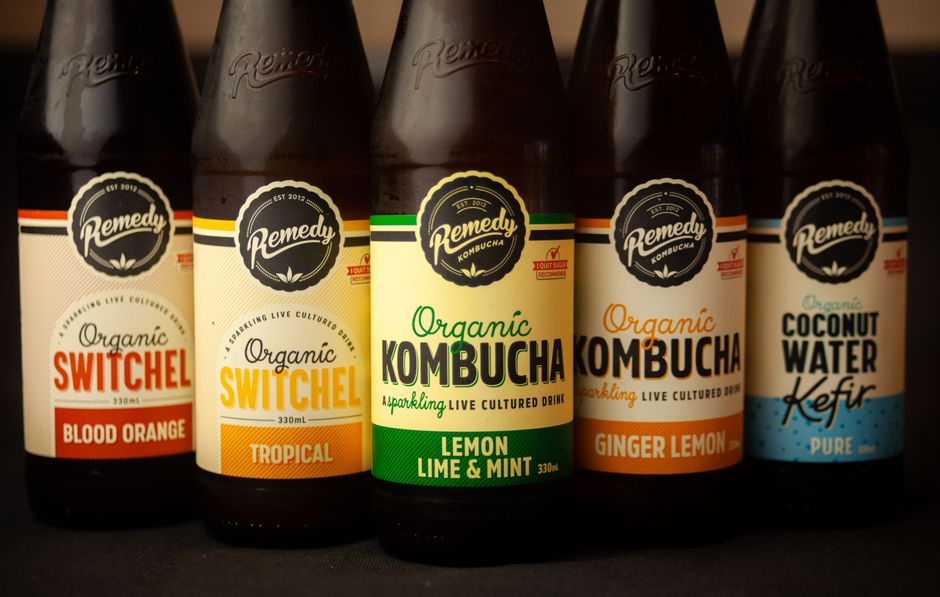
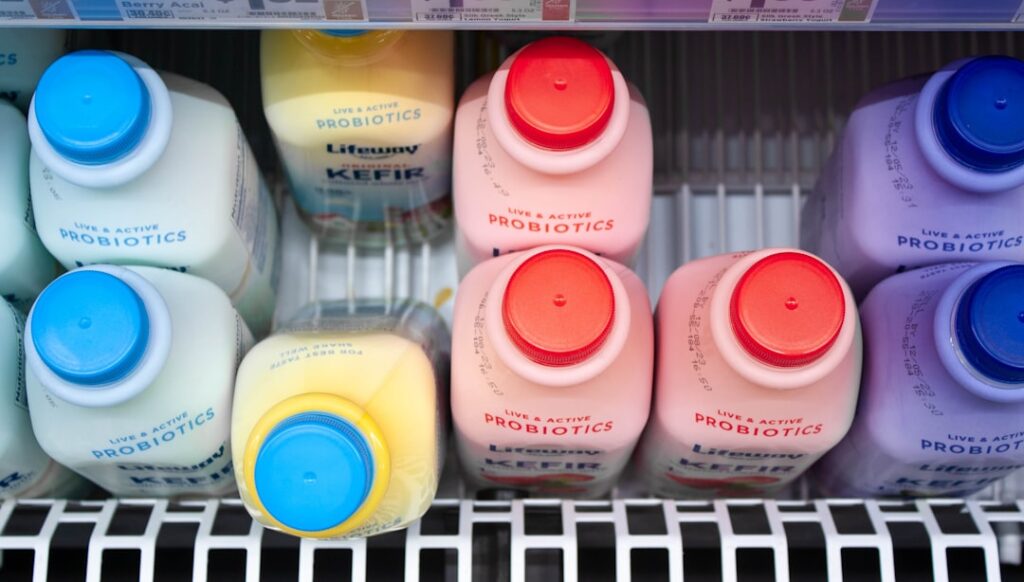
Store-bought kefir sits in a gray area. It may contain live cultures, but it is not the same as owning active grains, and results can be thinner, slower, or less repeatable. For a first batch, using bottled kefir as a starter is better treated as an experiment than the main plan.
A simple rule helps: pick milk or water first, then pick grains or starter powder, then follow instructions written for that exact choice.
Start with lively grains
After temperature, culture quality is usually the biggest early variable. Two jars made the same way can behave differently if one starts with plump, recently fed grains and the other starts with tired grains that just spent a week in transit.
Active milk kefir grains often begin thickening milk within a batch or two, especially when paired with milk that ferments consistently. For water kefir, lively grains usually show gentle bubbling, floating fruit, or a slightly less sweet taste; sourcing from a seller that ships active water kefir grains can shorten the awkward first few days.
Dried or heavily shipped grains are different. They may need several feedings before they smell cleanly tangy, multiply, or ferment on schedule, so the first jar is sometimes more of a wake-up batch than a drinking batch. A careful rehydration routine for dried grains can make this stage less confusing.
It also helps to set expectations before buying. Some beginners prefer fresh, active cultures from reputable sources, while others accept a slower start for easier shipping or storage. The trade-off between fresh and dried grains matters most when waste is the worry.
For the first few rounds, judge progress by signs of life rather than perfection:
- Milk kefir: light tang, slight thickening, tiny bubbles, clean sour smell.
- Water kefir: reduced sweetness, small bubbles, mild fermented aroma.
- Either type: steady improvement over several feedings.
Water kefir grains also depend on minerals and fuel, so the sugar used for feeding can affect how quickly they settle in.
A low-waste first batch
-
Use a spotless jar
Wash well; rinse away soap.
-
Measure small
Try 1 teaspoon grains with 1 cup suitable milk.
-
Cover lightly
Use cloth or a coffee filter, not a tight lid.
-
Keep warm
Set in a warm, not hot, spot.
If grains look quiet, feed again with a small amount of fresh milk. Early batches may taste uneven while the culture wakes up.
Kefir without grains
Dr Okeke channel shows a grain-free method using store-bought kefir and milk. It is useful for comparison, though grains are usually more predictable for ongoing batches.
Read the kefir, not the clock
A recipe may say “24 hours,” but kefir rarely follows the clock neatly, especially in a first batch. Temperature, grain strength, and recent storage all change the pace. A warm kitchen can speed things up; a cool counter can make the same jar look sleepy for much longer.
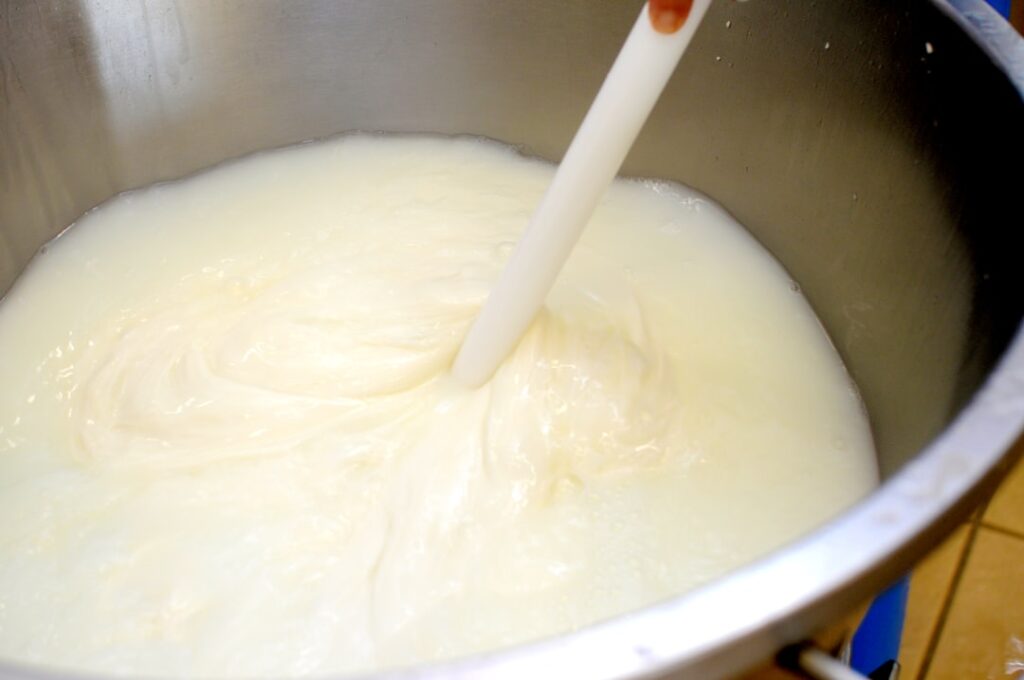
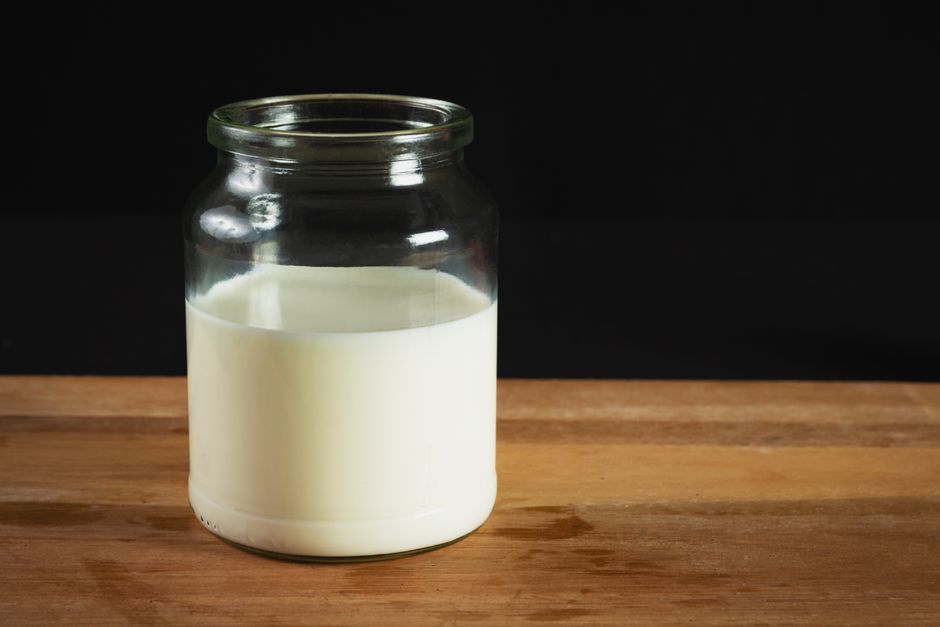
For milk kefir, early activity is often subtle. The milk may look slightly thicker around the grains, smell gently tangy, and show tiny pockets or bubbles along the glass. As it ferments further, it may thicken more evenly and develop a tart, yogurt-like aroma. A little whey collecting at the bottom or in thin streaks is normal, but full separation into curds and clear whey usually means it has gone longer than needed for a mild first batch.
For water kefir, the signs are different. The liquid may become less sweet, lightly tangy, and faintly yeasty, with small bubbles rising when the jar is moved. Dried fruit may float, and grains may shift upward and downward as carbon dioxide forms. It often still looks quite clear, so flavor and gentle fizz matter more than thickness.
A simple way to check progress is to look, smell, then taste a tiny spoonful with a clean utensil:
- Too quiet: very sweet or plain, little aroma, no visible bubbles.
- Active: lightly tangy, pleasant fermented smell, small bubbles or thickening.
- Overrun: sharply sour, strong yeastiness, or heavy separation in milk kefir.
A recovering culture may need extra time before it shows much. Once the grains are lively, the same setup usually becomes more predictable.
For a first batch, a time window is more useful than a deadline. Checking at intervals helps catch the point where the kefir is active but not overly sour.
The first strain is just a checkpoint
After the first fermentation, straining is less of a test and more of a pause to see what happened. The goal is simple: separate the grains from the liquid without scraping, squeezing, or rinsing away the living culture.
Set a clean strainer over a bowl or jar. A plastic or stainless-steel mesh strainer both work for many home fermenters; the key is that the holes are small enough to catch the grains. Pour the kefir in slowly, then use a clean spoon or spatula to nudge the thickened liquid through. If it is clumpy, gentle stirring is usually enough.
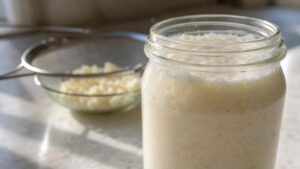
Do not press the grains hard. They can look like soft cauliflower bits, tiny jelly clusters, or uneven curds, depending on the culture and how active it has been. Once caught in the strainer, they can go straight into fresh milk or sugar water for the next small batch.
What to do with the liquid
The strained liquid may be perfectly useful even if it is not yet delicious. A first batch can taste thin, yeasty, extra sharp, or slightly unbalanced while the grains settle in.
A quick check can help decide its fate:
| Sign | What it suggests |
|---|---|
| Tangy smell, mild fizz, slight thickening | Likely usable kefir |
| Very sour, separated into curds and whey | Often over-fermented but usable in smoothies or baking |
| Flat, sweet, unchanged milk after plenty of time | Grains may need more recovery |
| Mold, pink/orange streaks, rotten odor, slimy texture | Discard the liquid and the batch |
When in doubt, skipping the drink is reasonable. Saving the grains, when they look normal and smell cleanly sour, keeps the learning going with very little waste.
For recovering grains, another small feeding is often more useful than a large jar. Fresh liquid gives the culture a cleaner start and makes changes easier to notice.
Early batches usually need tuning, not rescuing
A loose texture can simply mean cool room temperature, a generous milk ratio, or grains still settling in.
If it smells clean and tangy, change one thing next time: a little more warmth, slightly less milk, or a longer ferment. For a closer read, see thin batches that stay drinkable.
Separation often points to a fast or long ferment, especially in a warm kitchen.
The liquid may taste sharper and look dramatic, but the useful fix is usually a shorter next batch or more milk, not panic. This curds-and-whey troubleshooting guide explains the difference.
Fizz depends on sugar balance, minerals, bottling time, temperature, and whether the bottle seals well.
Active water kefir can still be quiet in the glass. Adjust the second ferment first, using flat bottle fixes as a starting point.
Sharp flavor usually means the ferment ran too warm, too long, or with too many grains for the amount of liquid.
The next batch can be gentler with less time, more milk or sugar water, or a cooler spot. These ways to soften an overly sour batch keep the fix practical.
Let the grains settle before judging the recipe
A first ferment is often more like a warm-up than a verdict. Grains that have been shipped, refrigerated, rinsed, or rehydrated may need a couple of feedings before they show their normal pace. That is why the second or third batch is usually a fairer baseline for thickness, tang, fizz, and timing.
For those next rounds, keep the process almost boring: same jar, same amount of fresh milk or sugar water, same counter spot, same straining window. Changing three things at once makes it hard to tell whether the grains improved or the recipe simply shifted.
A steady reset helps avoid waste:
- Use another small batch before making a full jar.
- Keep the temperature as consistent as practical.
- Change only one variable after two similar results.
- If a break interrupts progress, follow a simple grain storage routine before restarting.
Once two batches behave similarly, scaling up becomes less of a guess and more of a repeatable habit.
What to do with the first jar
- Use it If it smells cleanly tangy, shows some thickening or bubbles, and tastes pleasantly sour, it can be used like fresh kefir.
- Adjust it If it is thin, flat, sharply sour, or separated but smells normal, keep the grains and change one variable next round: time, warmth, or milk ratio.
- Wait longer If grains were shipped, dried, or refrigerated, treat the next small batch as another recovery feeding before judging the recipe.
- Let it go If there is mold, a rotten smell, pink or orange discoloration, or anything that seems clearly off, the liquid is better discarded and the grains checked carefully.
The first jar is not a pass-or-fail test. It is a small, controlled starter run that shows how active the culture is, how warm the kitchen runs, and how quickly the liquid changes.
A good first batch can be enjoyed; an awkward one can guide the next adjustment; a questionable one can be thrown out without much loss. Keeping the batch small makes that choice calm instead of costly.

Can you explain the breathable cover thing a bit more? I’ve seen people say coffee filter, cloth, paper towel, loose lid… and then other people insist it MUST be airtight for bubbles.
I’m mostly interested in water kefir, so I don’t know if the advice changes there. I want fizz eventually but I also don’t want a countertop grenade.
For the primary fermentation, a breathable cover is mainly about keeping dust/bugs out while letting gas escape. A coffee filter, paper towel, or tightly woven cloth with a rubber band works well. A loose lid can also work as long as pressure isn’t building.
For water kefir fizz, the more sealed stage is usually the second fermentation after the grains are removed and the liquid is bottled with a little sugar/fruit. That’s when you need to burp bottles and use appropriate pressure-safe containers. Primary ferment: gentle and breathable. Secondary ferment: controlled fizz, but with caution.
The store-bought kefir starter warning is the part I wish I’d read last month. I tried using a splash from a bottle and got one decent batch, then the next one was thin and strange. Thought I had invented poison yogurt. Good to know it’s just not very predictable.
I like the idea that the first strain is just a checkpoint. Makes the whole process feel less like a pass/fail exam.
My only gripe is that every guide still makes “normal kefir smell” sound obvious. To me it’s like, is this tangy? yeasty? cheesy? suspicious? My nose did not come with a fermentation glossary.
I appreciate the low-waste angle. So many tutorials are like “use a quart of milk and see what happens,” which is not exactly fun when the first jar smells weird.
I ordered dehydrated milk kefir grains and the seller says they may need 3-7 feedings. During those recovery feedings, should I be tasting the milk at all, or just tossing it until it starts thickening reliably?
During recovery, I’d treat the first few feedings as culture rehab rather than a finished food. You can smell and observe them, but I’d be conservative about tasting until the grains show consistent activity: mild tang, slight thickening, no off colors, no rotten odor, and a predictable change between feedings.
Once they’re reliably fermenting small amounts of milk, then the strained kefir is usually fair to evaluate as a drink/ingredient. Keeping those recovery batches small is exactly the low-waste approach.
I had dehydrated grains too and mine took about 5 tiny batches before they stopped smelling “flat.” Not bad, just like warm milk with ambition lol. Small jars saved me from wasting so much milk.
I’m still confused about grains vs powder. If the powder packet says “kefir starter,” does that mean it can be reused like grains or is it more like yogurt where it weakens over time? I don’t want to buy the wrong thing and then wonder why my second batch is sad.
Great question. Most powdered kefir starters are designed for a limited number of re-cultures, and they usually don’t behave like true kefir grains long term. They can make a kefir-like fermented milk, but they don’t continually grow and renew themselves the same way grains can.
If your goal is ongoing batches with a living culture you keep feeding, choose milk kefir grains for dairy kefir or water kefir grains for sugar-water kefir. If you want a convenient occasional batch without maintaining grains, powder can be fine.
This was super helpful, especially the “read the kefir, not the clock” part. I’ve been obsessing over whether it’s 24 hours exactly and probably stressing myself out more than the grains 😂
For milk kefir, is mild separation still okay if it smells pleasantly sour? Mine had a thin whey layer at the bottom after about 20 hours but wasn’t chunky or moldy.
Yes, a little separation with a clean, pleasantly tangy smell is usually normal, especially if the room is warm or the grain-to-milk ratio is a bit strong. It’s often a sign that fermentation moved a little faster than expected, not that the batch is ruined.
For the next small batch, you could either strain a bit earlier, add slightly more milk, or move the jar somewhere a touch cooler. If there’s any mold, putrid smell, pink/orange discoloration, or slimy texture that seems wrong, that’s when I’d discard.