
Sourdough begins to feel easier when the jar becomes a little less mysterious.
A bubbly starter can look exciting one morning and completely flat by dinner, which makes the first few days feel more like guessing than baking. That is normal. Flour, water, room temperature, and time all move at their own pace, especially in a new kitchen routine.
Early success is less about perfect timing and more about spotting patterns: a starter that rises after feeding, smells pleasantly tangy rather than harsh, and leaves small bubbles along the glass. A first loaf may spread, crack unevenly, or bake up denser than expected. Still, each batch teaches something useful. Repeatable signs matter more than flawless results.
- Keeping a small starter can reduce waste; many beginners maintain around 20–30 g between bakes.
- A rubber band or tape mark on the jar makes rise-and-fall patterns easier to notice.
Sourdough Terms in Plain English
- Sourdough starter
A bubbly mix of flour and water where wild yeast and helpful bacteria live. When fed with fresh flour and water, it becomes active enough to raise bread dough.
- Wild yeast
Tiny organisms naturally found on flour and in the kitchen environment. They eat sugars in flour and release gas, which helps the dough rise.
- Lactic acid bacteria
Friendly bacteria that live alongside the yeast in a starter. They create the gentle tang, help shape flavor, and make sourdough smell pleasantly fresh or fruity when active.
- Feeding
The simple act of adding fresh flour and water to a small amount of starter. This gives the yeast and bacteria new food so the starter can grow bubbly again.
- Fermentation
The slow process where the starter or dough becomes airy, flavorful, and easier to shape. In everyday terms, it is the resting time when the living culture does its work.
The first milestone: a starter that rises
Before the first loaf, the starter is the main project. A young starter may bubble wildly on day two, smell fruity one morning, then seem flat the next. That usually reflects changing microbial activity, not failure.
Consistency matters more than fussiness. Feed with equal weights flour and water, discard down to a small amount, and keep it somewhere comfortably warm. A clear jar or rubber band makes progress easier to read.
The useful sign is not a few bubbles; it is reliable rise. A starter is more likely ready when it predictably doubles after feeding, peaks, and begins to fall on a schedule that repeats for a few days.
Flour can help, but it does not need to be rare or expensive:
- Unbleached all-purpose flour works for many starters.
- Whole wheat or rye can boost activity in small amounts.
- Bread flour may add strength, but is not required.
Once the starter behaves predictably, the first dough becomes much less mysterious.

Useful Tools, and What Can Wait
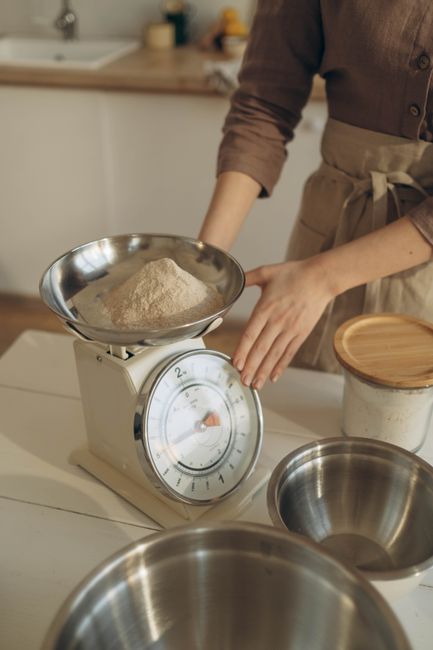
A small kitchen scale makes feeding and dough mixing steadier because flour volume changes so much from scoop to scoop. It is one of the few tools that noticeably reduces guesswork early on.
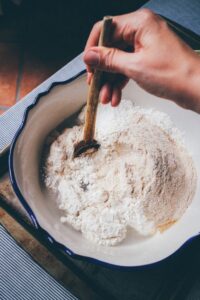
A straight-sided jar makes starter growth easier to see, while a medium mixing bowl gives dough room to stretch and rise. Neither needs to be specialty bread gear.
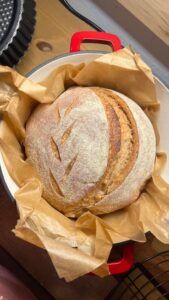
A Dutch oven or oven-safe pot with a lid can help trap steam, which supports better oven spring and crust. A heavy covered pan can work before buying something dedicated.
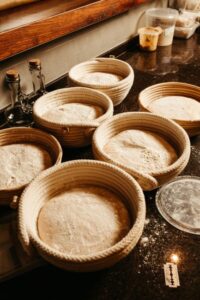
Proofing baskets, scoring tools, and linen liners can improve shape and appearance, especially after a few bakes. For early loaves, a towel-lined bowl and sharp knife are often enough.
How a first sourdough loaf comes together
-
Mix
Flour, water, starter, and salt become one rough dough; for quantities, follow a beginner-friendly loaf guide.
-
Rest and fold
Time hydrates the flour while gentle folds build strength.
-
Bulk ferment
The dough slowly rises, showing bubbles and a softer feel.
-
Shape and proof
Shaping adds structure; the final rest relaxes the dough before baking.
-
Bake and cool
Steam helps the crust expand, then cooling sets the crumb.
Starter to baked loaf
Lauren I A Bright Moment walks through making starter and bread in one beginner-focused lesson, useful after the stages feel familiar.
Learning to read the dough
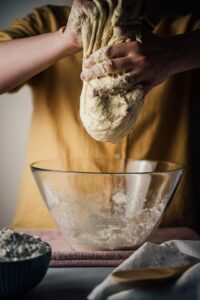
Bulk fermentation is the stretch of time after mixing when the dough slowly fills with gas and becomes lighter. Recipes often give a time range, but that range is only a starting point. A warm kitchen, lively starter, and whole-grain flour can speed things up; a cool room or sleepy starter can make the same dough move slowly.
Instead of waiting for an exact number of hours, beginners can look for a few friendly signs. The dough may look puffier, with rounded edges where it meets the bowl. Small bubbles might appear along the sides or on the surface. When the bowl is gently jiggled, the dough may wobble instead of sitting stiffly.
A common beginner trap is treating “doubled” as a strict rule. Some sourdough doughs are ready before doubling, especially in warmer kitchens or with higher-hydration doughs. Others may need more time to show enough movement. A clearer approach is to watch the dough’s overall change: volume increase, softer texture, visible bubbles, and a lighter, springier feel.
For a deeper look at judging the window without staring at a timer, this guide to reading bulk fermentation signs can help make the process feel less mysterious.
A straight-sided container can make these changes easier to see. Marking the dough level with tape or a rubber band gives a simple reference point without turning the bake into a math problem.
If the dough looks flat and dense, it likely needs more time. If it is very bubbly, slack, and hard to shape, it may have gone too far — useful information for the next loaf.
Common sourdough worries, decoded


Making sourdough fit everyday life
After the first loaf, sourdough becomes less dramatic and more like keeping a small kitchen habit. The routine can be adjusted around how often baking actually happens, rather than forcing bread into every weekend.
For frequent baking, a starter can live on the counter and be fed daily. This keeps it active and ready, but it also creates more discard and asks for regular attention. A smaller jar and smaller feedings can make this routine feel less wasteful.
For slower seasons, the refrigerator is often more practical. Cold storage slows fermentation, so the starter needs feeding less often and can wait between bakes. When a break is needed, learning how to store a starter without babysitting it can make sourdough feel much more sustainable.
A simple rhythm helps:
- Bake often: keep the starter at room temperature.
- Bake occasionally: store it in the fridge.
- Restarting after a pause: feed once or twice until it rises predictably again.
The goal is not constant baking. It is a routine that can come back when there is time for it.
A calm plan for the first week
-
Day 1–2: Feed and watch
Keep the starter routine simple. Note rise, smell, bubbles, and room temperature rather than chasing perfection.
-
Day 3–4: Look for repeatable activity
A starter that rises after feeding more than once is giving useful information. The timing may still wander, especially in a cool kitchen.
-
Day 5: Mix a small, forgiving dough
A modest loaf keeps the experiment low-pressure. Slight stickiness, slow rising, and awkward shaping are normal at this stage.
-
Day 6: Bake and let it cool
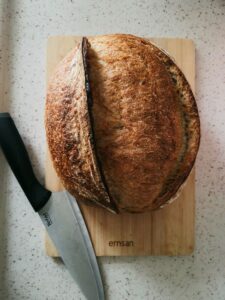
A full cool-down makes the crumb easier to judge. Cutting too early can make even a decent loaf seem gummy.
-
Day 7: Compare notes
Dense, pale, flat, or uneven bread still points to the next adjustment: more fermentation, stronger shaping, hotter baking, or a livelier starter.
- The first loaf is more useful as a record than as a final result.
- Small notes on timing, temperature, dough feel, and crumb make the next bake less mysterious.
- Visible flaws often narrow the problem instead of meaning the bake failed.
Sourdough becomes easier when the first week is treated as practice, not a test. A loaf that spreads, bakes pale, or has a tight crumb still teaches how the starter behaves, how the dough changes, and what to adjust next.
The most helpful habit is gentle observation: what rose, what lagged, what felt different, and what improved. Each bake adds one more clue, and the process starts to feel less like guesswork.

The “read the dough” section was helpful, especially the wobble/bubbles part. I think I’ve been following the clock too much and cutting bulk fermentation short because the recipe says 4 hours.
My kitchen is usually around 68°F though. Should I expect bulk fermentation to take way longer than most recipes claim?
Yes, at 68°F bulk fermentation will often take noticeably longer than recipes written for a warmer kitchen. A dough that might be ready in 4–5 hours at 75–78°F could take 7+ hours depending on starter strength, dough temperature, and flour.
That’s where the visual cues matter: some rise, bubbles along the sides/bottom, a smoother softer texture, and a bit of jiggle when you move the bowl.
I appreciate the “first loaf is observation, not failure” line. My first one was basically a beige frisbee with emotional damage.
Going to try the seven-day plan and actually take jar photos this time instead of just staring at it like it owes me money.
I like the plain-English definitions a lot, but I’m still confused about fermentation vs proofing. Are they basically the same thing but proofing is after shaping? Every sourdough video seems to use the words differently and it makes me want to go back to boxed cake mix lol.
That’s a fair frustration — bakers don’t always use the terms consistently. In simple terms, fermentation is the broad process of yeast/bacteria producing gas and flavor throughout the dough’s life. “Bulk fermentation” is the first rise before shaping, and “proofing” usually means the final rise after shaping.
So yes, proofing is a kind of fermentation, just at a specific stage.
The scale-first advice is probably the thing I needed to hear. I’ve been doing cups and my dough is either soup or a doorstop with no in-between.
Is a Dutch oven truly necessary for the first loaf, or can I fake it with a baking sheet and a pan of water? I don’t want to buy more kitchen gear until I know I won’t abandon this hobby in 10 days.
I started with a sheet pan + an upside-down stainless bowl over the loaf for the first 20 minutes. Not perfect, but it gave me way better oven spring than just open baking. Just make sure the bowl doesn’t have plastic bits.
Tom’s suggestion is a good workaround. A Dutch oven or covered baker mainly traps steam close to the dough early in baking, which helps the crust stay flexible while the loaf expands. You can absolutely start with a tray, steam pan, or inverted oven-safe bowl.
If you do use water for steam, be careful pouring it into a hot pan — steam burns are no joke.
I’m skeptical about keeping only a small amount of starter. Every beginner guide I’ve seen has you maintaining this huge jar like a flour-eating pet.
If I keep, say, 20g of starter, is it really enough to bake with later? Or do I have to build it up the day before?
Thank you for saying starter weirdness is normal. Mine smelled like apples on day 2, gym socks on day 3, and then absolutely nothing happened for two days 😅
When you say to look for patterns instead of exact timing, should I still feed it every 24 hours even if it hasn’t risen yet? Or wait until I see activity?
Totally normal progression — the “gym socks era” catches a lot of people off guard! In the first week, I’d usually keep feeding every 24 hours even if you don’t see much rise yet. Early on, you’re building the right environment, not responding to a fully mature starter.
Once it starts rising and falling predictably, then feeding after it peaks or when it’s just beginning to fall becomes more useful.