
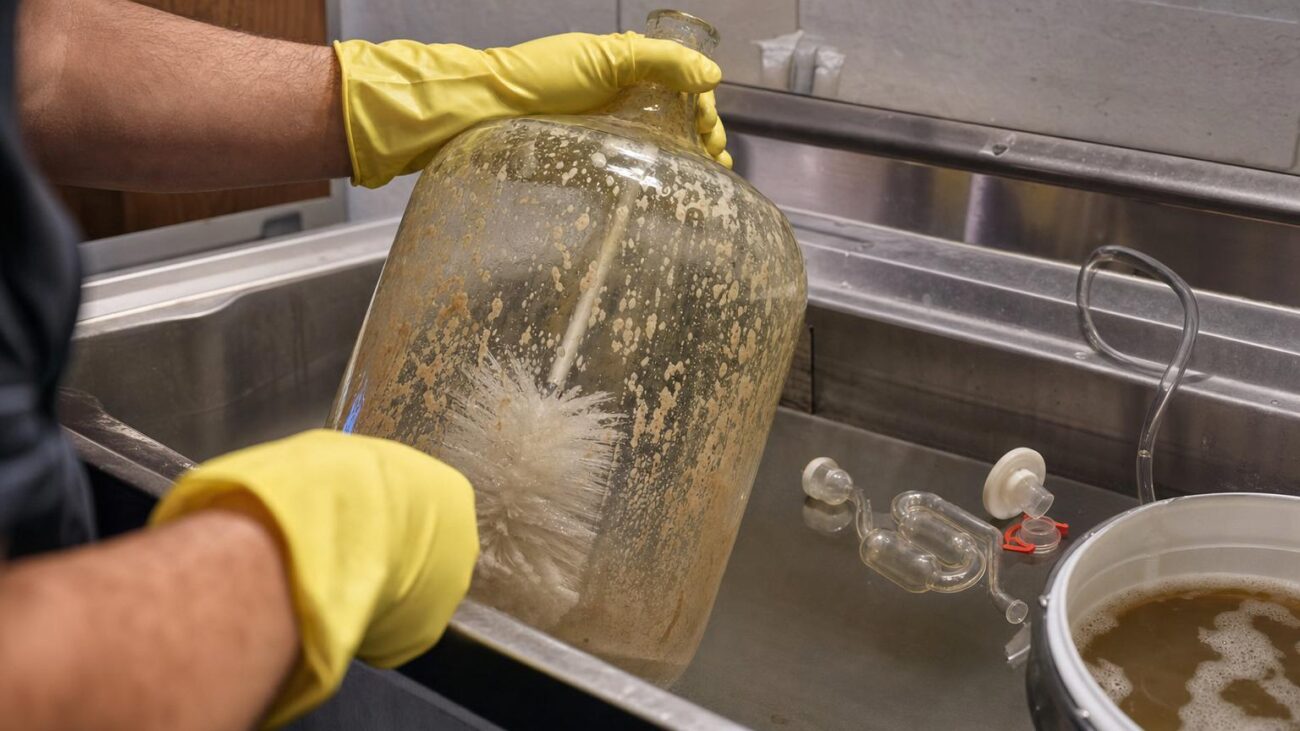
A lingering tang can feel more alarming than a visible stain.
The fermenter looks spotless, the tubing has been rinsed, and still a sour note hangs on. That moment can make the next batch feel risky, even when nothing obvious looks dirty.
The good news is that this is common, especially after active fermentations with krausen, fruit, or strong yeast character. A stubborn smell often points to residue hiding in seams, scratches, valves, or soft plastic parts—not necessarily a ruined vessel. In many cases, the issue is less about replacing equipment and more about using a more thorough, step-by-step cleaning routine.
Read the smell before cleaning again
A sour note does not always mean something is still dirty. Fermentation gear often smells sharper when wet because moisture carries odor more easily. Once the piece is fully dry, that smell may fade to a faint tang.
What the smell may be saying
- Active residue: usually smells heavy, sticky, or distinctly food-like. Think dried krausen, fruit pulp, or a yeasty film hiding around threads, valves, gaskets, or tubing ends.
- Trapped moisture: often smells musty, stale, or “closed in.” This is common in airlocks, spigots, bottling wands, and any part stored before it dried completely.
- Normal lingering tang: a light sour or cidery note with no visible film, slime, or discoloration. Many plastic parts hold onto a little aroma even after they are clean.
A simple check can help: smell the item wet, then again after several hours of air-drying. If the odor drops off sharply when dry, moisture may be the main issue. If it stays strong in one specific spot, hidden residue is more likely.
A localized smell around a gasket, cap thread, or valve usually tells more than the overall odor of the whole piece.
Rinse right away
The single habit that often makes the biggest difference is a prompt rinse as soon as a batch is emptied. Fresh brine, yeast, vegetable bits, and spice oils are still loose at that point, so warm water can carry away much of the material that later feeds a sour smell. Even a basic rinse lowers how much the full wash has to remove.
When equipment sits for hours or overnight, that residue changes character. Moisture evaporates, while salts, acids, and fine particles cling more tightly to the surface. What would have slid off easily can turn into a sticky film or a chalky ring that needs soaking and extra scrubbing.
A fast rinse is especially helpful for parts that trap residue:
- Jars and crocks: brine lines around the fill level
- Lids and weights: spice sediment and vegetable flecks
- Gaskets and airlocks: narrow spaces where sour liquid can linger
It is not the whole cleaning job, but it often makes the later wash much easier.
Take every removable part apart
A stubborn sour smell often comes from one missed pocket of residue, not from the whole setup being dirty. Fermentation gear has a talent for hiding tiny films in places that look clean at a glance.
Parts that deserve a second look include:
- lid gaskets and the groove underneath
- airlock caps, stems, and chambers
- spigots, washers, and the inside of the valve body
- jar threads, screw bands, and cap liners
- handles, feet, and any clipped-on accessories
Where odor likes to hide
The usual trouble spots are seams, threads, undersides, and hollow interiors. A spigot can smell fine outside but still hold residue behind the washer. A bucket lid may look spotless on top while the gasket channel keeps a thin sour film.
If a piece can be removed without damage, taking it apart can help isolate the source. Checking each part separately often turns a vague “everything smells off” problem into a small, fixable cleaning job. That can be reassuring: lingering odor may point to one hidden dirty spot, not a full sanitation breakdown.
Match the wash to the material
-
Start with warm water and a mild unscented cleaner
A soft cloth, bottle brush, or sponge can lift most fresh residue. The goal is to remove the thin organic film first, since odor often clings to that film rather than to the equipment itself.
-
Use a little more force on glass, stainless steel, and glazed ceramic
These surfaces usually tolerate longer soaking, firmer brushing, and repeated washing without holding onto odor easily. Threads, shoulders, and the underside of lids often need the most attention.
-
Go gentler with plastic parts
Plastic can scratch more easily, and tiny scratches may trap smells later. Soft tools, shorter soak times, and non-abrasive cleaners are often enough unless there is visible buildup.
-
Treat silicone separately
Silicone gaskets, airlocks, and stoppers can absorb strong sour notes even when they look clean. Washing them on their own, with extra attention to grooves and inner channels, can help keep odor from spreading back to the rest of the setup.
-
Rinse until no cleaner remains, then dry fully
Leftover soap, dampness, and closed storage can all create a stale smell that gets mistaken for fermentation residue. Air-drying with parts spread out usually helps more than reassembling them right away.
If a surface feels rougher after cleaning, the method was probably too aggressive for that material.
Abrasive pads, strong fragrances, and very aggressive chemicals can leave scratches, residues, or absorbed scent behind. On softer materials, that can make the next round of odor harder to clear.
Check the usual odor traps
After the main wash, the remaining sour note often hides in the smallest, slowest-drying spots. A clean vessel can still smell off if one overlooked part is holding a thin film of brine or yeast.
- Lid gaskets and O-rings: Remove them fully, then run a soft brush or cloth through the groove where the gasket sits.
- Airlock chambers and caps: Take every piece apart and pass a narrow brush through the stem and corners where liquid can dry unnoticed.
- Spigots and valves: Open or disassemble them as far as the design allows, then brush the inner channel and the back of each washer.
- Jar threads and screw bands: Wipe the threads with a cloth wrapped around a chopstick or small brush to reach the ridges.
- Rubber stoppers and grommets: Twist a pipe cleaner through the center hole to lift residue from the inside surface.
- Fermentation weights: Scrub the underside rim, handle recess, or finger hole, since brine often sits there after draining.
- Lid rims and locking seams: Work a damp cloth into the fold or seam line, especially where dried salt leaves a chalky ring.
A useful check is to let each part dry separately, then smell them one by one. If one piece still carries the sharp sour note, that piece often needs another pass more than the whole setup does.
Clean first, sanitize second
A lot of sour-smell frustration comes from treating cleaning and sanitizing as the same job. They help with different problems.
- Cleaning removes film, dried brine, yeast, and bits of food.
- Sanitizing lowers microbial load on an already clean surface.
If residue is still present, sanitizer often does little for odor because the smell source is still physically there. That is why equipment can smell better after a thorough wash even before any sanitizer is used. For readers comparing this step with how people sanitize fermentation jars, it helps to remember that sanitizing is usually the finish, not the fix for stuck-on residue.
Complete drying matters almost as much as washing. A sealed lid, folded gasket, airlock chamber, or valve body can hold a thin film of moisture that keeps a sour note hanging around.
After washing, parts can helpfully be left separated until fully dry, especially:
- gaskets and stoppers
- airlock pieces
- valve parts
- lids with enclosed rims or double walls
When the gear is clean and completely dry, any remaining smell is often much fainter and easier to judge.
A part that smells sharp only when damp often has trapped moisture, not necessarily fresh residue.
When cleaning is enough—and when a part is simply worn out
-
Let it dry before the final call
A faint tang on damp gear can fade once everything is fully dry. Final judgment usually makes more sense after air-drying, not straight from the sink.
-
Stop after one solid re-clean
If a part has been disassembled, washed well, and dried completely, endless extra scrubbing rarely changes much. At that point, the smell is either gone, clearly localized, or coming from wear.
-
Replace parts with damage, not just odor
Gaskets, stoppers, and plastic pieces can hang onto smell once they are scratched, cloudy, stiff, swollen, or cracked. Those surfaces become harder to clean thoroughly, so replacement can help more than force.
-
Use a simple between-batch rhythm
A quick rinse after emptying, a full wash before storage, and complete drying before reassembly can prevent most repeat odors. A short monthly deep check also helps catch problem parts early.
-
Keep the routine easy to repeat
That steady pattern fits nicely with basic fermentation equipment upkeep, especially for small home setups.
Clean enough is a useful line
- Dry surfaces give the most honest odor check.
- Worn soft parts often outlast their cleanability.
- Simple routines beat occasional marathon scrubbing.
Sour smell does not always mean a batch of equipment is ruined. More often, it points to one damp pocket, one missed seam, or one aging part that has become too porous to trust.
A calm routine makes the difference: rinse, wash, dry fully, then reassess. Once that cycle stops improving the smell, replacing the tired piece is usually the simpler answer.

The drying part is the one I always rush, and honestly that’s probably why the smell keeps coming back.
I clean everything, reassemble too soon, then wonder why the sealed jar smells funky two days later. Enclosed parts really do need that extra time.
I’m a little skeptical about the “harmless lingering tang” part.
Not saying you’re wrong, but I’ve had batches go sideways after equipment smelled only faintly off. Maybe the real point is that if it still smells sour when fully dry, don’t talk yourself into ignoring it?
Curious how strict other people are about the dry-then-check rule.
That’s a fair concern, and I agree with your practical version of the rule. A faint smell while wet can be misleading, but a persistent off odor after cleaning and full drying deserves more attention.
The main idea is not to dismiss odor entirely, but to separate temporary wet-smell amplification from a true remaining residue problem.
I’m with you on this. If it smells questionable when bone dry, I don’t gamble. Maybe that’s overkill, but dumping a whole batch feels worse than replacing one cheap part.
Appreciated the simple maintenance rhythm at the end. Rinse-wash-dry sounds almost too basic, but basic is usually what gets skipped.
Also, thank you for mentioning worn soft parts. Sometimes people act like every smell problem can be solved with one more heroic cleaning session, and sometimes the gasket is just old and tired. Same as me before coffee.
The “read the smell before cleaning again” part was actually super helpful. I kept re-washing a lid when the real issue was that it only smelled stronger while wet, then basically fine once it dried.
I think a lot of us assume sour smell = disaster, when sometimes it’s just trapped moisture and panic lol.
The section on matching the wash to the material should probably be said louder for people in the back 😂
I definitely scratched up a plastic fermenter years ago by scrubbing it like a stainless pot. It looked clean, but those micro scratches seemed to collect funk forever after that.
Good reminder about rinsing right away. Dried brine film in threads is weirdly stubborn for something that looked “basically clean” at first glance.
My biggest takeaway was clean first, sanitize second.
People mix those up constantly. Sanitizer is not magic fairy water if there’s still gunk under the gasket.