
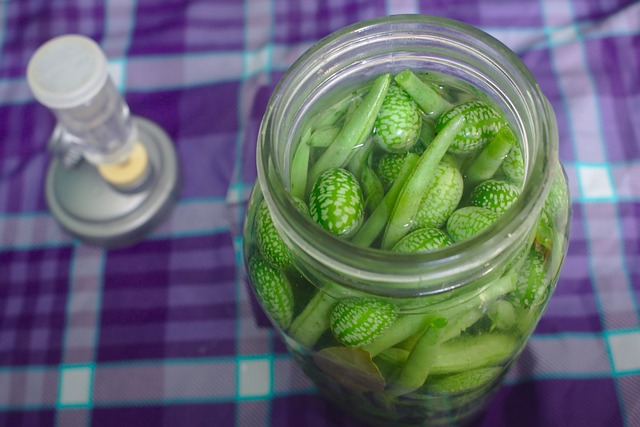
If a ferment keeps asking for attention, the setup is usually the noisy part—not the food.
Have you ever spotted one stray shred above the brine and immediately reached for the lid? I have. A weight tilts, a bubble lifts the cabbage, and suddenly I’m checking the jar again an hour later as if it needs babysitting.
What usually helps me is seeing that loop for what it is: not a “bad” ferment, but a setup that practically invites fiddling. When the weight doesn’t sit securely or the jar is packed a little awkwardly, every tiny shift looks urgent. And each extra peek can create more disturbance than the original wobble—letting in oxygen, sloshing brine, and loosening bits that had mostly settled down. A little movement is common; repeated handling is often what turns it into a project.
Let the weight do its simple job
A fermentation weight does not need to pin everything in place like a clamp. I mostly want it to keep the solids generally below the brine and make the surface harder for stray bits to reach. A little bobbing, tilting, or rotation is usually just gas moving through the jar.
Bubbles sneaking up the sides, a weight that lifts a few millimeters, or vegetables shifting after I tap the jar are all pretty normal. The part that gets my attention is anything staying above the liquid line for long stretches, because that is where spoilage is more likely to start. If you are trying to avoid mold on ferments, that surface exposure matters more than whether the weight looks perfectly still.
I stop fussing and check three simple things:
- Most solids remain submerged
- The brine still covers the top
- No floaters are parked at the surface
If those look good, I usually leave the jar alone.
Match the weight to the jar
I’ve had “bad” weights turn out to be fine once I paired them with the right jar. A weight that behaves nicely in one container can be awkward in another, so I try to do a dry fit before any vegetables or brine go in.
- Opening width: Wide-mouth jars usually give one-piece glass weights enough room to drop in and come back out easily. Narrow openings can make them tilt, bind, or knock solids loose.
- Shoulder shape: A steep shoulder can catch a weight at an angle. Straighter sides tend to let it settle more evenly; this is why some jar shapes tend to cooperate better with weights.
- Design style: One-piece weights feel simple, but split weights can be easier to insert through tighter mouths and sit flatter over uneven cut vegetables.
My quick test is simple: place the empty weight in the clean jar, remove it, and repeat once or twice. If it scrapes, jams, or lands crooked while dry, it usually won’t get less fussy after the batch starts.
I get better results when I build a tight, level bed for the weight
-
Cut the vegetables to a fairly even size
When pieces are wildly mixed, the big ones create gaps and the small ones slip around them. I try to keep slices or chunks close enough in size that they settle into a more uniform layer.
-
Salt first so the pile starts making its own brine
For vegetables that like salting, a short rest helps them soften and release liquid. That gives me a denser pack and fewer dry pockets hiding underneath.
-
Press in layers instead of dumping everything at once
I add a handful or two, then press down firmly to push out trapped air. Repeating that layer by layer usually makes the jar feel much more solid than one big push at the end.
-
Leave enough room at the top for brine and movement
A jar packed to the brim can force the weight upward once the brine rises. I leave a little headspace so the contents can expand without nudging the setup out of place.
-
Top it with an outer leaf before the weight goes in
A folded cabbage leaf or similar broad leaf can hold shreds and small pieces down. It also gives the weight a flatter platform, so it settles instead of tipping into uneven bits.
If the vegetables are springy, airy, or mounded unevenly, the weight may wobble no matter what it is made from.
I usually look for three small signs before closing the jar:
the surface looks level brine comes up readily when I press the weight lands on a firm cap, not loose shredsSet the weight down gently
I lower the weight slowly, then press solids—not the glass. A slight tilt is fine if the food stays under brine. If it still rocks, I reach for a clean stand-in weight.
Ferment tools that calm the setup
Fermented Homestead gives a practical overview of tools that can make weight placement feel simpler and less fussy.
Pack first; let the weight settle.
Watch the jar, not the weight
I fuss less when my closure answers the main question for me: can gas escape without me opening the jar? A clear jar with an airlock lid tends to calm me down, because I can watch bubbles and leave everything sealed. A standard lid can also be workable if your method allows a little venting, but I usually find myself less tempted to meddle when the setup is visibly doing its job. If you’re still sorting out fermentation equipment beginners actually use, I’d put visibility and simple venting ahead of fancy extras.
My outside-the-jar check takes about ten seconds:
- Brine line: are the solids still under liquid?
- Activity: do I see bubbles, slight cloudiness, or other normal change?
- Mess: is brine leaking or drying around the rim?
- Surface: is there anything fuzzy or brightly colored above the liquid?
If those look ordinary, I leave the lid alone. I can learn more from a full day of watching than from five quick openings, and the ferment usually seems steadier for it. Opening is still useful when something clearly looks off, but routine curiosity rarely tells me anything the jar wasn’t already showing me.
I sometimes snap one photo a day from the same angle. It makes slow changes easier to notice without touching the jar.
When I pause before opening the jar
My weight floated up overnight. Is the batch ruined?
Usually not. If the vegetables are still mostly under brine and the weight settles after a light tap, I leave it alone.
There are bubbles under the weight. Do I need to reset it?
Not usually. Gas can collect and make the weight look tilted; a gentle burp or tap often fixes the look without rebuilding the jar.
A shred slipped past the edge. What now?
One stray piece is rarely a crisis. I act only if it stays dry at the surface or starts to darken.
The brine level dropped a little. Should I repack everything?
Small changes are common as the jar vents and the vegetables soften. I only top up when the top layer is no longer covered.
Everything else—bubbles, wobble, foam, a slightly crooked weight—usually gets a watch-and-wait response from me, not a full reset.
My simple leave-it-alone routine
- Pack evenly, leave a little headspace, and lower the weight slowly.
- Seal the jar, do quick visual checks, and only open it for a real problem.
- Rinse, dry, and store the weight between batches.
What finally helped me was treating setup as the main job. If the jar fits, the vegetables are packed into a level bed, and the weight goes in calmly, I usually get a steadier ferment by leaving it alone than by correcting every wobble.
Between batches, I give the weight basic aftercare: rinse, wash if needed, dry well, and check for chips or trapped bits. If it hangs onto odor, this guide to getting rid of a sour smell from weights can help.
Fit the jar
Level the pack
Lower the weight
Check brine coverage
Close it
Leave it alone

This was the first explanation I’ve read that made me stop messing with the jar every 6 hours 😅
The part about weights only needing broad submersion really clicked for me. I kept thinking every tiny wobble meant failure, but once I left it alone my sauerkraut actually came out better.
I think the “match the weight to the jar” point is underrated.
I was using the same glass weight in two different mason jars and only one kept rocking. Turned out the shoulder on the taller jar was the real problem, not the weight itself. Switched jars, packed the cabbage more evenly, and suddenly no more daily fiddling.
Yes, exactly. A lot of people blame the weight first, but the jar geometry often decides whether the setup feels stable or annoying.
A better fit plus a flatter packed surface usually solves more than repeated adjusting ever will.
Same here. I thought I had bought a bad weight, but it was just a weird jar with a narrow shoulder. Drove me nuts for a week lol.
Honestly I needed the reminder to watch the jar, not the weight.
I have an airlock lid and still kept opening it because the weight looked crooked. Meanwhile the brine was fine, the vent was working, and I was basically creating the problem myself. Fermentation really is a lesson in leaving stuff alone lol.
Good article, but I still feel a little skeptical about the “bubbles and wobble are normal” part.
I’ve had one batch where it started with harmless-looking bubbling and later got a weird film on top. It wasn’t fuzzy, more like cloudy scum, but enough to make me nervous. I know you mention action thresholds, but I’d love a clearer line between “normal ugly” and “open this now.”
That’s fair, because fermentation can look messy even when it’s progressing normally.
In general, trapped bubbles, slight lifting, and temporary cloudiness are common. The signs that justify opening are persistent exposed solids, blocked venting, fuzzy growth, or a truly rotten smell. A thin harmless film can happen, but if you’re unsure, opening once for a targeted check is better than repeated casual adjustments.
“Normal ugly” is such a real category with ferments. Mine often look questionable on day 3 and then totally fine by the end.
The gentle lowering tip solved my dumb little problem.
I was basically dropping the weight in, then wondering why brine splashed up and bits floated everywhere. Lowering it at a slight tilt under the brine was way cleaner.
Also appreciate the note about a clean substitute for stubborn rocking. Not fancy, but I used a small cabbage leaf folded over one side and it steadied the whole thing.