
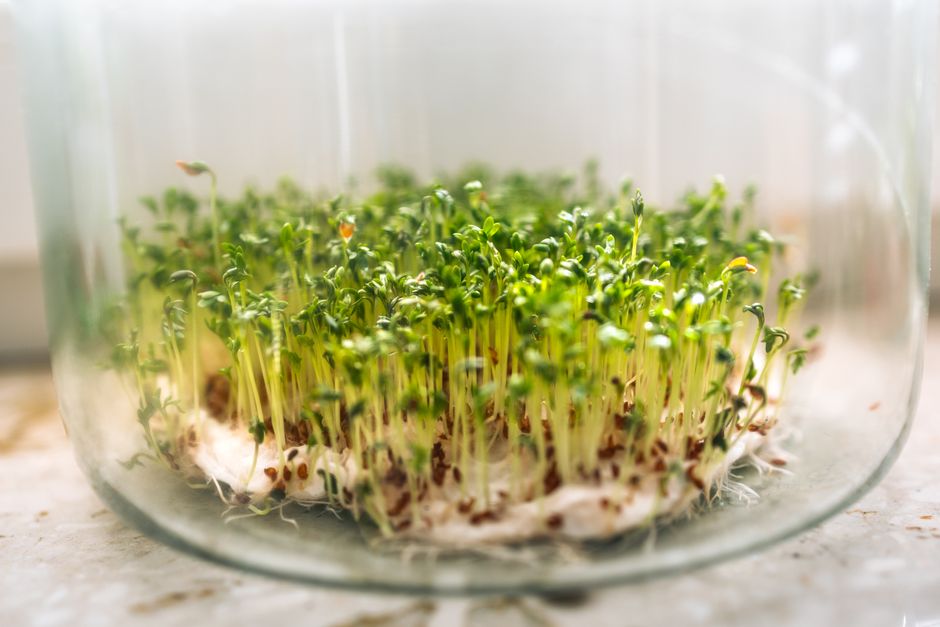
Microgreens turn an ordinary seed choice into something worth a closer look.
A packet of broccoli or radish seed can look perfectly normal on a garden-center rack: bright photo, sowing depth, days to maturity, maybe a small note that says treated or untreated. For a backyard bed, that label may barely register. The seed goes into soil, grows for weeks or months, and the harvested part is often far removed from the original seed coat.
Microgreens change the calculation. The crop is usually cut soon after germination, while stems are tender, roots are nearby, and seed hulls may still cling to leaves. That short timeline makes the starting seed feel more connected to the food on the plate. It is not about panic; it is about fit. Seeds sold for field planting are not always packaged with tray-grown, quick-harvest greens in mind, so the wording on the packet deserves a second glance.
- Look for wording such as “untreated,” “for sprouting,” or “for microgreens” when comparing packets.
- Colored dust, bright coating, or vague treatment language can be a reason to ask the seller for details.
“Treated” does not mean one specific thing
On a seed packet, treated is a broad flag, not the name of one coating or chemical. It means something has been applied to the seed before sale. That “something” may be there to protect the seed, make it easier to handle, improve storage, or support crop performance in the field.
For example, treated seed may have a fungicide, insecticide, polymer coating, color dye, inoculant, or other seed-applied product. Some treatments are used to reduce problems during germination. Others help large-scale equipment plant seed more evenly or make tiny seeds easier to see.
The important detail is that the word treated does not describe a single risk level. Two packets can both say “treated” and still be very different from each other. One might have a simple handling coating, while another could include an active crop-protection product.
That is why microgreen growers usually need more than the front label. Useful clues can include:
- the exact treatment name or active ingredient
- warning statements on the packet
- colored seed coatings or dust
- crop-use language such as “for field planting”
- supplier notes about food, sprouting, or microgreen use
When the packet does not say what was applied, the label is incomplete for practical decision-making.
Why microgreens change the picture
A treated seed packet is often designed with outdoor planting in mind. In a field or garden bed, the seed is placed in soil, spaced with room to grow, and left for weeks or months before harvest. Rain, irrigation, soil microbes, sunlight, and time all become part of the story.
Microgreens are grown in a much tighter setup. Seeds may be scattered thickly across a tray, kept evenly moist, covered during germination, and harvested when the plants are only a few inches tall. That warm, humid start is useful for quick sprouting, but it is not the same environment a seed treatment was necessarily chosen for.
There is also the matter of where the harvest happens. Many microgreens are cut close to the growing surface, and some crops hold onto seed hulls as they emerge. That means the seed coat and anything applied to it can feel more relevant than it would for a mature tomato, bean, or sunflower plant harvested long after the seed disappeared.
So the concern is less about alarm and more about fit for purpose. A packet suitable for sowing in a backyard bed may not be the most comfortable choice for a food crop harvested days after germination.
For microgreens, seed labels matter because the edible crop appears quickly, grows densely, and may stay in contact with hulls or seed coatings longer than a typical garden harvest.
What “untreated” does—and does not—promise
Untreated seed is seed that has not had a pesticide, fungicide, color coating, or similar treatment applied after harvest. For microgreens, that makes it a useful starting point: it removes one major question from the tray. There is no mystery coating meant for soil planting sitting on seed that will be soaked, sprouted, and harvested young.
That said, untreated is not a gold seal for everything a grower might care about. It does not automatically mean the seed is organic, produced for sprouting, tested for pathogens, or especially fresh. It also says little about germination rate, variety consistency, storage history, or how cleanly the crop will grow in a dense tray.
A simple way to read the label is:
- Untreated: no post-harvest chemical treatment is declared.
- Organic: grown under organic certification rules.
- Sprouting or microgreens seed: marketed for edible young shoots, often with more relevant handling expectations.
- Tested seed: may include germination or microbial test information, depending on the seller.
So “untreated” is a helpful baseline, not the whole decision. For next steps, seed source, crop type, lot information, and seller transparency all matter. A broader look at choosing microgreens seed with fewer question marks can help connect the label to the tray results.
Similar-looking labels answer different questions
Untreated
No fungicide, insecticide, or other seed treatment has been applied after harvest. It says little about how the crop was grown, how old the seed is, or whether it was handled for tray-grown greens.
Organic
The parent crop was produced under organic standards, and any allowed handling inputs must fit those rules. Organic seed may also be untreated, but the two labels are not twins; organic and untreated seed choices answer separate questions.
Sprouting seed
Often used for seed sold with raw, close-to-germination eating in mind, sometimes with extra attention to lot testing or food-use handling. The exact meaning depends on the seller, so the packet or product page matters more than the word alone.
Non-GMO
The variety is not genetically engineered. This label does not describe chemical seed coatings, organic status, sanitation testing, or likely germination in a microgreen tray.
High germination
This points to performance: how many seeds are expected to sprout under test conditions. It can be useful, but it does not replace questions about treatments, intended use, or storage age.
A quick packet check before filling a microgreen tray
-
Look for plain-language warnings
Scan the front, back, and crimped edges for words such as “treated,” “coated,” “pelleted,” “fungicide,” “insecticide,” or “not for food, feed, or oil.” Small print often carries the most important clue.
-
Check the intended use
Packets sold for sprouts, microgreens, or culinary seed usually say so clearly. Garden seed is not automatically a problem, but it deserves a closer read; this is where the question of using garden seeds for microgreens gets more nuanced.
-
Read around vague claims
“Natural,” “premium,” or “high quality” does not explain whether anything was applied to the seed. If “untreated” appears, look for nearby details rather than treating the word as a full safety profile.
-
Find the lot and germination information
A lot number, test date, packed-for year, or germination percentage makes the packet more traceable and easier to judge for freshness. Missing details do not prove trouble, but they leave less to work with.
-
Do not rely on color alone
Bright pink, blue, or green seed often signals a coating, but untreated seed can vary naturally, and some coatings are pale or nearly invisible. Color is a hint, not a verdict.
If a packet leaves real doubt about treatments or food use, a low-risk move is to save it for outdoor planting and choose seed labeled for sprouts or microgreens for dense trays.
That caution is less about panic and more about matching the seed to the way it will be grown: crowded, humid, and harvested young.
A few label myths worth retiring
Untreated only says no seed treatment was applied after harvest. It does not confirm the seed was handled, tested, or packed for tray-grown greens eaten soon after germination.
For microgreens, the more useful clues are intended use, lot information, cleanliness, germination details, and any sprouting or food-use language on the seller’s site or packet.
Treatment labels can cover different products and purposes, from fungicides to biological coatings or colorants. Risk depends on the substance, how the seed is handled, and whether it is used as intended.
The practical point is not panic; it is fit. A packet meant for field sowing is usually a poor match for a shallow tray that may be harvested in days.
Color can be a signal that something was applied to the seed, though some coatings are subtle and some harmless-looking seeds may still carry important use restrictions.
Color is a prompt to slow down and read the packet, not a complete safety test. Warning statements and use directions matter more than appearance alone.
Organic refers to how the seed crop was produced under a certification system. Untreated refers to whether something was applied to the seed after harvest.
A seed can be both, one, or neither. Reading the exact words prevents paying for the wrong assurance—or assuming a packet answers a question it never addressed.
When untreated seed still disappoints
Untreated seed removes one concern, but it does not make a tray foolproof. A packet can be untreated and still be old, poorly stored, low-vigor, or simply a crop that asks for more attention than a beginner expects.
Freshness matters more in microgreens than many people realize. Seeds kept in a hot shed, damp cupboard, or opened packet for too long may sprout unevenly or slowly, even with a clean label. If a tray fails in patches, seed age and germination problems are worth considering before blaming treatment status.
Some crops are also naturally fussier. Basil can gel and clump, beet and chard seeds can be irregular, and cilantro often takes longer than quick crops like radish or broccoli. A modest germination rate on the packet may still be acceptable for garden spacing, but it can look disappointing in a dense microgreen tray.
Ordinary tray technique plays a large role too:
- Too much water can leave seeds sitting in stale, low-oxygen conditions.
- Too little water can dry the seed surface before roots establish.
- Overcrowded sowing traps humidity and makes weak patches spread faster.
- Poor airflow can encourage musty trays, especially after blackout.
A small test tray can separate seed quality from growing conditions. If the same packet sprouts well at lighter density with careful watering, the seed may be fine; the tray setup simply needed adjusting.
A simple routine for choosing seed
-
Read the packet before sowing
Look for untreated status, crop name, lot number, germination date, and any warning about food use. A missing detail is a reason to slow down, not panic.
-
Ask when wording is vague
If a packet says “coated,” “pelleted,” or simply “treated,” the seller may be able to explain what was applied and whether the seed is intended for microgreens.
-
Test unfamiliar lots small
A partial tray or jar test can reveal weak germination, off smells, or mold-prone seed before a full planting.
-
Store seed like it matters
Cool, dry, dark storage helps seed age more gracefully. Reseal packets and keep them away from humid grow shelves.
-
Write down what worked
Notes on source, lot, soak time, density, and harvest results turn guesswork into a useful local record.
A label starts the decision; the tray confirms it.
- Clear labels make later troubleshooting easier.
- Good records can turn one lucky tray into repeatable results.
Untreated seed is a helpful clue, not a guarantee. Reliable microgreen growing comes from a small routine: read carefully, clarify doubts, trial new seed, protect what remains, and keep notes that make the next tray easier.

Slightly skeptical question: are we overthinking this for home growers?
I get that commercial microgreens need tight controls, but if I’m growing a tiny tray of broccoli greens on my windowsill, using untreated seed from a reputable garden brand, rinsing the tray, and eating it myself… is the risk meaningfully different from eating lettuce from the grocery store?
Not trying to be argumentative, just wondering where the practical line is. Some microgreen advice online makes it sound like you need a lab coat and a hazmat bin.
That’s a fair question, and I agree that home growers don’t need to turn this into theater. The practical line is usually about avoiding obvious mismatches: treated field/garden seed, mystery bulk seed with no traceability, old seed stored poorly, or seed marketed in ways that don’t match microgreen use.
For a small home tray, the routine can be pretty simple: choose seed from a seller that clearly identifies it, avoid treated/coated seed, store it well, and test small when trying something new. The goal isn’t zero-risk perfection — it’s avoiding preventable mistakes.
I appreciate the distinction between organic and untreated. I’ve had organic seed perform terribly in trays and untreated non-organic seed do great, so it’s nice to see someone say those labels are answering different questions.
Would you say germination percentage on the packet is still useful for microgreens, or is it kind of misleading because tray density changes everything?
It’s still useful, but it’s not the full story. A germination percentage gives you a baseline idea of viability under test conditions, but dense trays add more stress: less airflow, more moisture, more competition, and faster disease spread if something goes wrong.
For microgreens, I like using the packet rate as a starting clue, then doing a small tray or jar test before committing to a full batch.
The “when untreated seed still disappoints” section made me feel personally attacked 😂
I blamed a supplier for bad pea shoots last month, then realized the bag had been sitting half-open in my hot pantry since spring. So yeah, apparently seeds are not immortal. Rude.
I wish packets would just say “OK for microgreens” or “not OK for microgreens” in plain English. The overlap between untreated, organic, non-GMO, sprouting, and germination labels is way more confusing than it should be.
Also “non-GMO” on crops that don’t even have GMO versions available drives me nuts. Marketing departments gonna marketing, I guess.
What about seeds that are dyed bright pink or blue? I always assumed that was basically a giant NOPE for anything edible, but the myth section makes it sound like color is more of a warning flag than the entire answer.
Still, if my radish seed looks like it came from a unicorn crime scene, I’m not putting it in a tray lol.
That reaction is pretty reasonable 😄 Bright coloring is often used to make treated seed visually obvious and to reduce accidental food/feed use, so for microgreens it’s a strong stop sign unless you have very specific documentation saying otherwise.
The nuance is that not every treatment is the same, and not every colored coating tells you the exact product. But practically speaking, colored treated seed is not something I’d use for microgreens.
Same here. I use the color rule as my “don’t even open the bag indoors” rule, even if it’s technically more complicated than that.
This helped clarify a lot, especially the part about “untreated” not automatically meaning sprouting-safe.
One thing I’m still fuzzy on: if a packet says “untreated” but is sold by a regular garden seed company, is the main concern chemical residue or more like pathogens/handling standards? I’ve seen people in microgreens groups treat “untreated” like it’s the magic word, but that sounds too simple.
You’re reading it correctly — “untreated” mostly answers the coating/application question. It tells you the seed wasn’t intentionally treated with a seed treatment product, but it doesn’t necessarily say how it was handled, tested, stored, or whether it was intended for raw/near-raw consumption.
For microgreens, I’d think of untreated as one filter, not the whole decision. If you’re harvesting very young and eating them fresh, seller transparency and intended use matter too.