
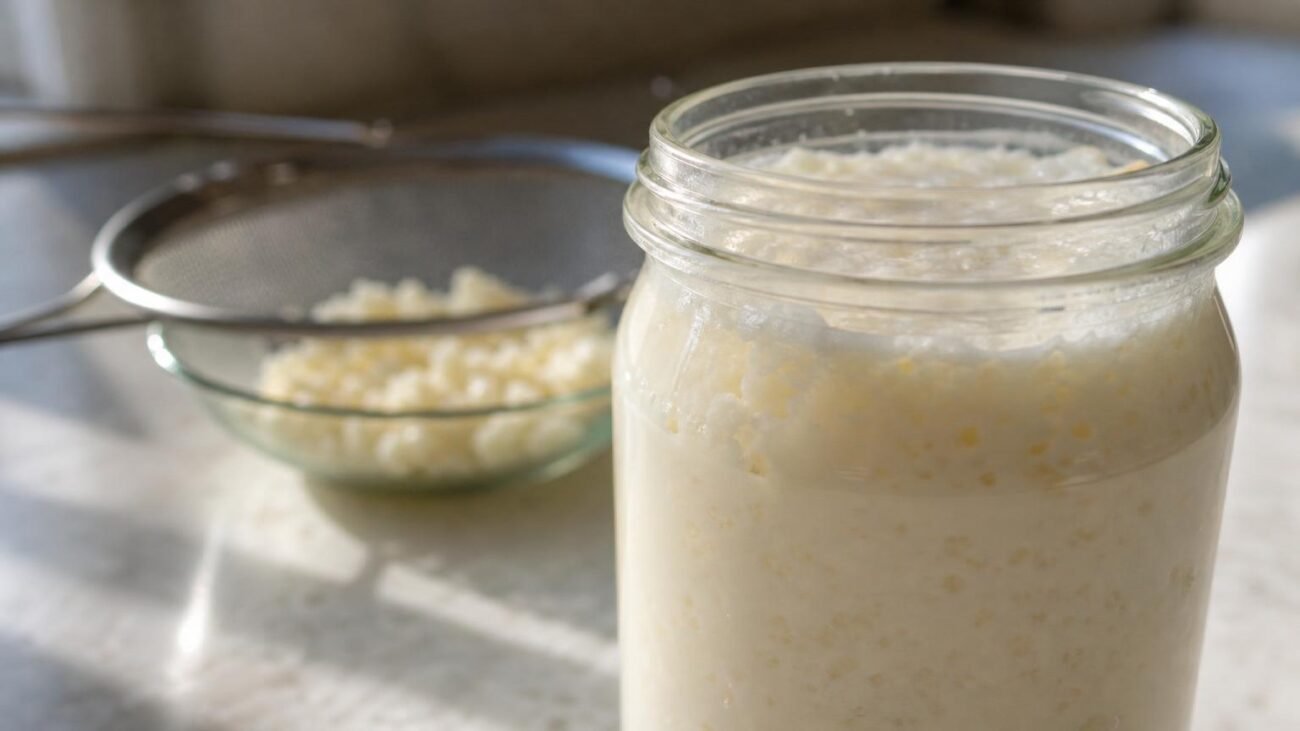
A culture that survives shipping is worth more than a page full of probiotic promises.
I’ve had that box-on-the-counter moment: the listing said live, the reviews sounded glowing, and two days later the grains looked sleepy while the milk just sat there. When I shop for kefir cultures now, I care a lot less about wellness buzzwords and a lot more about whether the starter can handle transit, wake up in an ordinary kitchen, and ferment without a week of guesswork.
Active cultures only matter if they become active at home. That’s why I pay attention to shipping resilience, realistic activation time, and whether the setup matches how I actually make kefir. Powdered starters can be a little easier after travel; heirloom grains can be rewarding, but they often need more patience at first. And milk and water kefir are different routines entirely, so clear instructions matter as much as the culture itself.
- Powdered starters are often simpler for first batches, but some are less suited to endless reculturing.
- Heirloom grains may arrive slower to activate, yet they can keep going once established.
- Water kefir and milk kefir need different liquids, feeding rhythms, and temperature expectations.
If I were narrowing it down fast



I’ve found the biggest buying mistake is assuming starter and grains mean the same thing.
Heirloom grains are living cultures intended for ongoing batches. Listings often say heirloom style, continuous re-culture, or similar. Starter cultures are usually powders or sachets. They’re easier to begin with, but I expect limited re-use, not an open-ended culture.If you want a long-term kitchen project, that distinction usually matters more than a small price difference.
What I mean by active cultures
When I call a kefir culture active, I mean something practical: it can arrive, wake up, and start fermenting a real batch without unusual troubleshooting. For heirloom grains, that usually also means they can keep working batch after batch once they settle in. For powdered starters, I’m looking for reliable fermentation first, even if the re-culture life is shorter.
That’s why I include both grains and starters here. In everyday use, they solve different problems. Heirloom grains make sense when I want ongoing batches; starter packets fit better when I want convenience, simpler storage, or a lower-commitment first try.
Here’s the lens I’m using across the roundup:
- Beverage type: milk kefir and water kefir are not interchangeable.
- Shipping format: fresh, dried, and powdered cultures behave differently in transit.
- Activation time: some are ready quickly; others need a few rounds before tasting right.
- Repeat-batch potential: heirloom grains usually go farther than sachet-style starters.
- Instructions: clear feeding ratios and recovery steps matter more than marketing copy.
- Packaging quality: good sealing, labeling, and temperature-conscious packing can make activation smoother.
-
Match the drink you actually want
Milk kefir and water kefir need different cultures and different care routines. A good pick starts with the beverage, not the brand name.
Look forCulture clearly labeled for milk or water useAvoidAssuming any kefir starter works for both -
Choose a format that travels well
Fresh grains, dried grains, and powder each have tradeoffs in transit and storage. I rate formats partly by how predictably they recover after shipping.
Look forWell-packed cultures with realistic shipping expectationsAvoidVague storage or transit details -
Check how quickly it becomes usable
Some cultures ferment well on the first rounds, while others need patience. Faster isn’t always better, but the listing should set honest expectations.
Look forClear activation timeline and troubleshooting notesAvoidPromises of instant perfect batches -
Think beyond batch one
Some options are built for ongoing reuse, while others are more limited. That difference affects value and day-to-day convenience.
Look forRealistic guidance on re-culturing and maintenanceAvoidUnclear lifespan or re-use claims
Yogourmet for predictable weekly batches
Economical bulk supply for regular kefir makers
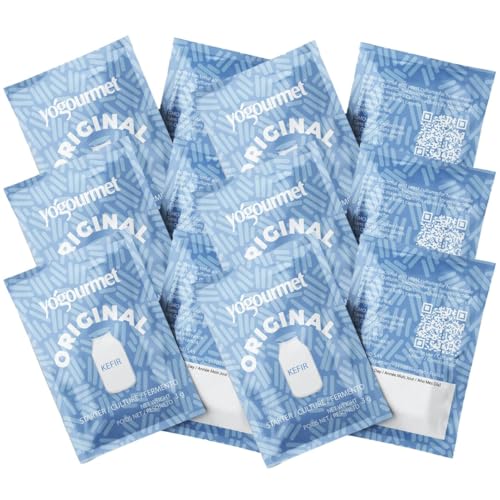
When I want kefir to feel easy, Yogourmet is the kind of starter I look at first. The 12-pack format keeps things simple: each 3 g sachet is portioned for 1 liter, so batch planning is pretty straightforward and repeatable.
To me, this works best for people who care more about a steady routine than the ongoing project of maintaining live heirloom grains. It’s a convenient culture starter with a long shelf life, and that convenience is really the point.
- Pre-measured for consistency
- Low-fuss repeat batches
- Long shelf life
- Not perpetual grains
- Ongoing sachet rebuys
- Less hands-on flexibility
Least-fussy first kefir experiment
Beginner-friendly, versatile for milk or water
I’d point a curious beginner to Cultures for Health Powdered Kefir Starter 4-Pack when the idea of caring for live grains still feels like a lot. It mixes into a simple first batch, works with several beverage types, and asks for a smaller commitment than heirloom grains.
What makes it approachable is the rhythm: open a packet, make a batch, and see if kefir fits your kitchen before signing up for ongoing grain maintenance. Just keep expectations realistic—powdered starters can usually be re-cultured only a handful of times, so the long-term behavior isn’t the same as keeping heirloom grains alive indefinitely.
- Very easy entry point
- Low-maintenance first try
- Flexible with milk or other bases
- Four packets spread out experimentation
- Limited re-culture life
- Doesn’t behave like heirloom grains long term
- Less appealing for perpetual brewing
If I wanted the least intimidating way to try kefir, this is where I’d start. Setup is straightforward and commitment stays small, which lowers the barrier nicely. I’d just go in knowing it’s a starter culture, not a forever grain system.
A true water-kefir kit for dairy-free fermenting
Includes guide, ebook access, and support
If I specifically want water kefir and not milk kefir, this is the kind of listing I double-check for. These are water kefir grains meant for sugary water or fruit-kefir style batches, so they make much more sense for dairy-free fermenters than any milk-based culture.
Because the grains arrive dehydrated, I’d expect some warm-up time before they really get going. That makes this a better fit for someone who can tolerate a couple of activation rounds and wants a reusable water-kefir culture rather than a quick dairy starter.
- Actual water kefir grains
- Good dairy-free fit
- Guide and support included
- Reusable after recovery
- Activation can take patience
- Dehydrated start is slower
- Not for milk kefir
Closest match for real milk kefir grains
04
Limitless heirloom-style grains for daily kefir
If I wanted to get kefir going at home with actual milk grains rather than a powder starter, this is the kind of culture I’d pick first. It’s a living heirloom setup meant for ongoing dairy batches, not a one-and-done packet.
To me, it suits people who want the traditional milk-kefir experience and don’t mind learning the rhythm of feeding, straining, and batch-to-batch adjustments.
- Actual heirloom milk grains
- Reusable for ongoing batches
- Flexible for plain or flavored kefir
- Early batches can vary
- Needs regular milk and attention
- Less predictable than sachets
Quick take For shoppers who really mean active dairy kefir grains, this feels like the clearest match. I’d just go in expecting a short settling-in period before the culture becomes more consistent.
This is probably the most on-target option here if your priority is a real, reusable milk kefir culture. I like it most for people who enjoy the process as much as the drink, because the first few batches may take some patience before they find a steady groove.
Heirloom water-kefir grains for dairy-free batches
Dairy-free sparkling probiotic alternative
I’d look at this one when I want a true water kefir culture, not a milk-kefir substitute. It’s built for sugar-water fermentation, so it fits dairy-free households and anyone after a lighter, slightly sparkling drink. The listing uses broad wellness language, but the more useful takeaway is simple: these grains are for ongoing water-kefir batches, not thick, tangy milk kefir.
- Made for water kefir
- Dairy-free, vegan-friendly
- Heirloom culture for repeat use
- Activation can take patience
- Not the same as milk kefir
- Listing terms may confuse beginners
How I’d sort these options fast
-
If I want classic dairy kefir with reusable grains
I’d lean toward Cultures for Health Milk Kefir Heirloom Grains. It fits the traditional milk-kefir lane and makes the most sense if I’m okay tending a living culture.
-
If I want dairy-free, fizzy water kefir
I’d start with Natural Probio Water Kefir Grains Starter Kit for the hand-holding, or Cultures for Health Water Kefir Heirloom Starter if I specifically want heirloom-style water grains.
-
If I’m brand new and want the easiest first batch
Cultures for Health Powdered Kefir Starter 4-Pack feels like the gentlest on-ramp. I’d use it for a low-pressure trial run before committing to grain care.
-
If I brew often and care more about routine than reuse
Yogourmet Bulk Kefir Starter 12-Pack Sachets is the tidier fit. The pre-portioned sachets suit regular batches without the extra personality of heirloom grains.
-
If I enjoy the culture itself as part of the hobby
Heirloom grains are the more interesting lane. Powdered starters are usually simpler up front, while heirloom options can feel more rewarding once settled.
When I’m undecided, I choose beverage type first and activation effort second. That usually narrows the field faster than comparing brand claims.
A few things that look alarming at first
My grains arrived small or sluggish. Is that a bad sign?
Not always. With heirloom grains, a quiet first batch or two can happen after shipping, especially if they were dehydrated.
How long should activation take before I worry?
Powdered starters usually feel more predictable right away. Heirloom grains often need a short ramp-up, so I pay more attention to gradual improvement than to one imperfect batch.
Why does the first batch look thin or taste odd?
Early batches can be weak, yeasty, or just not very kefir-like yet. That does not automatically mean the culture failed; it can simply mean it is still settling in.
Is a starter the same thing as grains?
No. A starter powder is a set amount of culture for a limited run, while real grains are a living culture you can keep reusing if they stay healthy.
What should I choose before I start comparing brands?
I would sort by format first: milk kefir or water kefir, then heirloom grains or starter powder. Once that is clear, the product choice usually gets much easier.
- Starter powder usually wins on convenience.
- Heirloom grains make more sense for ongoing batches.
- Milk and water kefir are separate setups.
If I wanted the easiest first try, I would start with Cultures for Health Powdered Kefir Starter 4-Pack. For simple, repeatable weekly batches, Yogourmet Bulk Kefir Starter 12-Pack still looks like the tidiest fit.
If I specifically wanted reusable cultures, I would go with Cultures for Health Milk Kefir Heirloom Grains for dairy kefir or Natural Probio Water Kefir Grains Starter Kit for water kefir. Cultures for Health Water Kefir Heirloom Starter also fits a dairy-free setup, but I would pick it only after I was sure I wanted water kefir heirloom grains, not just any kefir starter.

I liked that you separated powdered starters from heirloom grains instead of treating them like the same thing. So many roundup posts blur that and then people wonder why their “grains” stop after a few batches 😅
One question though: why no Fusion Teas milk kefir grains? Those come up a lot when people search for active cultures, and I was expecting to see them in the comparison.
Mostly a scope choice. I kept this list tighter around products with clearer positioning on activation style, reuse expectations, and milk-versus-water fit, because that seemed more useful for people trying to avoid a bad first purchase.
Fusion Teas is definitely one people mention, but I didn’t include every commonly searched option. If I expand the roundup later, that brand is a reasonable candidate to add.
I was wondering the same. Fusion Teas worked fine for me, but the first week was kind of chaotic, so the article’s point about activation patience is very real lol.
For someone on a budget, which one would you actually buy? The Yogourmet sachets look easy, but 12 packs of anything can feel wasteful if I’m just testing whether I even like homemade kefir.
I appreciated the “least-fussy first experiment” section, but I still wasn’t sure if your practical pick under, say, $20 would be the powdered 4-pack or just going straight to heirloom grains.
If your goal is a low-stress trial run, I’d lean powdered 4-pack first. It’s simpler, more predictable for getting initial batches going, and the commitment is lower if you end up deciding kefir just isn’t your thing.
If your goal is long-term value and you already know you want ongoing batches, heirloom grains usually make more sense despite the fussier start. So the cheaper option depends a bit on whether you mean cheapest upfront or best reuse over time.
Yeah this is the key distinction. I went “cheap” with heirloom once and then spent a week wondering if I had killed them, so emotionally it was not the budget option 😂
Maybe this is me being overly picky, but I wanted a stronger callout that “active cultures” doesn’t always mean “reusable forever.” You do explain it, to be fair, especially in the Yogourmet and powdered starter sections.
I just think that distinction is where most beginners get burned. They see active, live, probiotic, heirloom, starter… all tossed together and assume it’s all the same bucket.
Also curious why no Lifeway or similar retail starter mention, even as a “not included because…” note.
Small gripe: I wish you had included at least one option that ships already hydrated instead of dehydrated. The section about shipping resilience was useful, but some of us are specifically trying to avoid the activation lag because we’ve had bad luck before.
Not saying the picks are wrong, just felt like that lane was missing.
Thank you for clearly saying water kefir and milk kefir are not interchangeable. That sounds obvious until you read marketplace listings written like they were assembled by a confused robot.
I was a little surprised the Natural Probio kit made the cut over more bare-bones water kefir grain listings though. Was that mainly because it includes instructions/support, or because you thought the grains themselves were more reliable?