
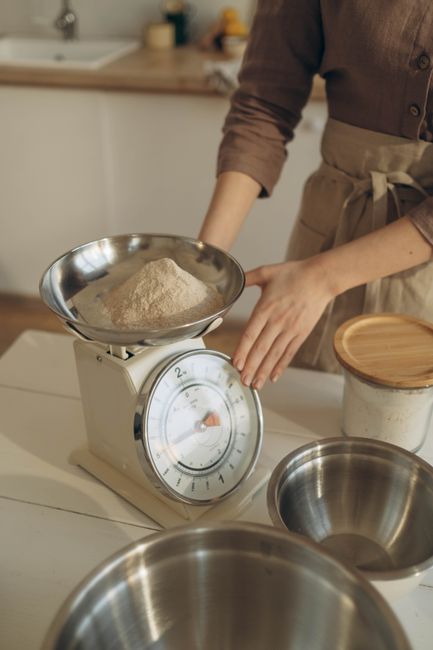
When my “same as last time” dough turns weird, the measuring cups are usually the first suspects.
One weekend my usual loaf mixed up silky; the next, using the same formula, it felt like paste. That swing can make me feel careless, but sourdough is unusually sensitive to tiny shifts.
A cup of flour is never exactly the same cup twice. How tightly it’s packed, how humid the kitchen is, even which scoop I use can nudge the dough wetter or drier before fermentation even starts. That isn’t you failing the recipe. It’s volume measuring drifting just enough to show up in the bowl.
- A “cup” of flour can vary by roughly 20–40 grams depending on how it’s filled.
Five easy sourdough matches


What matters in a sourdough scale
Why tiny errors matter here
In soups or weeknight baking, being a little off often disappears into the final dish. Sourdough is less forgiving because water, flour, and starter are all pulling on fermentation at the same time. A 10-gram miss can slightly change hydration, dough feel, rise speed, and even how easy the loaf is to shape.
That’s why I care less about extra modes and more about a few practical things: fast readings, a reliable tare button, readable numbers, and enough precision for small ingredients. For most dough mixing, 1-gram resolution is usually fine. Where finer accuracy helps is starter work and add-ins.
If I’m feeding a tiny starter or measuring salt, malt, or spices, tablespoons can get awkward fast. Weighing 5g starter, 10g water, and 10g flour is cleaner than trying to eyeball fractions of spoons, and it’s much easier to repeat later.
-
Resolution that fits the job
Bread dough usually works well with 1g steps, but starter micro-feedings and small add-ins benefit from 0.1g precision.
Look for1g for dough, 0.1g if you often measure tiny amountsAvoidA single coarse scale if you routinely feed very small starters -
Responsive tare
You’ll add flour, water, starter, and salt in stages. A laggy tare button slows everything down.
Look forQuick zeroing between additionsAvoidDelayed resets that make you overshoot -
Capacity and bowl space
A scale should handle a mixing bowl plus full dough ingredients without maxing out.
Look forEnough capacity for bowl + doughAvoidLow limits that force ingredient splitting -
Easy-to-clean surface
Flour dust and sticky starter get everywhere. A flat platform is simpler to wipe down.
Look forSmooth stainless or sealed topAvoidFussy seams around the platform
If your starter lives on small feeds, a dual-platform or 0.1g scale can help more than a bigger max capacity. It also makes tiny doses of salt, seeds, or sweeteners easier to repeat.
A roomy everyday scale for most sourdough bakers
01
Best for bulk sourdough and large batches
The Greater Goods 10kg Stainless Steel Baking Scale feels like the easiest single-scale pick for a typical home sourdough setup. I like it for bakers who want one tool that can handle starter jars, flour bags, mixing bowls, and larger dough batches without turning each weigh-in into a tiny precision exercise.
It lands in a practical middle ground: more accommodating than a small coffee-style scale, but still simple enough for everyday bread work.
- High 10kg capacity for bowls and batch mixing
- Simple 1g readout suits most bread formulas
- Large display and stainless platform feel easy to live with
- 1g steps can feel coarse for tiny additions
- Less ideal for very small starter feeds
- Not meant for ultra-fine precision work
For most home bakers, this is the safest all-around choice in the group. It’s roomy, straightforward, and well matched to normal sourdough workflows.
I’d only hesitate if a lot of your baking depends on measuring very small amounts with extra finesse, where a 0.1g companion scale can still feel more exact.
ApeWeghr dual-platform scale for big bowls and tiny doses
Dual-platform precision for tiny and large weighs
If I regularly bounced between weighing a full dough tub and measuring tiny amounts of salt, yeast, or inclusions, this is the kind of setup that would make sense. The ApeWeghr gives you a large platform for heavier mixes and a smaller precision side for fiddly, low-weight ingredients, so you spend less time guessing where one scale stops being useful.
It feels like a fit for bakers who tweak formulas often and want one station that can handle both bulk dough work and detail work. The tradeoff is simple: you get more flexibility, but also a busier tool to learn and store.
- Handles large dough batches and small add-ins on one unit
- 33 lb top end leaves plenty of room for heavy bowls
- Tare and totalizer features can streamline multi-step measuring
- Helpful for frequent formula adjustments
- Takes more counter and storage space than a basic scale
- Two platforms and extra functions add a learning curve
- More going on visually than a simple everyday model
For a baker who shifts between full dough mixes and tiny ingredient doses, this dual-platform design can feel genuinely practical. I think it is most appealing if you often fine-tune recipes; if you mostly weigh flour and water, a simpler single-platform scale may feel easier to live with.
A larger precision scale for salt, starter, and small formula tweaks
Rechargeable with percent and hold functions
When my annoyance is 0.6g of salt, a tiny malt addition, or a very small starter feed—not the main flour load—this BOMATA makes more sense than a basic 1g scale. The 0.1g readout can be genuinely helpful for micro-feeds, small levain builds, and test batches where a single gram changes the mix more than I expected.
What makes it more usable than many precision-first models is the bigger platform and 5kg capacity. Even so, I’d still think of it as a detail-focused kitchen scale. For a heavy bowl plus full dough ingredients, I usually find a roomy 1g scale simpler and less fussy.
- 0.1g helps tiny additions
- Bigger platform than pocket models
- 5kg capacity is fairly practical
- Rechargeable design feels convenient
- Less relaxed for full bowls
- Tenths matter less in bulk
- Single platform means compromise
- Can feel fussier day to day
A low-cost first scale for leaving cups behind
Huge review count, reliable everyday baking scale
The Amazon Basics Digital Kitchen Scale feels like the sensible starting point when I’m not sure a weighing habit will stick. At around $15, it covers the basics that matter for bread: grams, a straightforward tare button, and enough capacity for a mixing bowl and dough ingredients.
What stands out here isn’t fancy precision or extra modes. It’s that this is a simple, widely used scale that can solve the everyday flour-measuring mess without asking you to pay for features you may never use.
- Usually very affordable
- Reads in grams
- Tare function keeps workflow simple
- 11-pound capacity suits most home baking
- Huge review history can feel reassuring
- Not aimed at ultra-fine 0.1g measurements
- Basic build and feature set
- May feel small with very large bowls
A waterproof scale for messy bake days
Waterproof, rechargeable, high-capacity option
If I regularly baked with wet hands, a floury counter, and quick wipe-downs between mixes, this is the kind of scale I’d notice. The Etekcity leans into kitchen mess rather than trying to avoid it.
It makes the most sense for bakers who want one everyday scale with a little extra resilience, plus the convenience of USB-C charging instead of keeping spare batteries around.
- IPX6 helps cleanup
- USB-C feels convenient
- 22 lb suits big bowls
- 1g only, not micro-precise
- Rechargeable adds little for some
- Waterproof may be overkill
For a sourdough routine that gets sticky and dusty, this model can make daily use feel lower-maintenance. Waterproofing is meaningful when you wipe often or weigh near the sink; if you mostly bake in a calm, dry setup, a simpler battery scale may feel just as practical.
How I’d match a scale to my baking habits
I mix large doughs in heavy bowls. What matters most?
I’d look at capacity first. If I regularly build bigger batches, the Greater Goods or Etekcity style of scale feels easier than a precision model with less room.
I feed starter often, but only in small amounts. Do I need 0.1g?
It can help if I’m doing tiny feeds, salt doses, or micro adjustments. The BOMATA or the small side of the ApeWeghr makes those jobs feel less guessy than a standard 1g scale.
Is one scale enough for most home bakers?
Usually, yes. If I mostly weigh flour, water, and starter in normal amounts, a simple 1g scale like Greater Goods or Amazon Basics covers everyday baking well.
When does a two-scale setup make sense?
I’d consider it if I switch between big dough bowls and very small additions a lot. The ApeWeghr can simplify that in one body, while two separate scales can be a tidier long-term setup for frequent bakers.
I bake often and make a mess. Which feature matters then?
Cleanup starts mattering more than I expect. A washable, rechargeable option like the Etekcity can feel worth it when flour, starter, and splashes are part of my routine.
The little hassles that decide daily use
On paper, a lot of kitchen scales look similar. What decides whether I keep one on the counter is usually the boring stuff that shows up halfway through mixing.
- Auto-off timing: if a scale sleeps while I’m scraping sticky starter into a bowl, I’m suddenly re-taring and trying to remember where I was.
- Blocked display: wide bowls can hide the numbers, which gets old quickly on sourdough days.
- Buttons and cleanup: sleek touch controls can look nice, but floury fingers don’t always register well. Raised buttons are often easier, though crumbs can collect around them.
- Stability and charging: a slightly wobbly platform makes tiny salt additions more annoying than they should be, and a finicky charging setup can make a rechargeable model feel less convenient in real life.
For me, the scales that stand out in this roundup are the ones that feel calm in use, not just accurate on a spec sheet.
If you bake with big mixing bowls, display placement and button spacing can matter more than an extra pound of capacity.
If I were narrowing this down fast, I’d start with the Greater Goods 10kg Stainless Steel Baking Scale for most sourdough baking, the ApeWeghr Dual-Platform if I regularly switch between big dough bowls and tiny salt or starter feeds, and the Etekcity 22lb Waterproof if my counter gets messy often. The Amazon Basics model still makes sense as a simple first step, while the BOMATA is a nice fit for detail-minded tweaking.
My low-pressure move would be simple: pick the one that fits your habits best and bake by weight for one week. The payoff usually isn’t instant perfection. It’s steadier dough, clearer notes, and much easier troubleshooting when a loaf goes sideways.

Can you do a stricter budget call here? If someone has like $20 max, is the Amazon Basics one still your pick, or would you actually tell them to buy used / wait and get something better?
I’m asking because I’m teaching my sister to bake and she keeps insisting cups are “close enough.” They are not close enough lol.
At a hard $20 ceiling, yes, I’d still point most people to the Amazon Basics-style option over continuing with cups. For learning sourdough, consistent gram-based weighing matters more than chasing premium features right away.
If she later gets into tiny starter feeds or more formula tweaking, that’s when a second precision scale can make sense.
100% this. Even a cheap gram scale is a huge upgrade from “one cup flour” roulette.
Mildly surprised OXO didn’t get a mention. Their kitchen stuff is usually pretty user-friendly, and your section about low-friction daily use sounded exactly like the kind of thing they’re good at.