
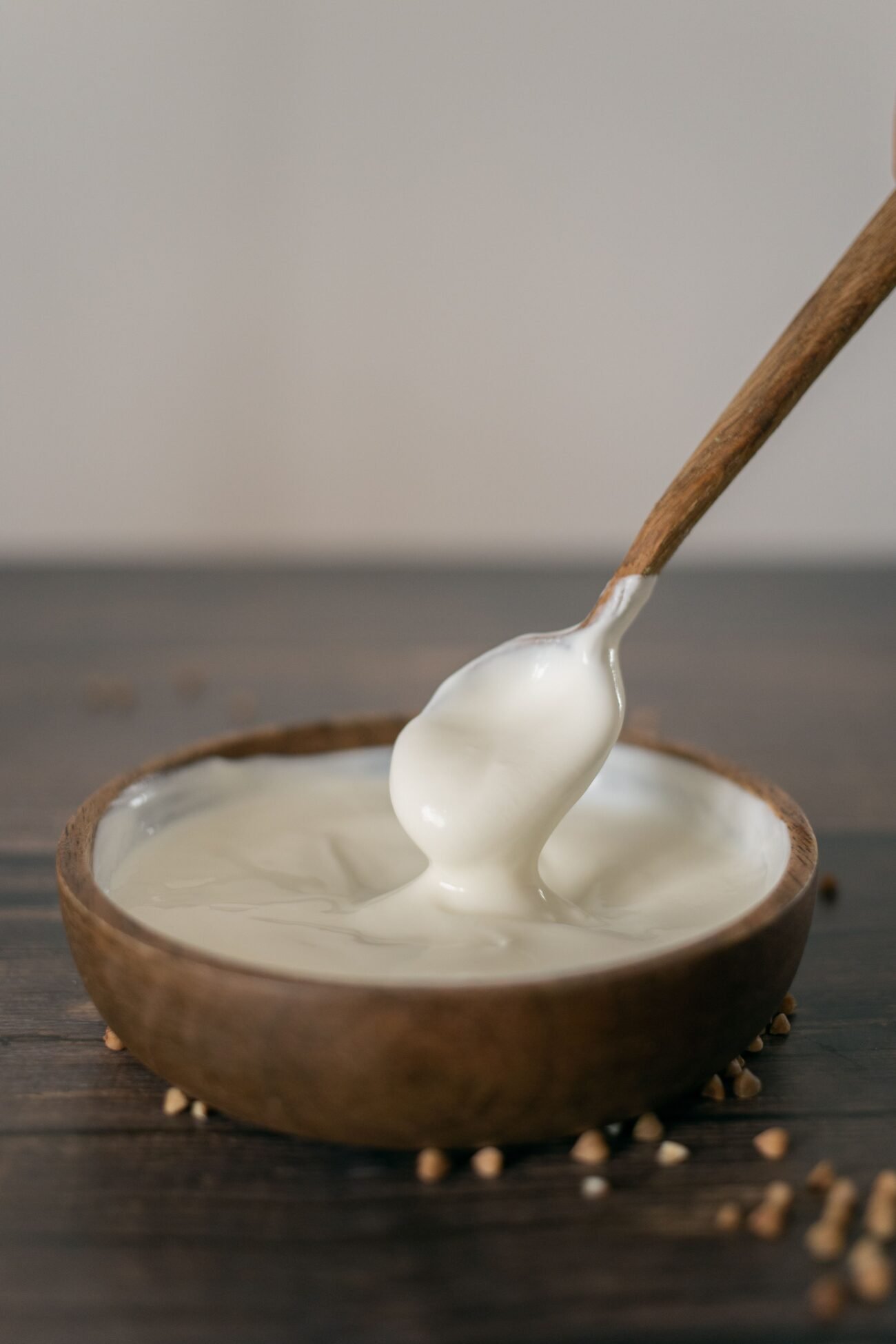
A wobbly batch usually points to hidden variables, not some mysterious failure.
Have you ever lifted the lid and found cream that coats the spoon but still slides like heavy sauce? I’ve had that in-between batch too, and it’s oddly frustrating because it looks close enough to trust. Not thin, not set is where homemade sour cream can start feeling fussy.
What helped me was seeing it less as bad luck and more as a few small variables colliding: room warmth, how active the starter was, how long the jar rested, even how full it was. Once I started noticing those details, the texture felt much less mysterious — and a lot more repeatable.
What actually makes sour cream thicken
Thickness can look mysterious until I break it into four small levers. When a batch turns out well for me, it’s usually because those levers lined up—not because I got lucky. If you’ve read about cultured cream and other dairy ferments, the pattern is pretty similar.
- Fat level: higher-fat cream usually gives a richer base and a fuller body.
- Live cultures: active starter is what acidifies the cream and helps it set.
- Gentle warmth: warm, not hot, gives the cultures a steady place to work.
- Time: texture builds slowly as acidity rises and the cream rests.
I think of it a bit like yogurt, just looser and creamier. If the cream stays too cool, the culture can drag along; if it gets too warm, the texture may turn uneven. When fat, live cultures, mild warmth, and enough time line up, the result is much more predictably spoonable.
Pick a baseline that behaves
When I want sour cream to thicken consistently, I stop changing multiple ingredients at once. The simplest starting point is higher-fat cream plus live-culture buttermilk. That combination gives the cultures something rich to work in, so the final texture usually lands closer to thick and spoonable.
My default ratio is:
- 2 cups heavy cream
- 1/4 cup cultured buttermilk with live active cultures
If I can choose, I use heavy cream rather than light cream or half-and-half. More fat does not guarantee a perfect set, but it tends to make the result fuller and steadier. For the buttermilk, the label matters more than the brand name: I look for live active cultures.
Ultra-pasteurized cream can still work, but I treat it as a variable. Some cartons culture nicely, while others seem slower or looser, even when I keep everything else the same. If a batch feels unpredictable, switching to regular pasteurized heavy cream can help me rule out one moving part.
Set up for a steady set
Before I mix anything, I try to make the environment boring. Sour cream thickens more predictably when the jar, cream, and resting spot all start from a steady place.
A simple setup helps:
- Use a clean glass jar with some headroom; I leave about 1 inch so the culture can work evenly.
- Let very cold ingredients sit out for 10–15 minutes so the starting temperature is less erratic.
- Pick one resting spot at a gently warm room temperature, away from sun and appliances.
The most common texture problems come from environmental swings. A windowsill can heat up fast, then cool down just as quickly. An oven with the light on can also run warmer than it seems, which can slow thickening or make the set uneven.
If the jar keeps warming and cooling, the texture often turns less consistent.
Wait it out
-
Cover
Room-temp rest.
-
12 hours
Loose is normal.
-
18–24 hours
Stop at a soft set.
-
Hands off
No stirring or shaking.
Culturing pace shown
Our Tribe of Many makes the timing feel less mysterious.
How I tell it’s ready
-
Look for a gentle set
I look for cream that has thickened from pourable to spoonable. The surface usually looks smooth and slightly domed rather than liquid-flat.
-
Tilt the jar
A ready batch should move slowly in one mass, with a soft wobble. If it sloshes like heavy cream, it likely needs more time.
-
Notice the aroma
It should smell lightly tangy and fresh. A cultured smell matters more than an exact hour count.
-
Check after chilling
If it seems a little loose while warm, I refrigerate it before judging. A few hours in the fridge can make it noticeably firmer.
A finished batch can still look softer than expected before it’s cold. I treat chilling as part of the thickening process, not just storage.
When the texture misses
Most sour cream problems are fixable, or at least explainable. When a batch keeps landing in the same awkward middle ground, I usually look at the starter first; starter cultures that often give thicker batches can behave quite differently from one carton to the next.
- Still thin after a full rest: This usually points to weak culture, a cool resting spot, or not quite enough time. Now: chill it and use it as a drizzle or base for dips. Next time: start with very fresh cultured buttermilk, keep the jar in a steadier warm spot, and give it the full window before judging.
- Set on top, loose underneath: That often happens when the jar was jostled, overfilled, or the temperature swung around. Now: stir gently after chilling for a smoother texture. Next time: leave more headroom and let it rest somewhere you will not need to move it.
- Grainy or slightly curdled: I usually see this when the batch got too warm or fermented a bit too long. Now: whisk lightly after chilling; it may not become perfectly silky, but it can still work in baking or dressings. Next time: choose a milder spot and start checking earlier.
- Too thick and extra tangy: That is usually just an overachiever. Now: stir in a spoonful of fresh cream to soften the body. Next time: stop the ferment sooner and chill as soon as it reaches a spoonable set.
Store it well and remember the pattern
Once mine is set, I cover the jar and chill it. The cold helps it firm up a bit more, and with a clean spoon each time, I often get about 1 to 2 weeks of good texture in the fridge.
I usually pass on a batch if I notice:
- pink, blue, or fuzzy spots
- a harsh or rotten smell, not just tang
- slimy texture, unusual bubbling, or separation that still seems wrong after a stir
The simple formula I remember is rich cream + live starter + gentle warmth + enough time + a cold finish. Once that clicks, it’s easy to branch out into other cultured cream projects.
- Cold finish Chilling after culturing helps the set feel thicker.
- Clean handling Clean utensils can help a batch stay pleasant longer.
- Skip signs Odd color, slime, or off smells usually mean it’s done.
Homemade sour cream usually keeps best when it stays cold and is handled with clean utensils. I use the shorthand cream, culture, warm rest, chill when I want a batch I can repeat without much second-guessing.

Good article, but I still think “stable temperature” is the hardest part in a normal house. Not everyone has a magic draft-free, not-too-warm, not-too-cold corner sitting around.
That said, the clean jar + headroom tip helped me more than expected. My last batch finally set with that slow movement you described after about 22 hours in the pantry.
I used the baseline ratio you gave — 2 cups heavy cream and 1/4 cup cultured buttermilk — and the flavor was great, but the texture only got to a pourable yogurt stage, not really spoonable.
My kitchen was probably around 67F at night, maybe a little cooler. Does that usually just mean I needed more time, or is that too cool for a reliable set? I chilled it anyway and it firmed up some, but still not what I was aiming for.
67F can slow things down quite a bit, so yes, more time is the first thing I’d suspect. If the flavor was developing and it thickened further after chilling, the culture was likely working — just more slowly than in a slightly warmer resting spot.
Next time, try keeping it in a steadier mild-warm area and let it go the full 18–24 hours before judging it. As long as it still smells clean and pleasantly tangy, a slower set is usually a temperature issue rather than a failed batch.
I had almost the same result in a cool house. Mine looked meh at 16 hours and then finally got there around 24. So annoying, but not ruined.
Step-wise this mostly worked, but I think my problem is the cream itself. The only heavy cream I could get was ultra-pasteurized, and like you said, it felt less predictable.
First batch thickened beautifully. Second batch with the same brand stayed in that awkward in-between texture foreverrr. Same jar, same counter, same buttermilk brand. That’s the part that drives me nuts with homemade stuff lol.
That kind of inconsistency can definitely happen with ultra-pasteurized cream, even when everything else seems identical. It’s one of the more frustrating variables because the process looks the same from your side, but the cream can behave differently batch to batch.
If regular pasteurized cream is available, it’s worth testing once just to compare. If not, the best workaround is being extra steady with temperature and giving the batch the full resting window before deciding it’s off.
Yep, same here. I thought I was losing my mind because one carton set great and the next one from the same store stayed loose. Switched brands and it got way more consistent.
Mine went past mild tang and into “whoa okay that’s enough” territory. Texture was thick, almost too thick, but the flavor was sharper than store-bought and the surface looked a little uneven because I moved the jar around a couple times.
Is that basically overfermenting, or can moving the jar make it seem worse than it is? No mold, no slime, smelled sour but not rotten. I ended up using it in biscuits so it didn’t go to waste.
That sounds much more like overfermenting than spoilage, especially since you had a thick set, no slime, and no off or rotten smell. Moving the jar can disturb the surface and make it look rough or broken, but it usually doesn’t create that sharper tang by itself.
Using it in biscuits was a smart save. For a milder result next time, check it earlier in the 18–24 hour window and chill it as soon as it reaches that spoonable stage you want.
I’ve done this too. The “just one more hour” gamble turns into super tangy real fast lol. Great for baking though.
This actually fixed my “randomly runny” problem. I was checking at 10–12 hours before and assuming I messed it up, but waiting closer to 20 hours without stirring made a huge difference.
Also the note about jar headroom was weirdly helpful? I had been filling mine almost to the top. This batch turned out thick enough to sit on a baked potato without sliding off, so I’m calling that a win 😄
Appreciate that you said looseness at 12 hours is normal. So many recipes act like if it’s not perfect by breakfast you’ve somehow failed as a person 😂
The “don’t stir it while waiting” reminder was the part I needed most.