
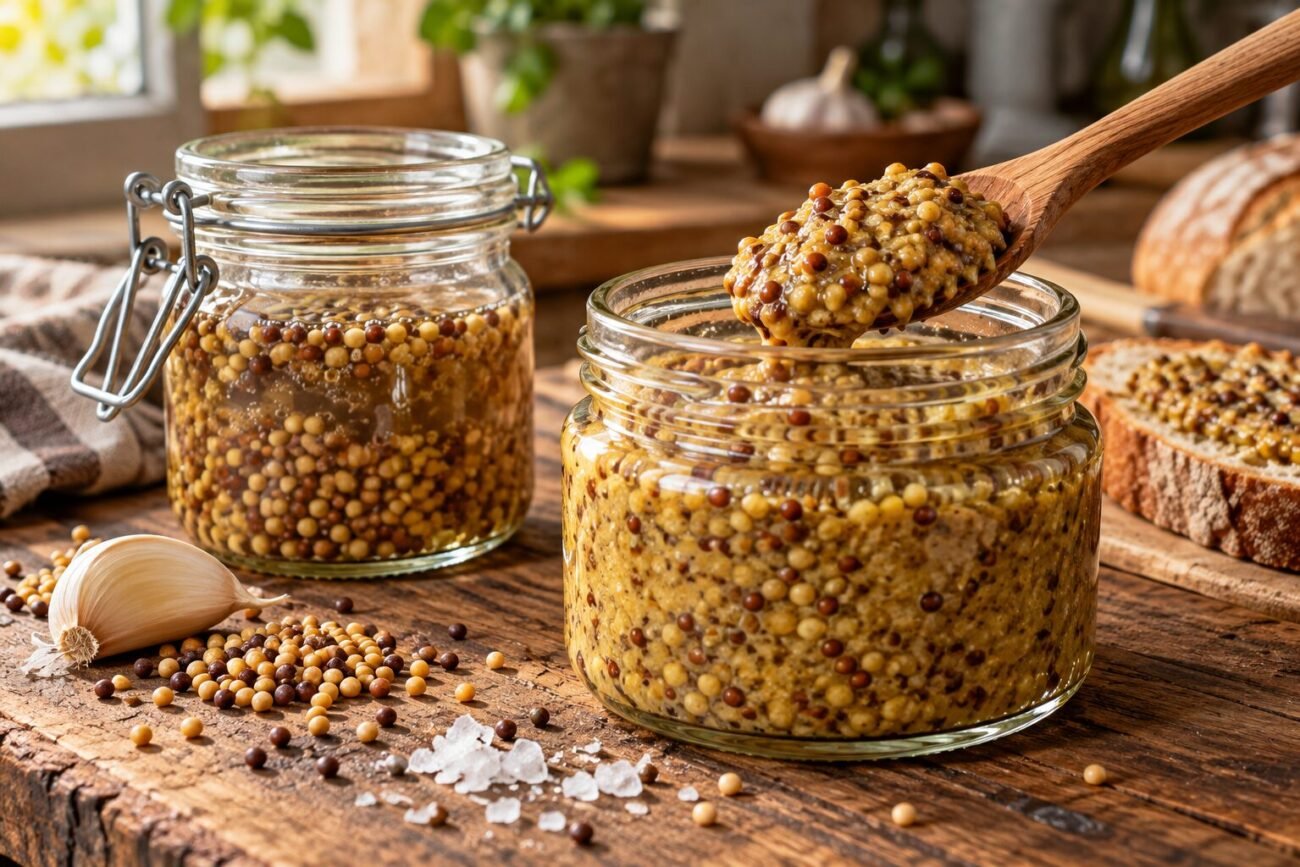
That aggressive nose-tingle is usually a clue, not a failure.
Ever mixed up a batch, waited a day, and then wondered why it tasted more like wasabi than mustard? I’ve done that too. Freshly crushed mustard seeds can get very punchy, especially early on, and the first taste can feel harsher than the mellow, rounded mustard you expected.
The good news is that sting usually comes from choices you can adjust: how finely the seeds were broken, how warm the jar sat, how long it fermented, and when acid showed up in the mix. It’s rarely just a mystery bad batch. Once I started treating sharpness as a signal instead of a disaster, my results got much easier to steer.
I try to name the sharp edge first
Heat
The nose-prickle and quick back-of-throat burn from mustard enzymes. Fermentation can soften the first hit, but some bite usually stays.
Bitterness
A lingering, drying edge on the tongue, often tied to husks, over-grinding, or older seed. It is different from clean, lively heat.
Sulfur
An eggy or cooked-cabbage smell that can show up early, especially when things run warm. A little may fade; a lot tastes muddy rather than spicy.
Thin acidity
A sharp, watery sourness with not much depth behind it. Good fermentation often makes that tang feel rounder and more settled.
When my mustard ferments well, the rough corners relax, but the character does not disappear. I still expect a pleasant nip after the tang comes through. The goal is less raw aggression, not a flat, fully tamed jar.
I start with a mild seed mix and keep the rest simple
-
Make yellow seed the base
Yellow mustard seed usually gives me a rounder, less aggressive heat. It still tastes like mustard, just with fewer sharp corners.
Look forMostly yellow seeds, with brown or black as a smaller shareAvoidStarting with all brown or black seeds if harshness is already a concern -
Use darker seeds as an accent
Brown and black seeds bring depth and punch, but they can dominate fast. I treat them like seasoning, not the whole foundation.
Look forA small portion for complexity and biteAvoidLarge amounts that build heat and bitterness from day one -
Choose good water
Clean-tasting water helps keep flavors clear. Very chlorinated water can make a batch taste muddier or a little rough.
Look forFiltered or otherwise pleasant-tasting waterAvoidStrongly chlorinated tap water if it smells sharp -
Keep the support team short
Salt is enough to get started, and extra sweeteners or spices can wait. Fewer variables make it easier to taste what the seeds are doing.
Look forSeeds, water, salt, then adjust laterAvoidLots of add-ins before you know the base flavor
If I want more zip, I’d rather increase brown seed, grind finer, or adjust acid after fermentation. It’s usually easier to build sharpness than to soften a harsh batch.
Build the mash
-
Crack seeds lightly
-
Soak generously
-
Salt around 2%
-
Keep everything submerged
Clean jars and steady warmth matter more than lab-style sterility.
Fermented mustard method
Preserving Today shows a simple batch and how fermentation softens mustard’s edge.
I watch the jar more than the calendar
A ferment can move quickly in a warm kitchen and crawl in a cool one, so I don’t treat day counts as a promise. I look for a pattern of changes instead: a little activity, a calmer smell, and seeds that no longer feel stubbornly raw.
Early on, I often notice a few signs that things are waking up:
- tiny bubbles clinging to the sides or rising after I stir
- a jar that feels slightly warmer than the room
- an aroma that shifts from sharp and dry to tangy, savory, and less sulfurous
- seeds that start to soften instead of crunching hard
The most useful tool, at least for me, is a small daily taste. I want the mustard to keep its bite, but not in that nose-stinging, green way it has on day one. When it’s still too raw, the heat feels separate from everything else. As fermentation settles in, the heat starts to feel woven into the salt and acidity instead of sitting on top of them.
A simple way to check progress:
- Stir cleanly once a day.
- Smell first, then taste a tiny bit.
- Notice whether the seeds are softening and the sharpness is rounding off.
If it tastes lively but not harsh, that’s usually my cue to blend or refrigerate.
I finish in small moves, then let the jar rest
-
Test a spoonful before changing the whole jar
I like to pull out a few spoonfuls and try adjustments there first. It keeps me from making one big correction that I can’t easily walk back.
-
Set the texture first
If the mustard feels stiff or pasty, I loosen it with a little reserved brine or water. If it seems thin, a small spoonful of freshly ground mustard or a brief blend can give it more body.
-
Add acid in tiny increments
A little vinegar or cider can brighten the flavor, but too much can make the edge feel sharper. I stir in a small splash, taste, and stop as soon as it tastes lively rather than thin.
-
Use sweetness as a background note
If the finish feels pointy, a small amount of honey, sugar, or maple can round it out. I aim for balance, not a noticeably sweet mustard.
-
Give it a short rest after adjusting
Freshly blended mustard can taste louder than it will a day later. I usually let it sit in the fridge for 12 to 48 hours, then taste again before changing anything else.
Right after blending, mustard often tastes hotter and more scattered. A short rest can help the texture settle and the sharp notes knit together.
When I can rescue a batch—and when I let it go
It tastes too sharp. Is that fixable?
Usually, yes. If the smell is clean, I give it more time, then soften the edge with a small splash of vinegar, a little sweetener, or a longer rest after blending.
What if the flavor is bitter?
Bitterness often comes from over-processing, too much brown seed, or extra-bright add-ins. I usually blend in a milder mustard, a touch more acid, or a little sweetness rather than trying to cover it up with lots of spice.
Why does it smell a little sulfurous?
A brief cabbage-or-egg note can show up early and often fades as fermentation settles. If the aroma stays mild and the surface looks normal, I let it vent, keep it submerged, and check again in a day or two.
Can I fix texture problems?
Runny mustard can tighten after resting, or with a small spoonful of soaked seeds blended in. If it feels gritty, more hydration time and a gentler blend often help more than pureeing it aggressively.
Discard the batch if you see fuzzy mold, pink/orange discoloration, or smell rotten, putrid, or truly foul odors.
A little separation, bubbling, or tang is normal; obvious contamination is not worth gambling on.
Store it cold, then judge it on real food
Once the flavor is close, I spoon the mustard into a clean jar and refrigerate it. A few cold days often reveal more than one last warm taste: the bite settles, the texture tightens, and any thin acidity becomes easier to spot.
Taste it with food
I don’t decide from a spoon alone. I try it with:
- sausage or roast chicken
- a ham or cheddar sandwich
- potatoes, eggs, or vinaigrette
Food shows whether it is truly mellow and useful. A mustard that seems soft alone may vanish on a sandwich, while one that feels sharp in the jar can taste balanced next to rich food.
Keep simple notes
I write down the seed mix, warm ferment time, fridge time, and one clear reaction. Even short notes help:
- better after 3 cold days
- still bitter on potatoes
- sweetness softened bitterness, not heat
- Cold storage can soften the overall impression.
- Pairings reveal whether the flavor holds up or disappears.
Fridge time is part of the evaluation, not just storage. I learn the most by tasting mustard with actual food and keeping a few notes for the next batch.

The rescue section was honestly my favorite because most posts pretend every batch is salvageable if you just “trust the process.” Nope 😂
I had one that went weirdly bright and smelled plain bad, and reading your discard line made me feel less guilty about tossing it. On the happier side, I rescued a too-bitter batch last month by blending smoother, adding a touch more acid, then letting it sit cold for a few days. Not perfect, but very usable with sausages.
This worked for me. Light cracking instead of grinding it into oblivion made a bigger difference than I expected.