
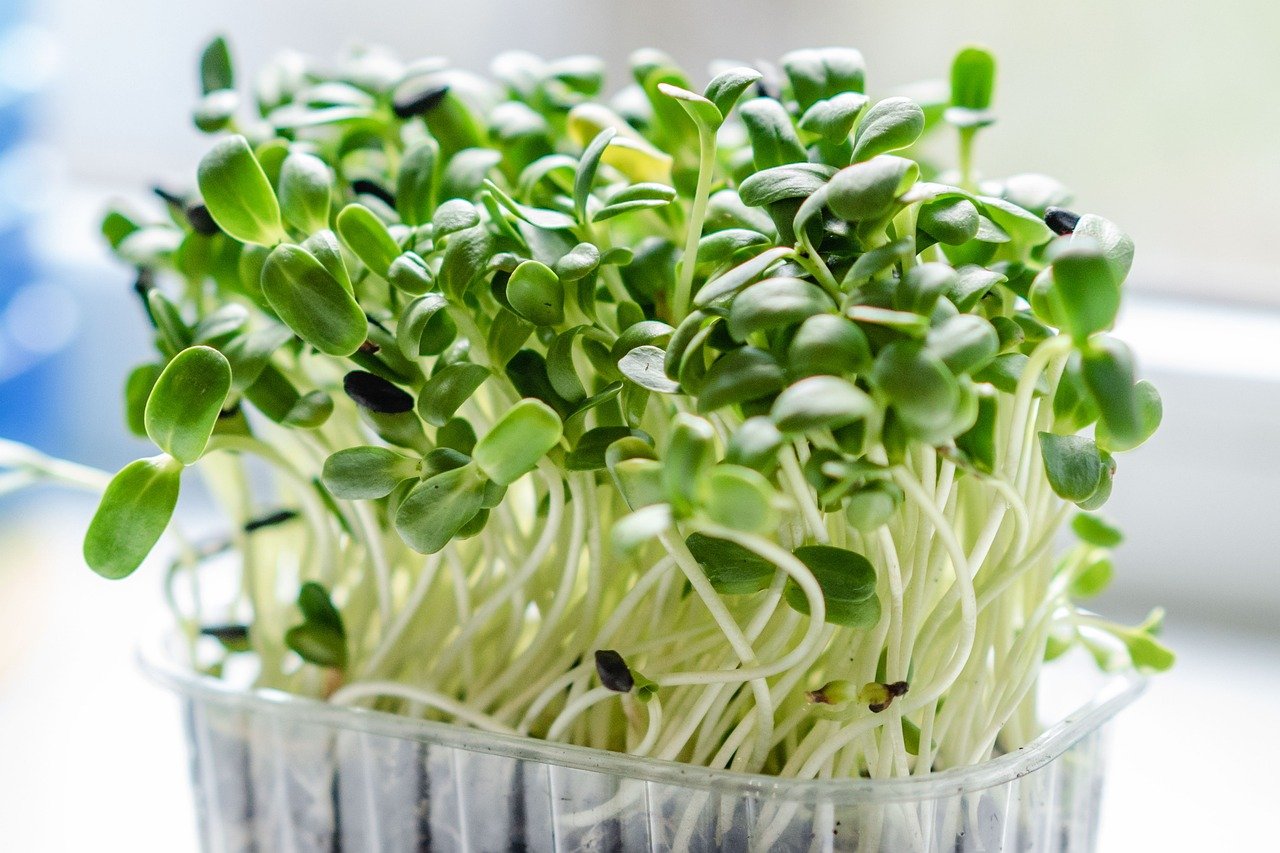
A slick green patch looks dramatic, but it usually means the tray is wet and bright—not doomed.
You lift the blackout cover, see a thin green film on the mat or soil, and your stomach drops. I’ve had that moment too. In many trays, algae is just a common side effect of extra moisture plus light, especially early on when watering runs a little heavy.
What calmed me down was learning that it isn’t automatically mold, and it isn’t the same as the soft white root fuzz that often clings to healthy seedlings. Algae tends to look flat, green, and slick rather than fluffy. So yes, it’s a clue that conditions are staying damp, but it usually doesn’t mean the whole tray is ruined.
What I check before I call it algae
If it hugs the roots in a neat halo, it may be root hairs.
Root hairs stay close to the root line and look even. Mold tends to bridge gaps, climb stems, or grab seed hulls in messy patches.
Algae is usually a flat green film, not airy growth.
When I see algae, it looks slick or dusty on the surface. Mold is more cottony or web-like and often shows white first.
It can just be mineral residue from water.
Residue dries chalky, thin, and crusty, often near edges or after evaporation. It does not look soft, fuzzy, or alive.
They may be soggy seed hulls or ungerminated seed mush.
Seed mush stays stuck around the original seed, looks beige or brown, and breaks apart easily. Algae spreads more like a film across the medium.
It’s usually a conditions clue
When I spot algae, I usually read it as a growing-conditions clue, not a sign that my trays are filthy or that the crop is ruined. It tends to show up when the surface stays wet for too long and gets enough light to turn that moisture into a thin green film.
A few tray patterns seem to make it more likely:
- Constant surface moisture: frequent misting or weak drainage can leave the top layer shiny all day.
- Light hitting the medium: once that damp surface is exposed, algae has an easy place to start.
- Dense sowing: crowded stems slow evaporation and hold humidity near the tray.
- Stale air: low airflow lets that damp layer linger instead of drying evenly.
For me, algae is less a verdict and more a signal. It usually means the tray environment is staying wet, bright, and still a little too consistently.
What it means for the crop
Most of the time, a thin green film is more of a surface symptom than a crop killer. I still often get a usable harvest if germination was already strong and the stems stay upright, clean-looking, and odor-free. At that stage, algae mostly tells me the tray has been staying bright and damp a bit too long.
Heavier growth is different. When the layer gets slick, thicker, or starts smelling swampy, it can begin to affect the crop by:
- causing uneven germination
- holding extra moisture around stems and roots
- making the tray slower to dry between waterings
- adding odor and making bigger problems, like mold or rot, more likely
So algae is often the signal, not the whole problem. A light film can be mostly cosmetic, while heavier growth can interfere with an even, clean tray.
If the tray only has a faint green cast on the surface, I usually watch the seedlings themselves first. If growth is patchy, soggy, or smelly, I treat it as more than a cosmetic issue.
What I do while the tray is still growing
-
Lift off only the thickest slime
If I see a slick, heavy layer, I dab or scoop off just the worst spots with a paper towel or spoon. I leave the roots and seedlings alone as much as I can.
-
Pause top misting for a bit
I try to stop keeping the surface shiny-wet. A lightly damp top usually gives algae less to work with than a constantly wet one.
-
Switch to bottom watering
I let the roots drink from below so I am not re-wetting the film every few hours. If the tray is already soggy, this can pair nicely with recovering a too-wet tray.
-
Give the tray more air
I add airflow if I can, or at least make sure the tray is not packed tightly against others. Even a small bump in air movement can help the surface dry more evenly.
-
Aim for steady, not drastic
I keep checking moisture once or twice a day. The goal is to move away from swampy conditions without turning the mat hard and dry.
I have had better luck with small corrections than with a full panic reset. If the tray goes from soggy to bone-dry, shallow roots and tender stems can stall fast.
A calmer target is a surface that looks less glossy, while the root zone still has access to moisture from below.
How I decide whether to finish the tray
When I’m deciding whether to keep a tray going, I try not to react to the green color alone. A thin green film can look dramatic, yet I’ve had trays grow through it without much trouble. The crop’s behavior usually tells me more than the surface does.
- Seedling vigor: If the stems are upright and the canopy is still filling in, I usually keep going. If sprouts are stalling, collapsing, or staying uneven, that’s a worse sign.
- Smell: A mild earthy smell is one thing. Sour, swampy, or rotten odor makes me much more cautious.
- Spread: A small patch in one corner is very different from growth covering most of the tray.
- Surface texture: A light stain is often less concerning than a slimy, slick, or crusty layer that keeps the top wet.
My rough rule is simple: if the greens still look lively and the tray doesn’t smell off, it can still be worth finishing. If growth is weak and the surface feels swampy, starting over often seems easier.
The small routine changes that prevent repeat algae
In my setup, algae usually settles down when I change the routine, not when I try to make everything perfectly sterile. I think of cleaning as backup; the bigger wins come from how wet, crowded, and covered the tray stays.
- Water on a rhythm: I bottom-water a bit more deliberately, then let the surface dry slightly before the next drink.
- Ease up on seed density: If the canopy turns into a tight mat, I sow a little lighter next time.
- Uncover on time: Once most seeds have popped and are pushing up, I stop keeping the tray covered.
- Add gentle airflow: A small fan nearby can help keep the surface from staying damp for too long.
- Clean lightly between rounds: I rinse trays well and scrub off residue, but I do not treat cleaning as the whole answer.
What has helped me most is stacking these small adjustments together. If watering and airflow improve, algae usually has less opportunity to return.
My quick algae checklist
Algae is usually feedback for the next tray, not a verdict on this one.
My reset is simple: water, light, airflow. When algae shows up, I treat it as a clue to tweak moisture, shorten the wet-and-bright window, and give the tray a bit more breathing room.
If I ever upgrade, I look for small supports—like drainage holes or better room drying—that make clean growing easier without turning it into a gear project.

I had sunflower trays where the surface looked green AND there was some mushy seed hull stuff mixed in, so it was hard to tell what problem I was actually dealing with.
What finally helped was less top watering after germination and a lot more airflow. Still, I’m curious how long people give a tray before deciding it’s not worth finishing. If the seedlings are mostly upright but the surface is a little slimy, are you still harvesting it or nah?