
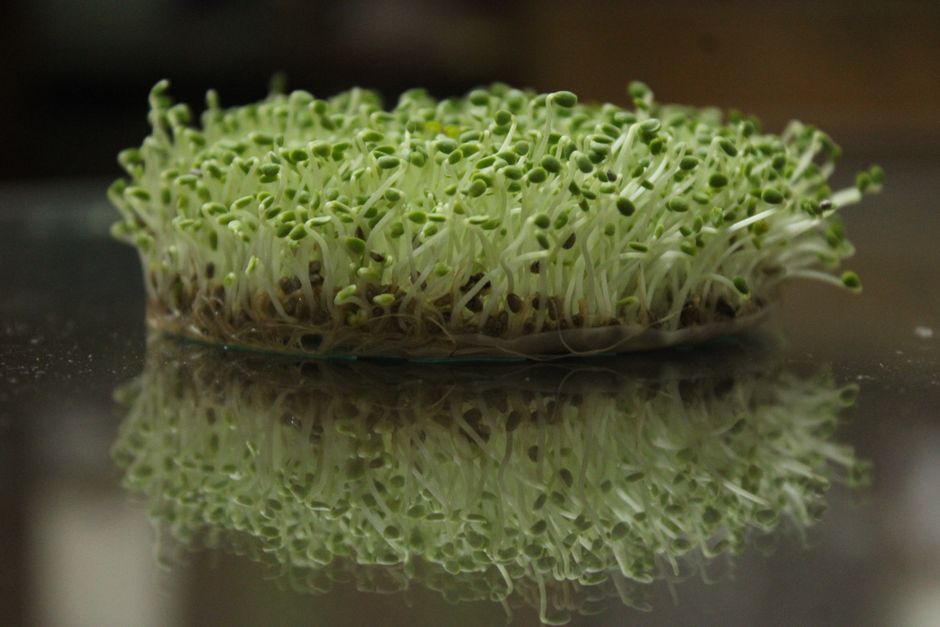
Nothing deflates microgreens faster than a lid that fits the container better than the harvest.
I’ve had trays of gorgeous pea shoots and radish greens go into the fridge fluffy and crisp, then come out flat, wet, and oddly tired by the next day. The frustrating part is that it happens fast: one enthusiastic handful too many, the lid touches the tops, and all that delicate volume gets pressed down.
For me, the trick isn’t just keeping greens cold. It’s finding enough headroom to protect their shape while also managing moisture so they don’t turn damp underneath. That balance gets surprisingly tricky with microgreens, because even a container that looks roomy can feel crowded once the harvest is washed, dried, and packed.
- A little extra lid clearance matters more than total container volume.
- Baskets or raised bottoms can help keep leaves off pooled moisture.
- Overfilling is easy with light, fluffy greens like sunflower and pea shoots.
My short list for different harvest sizes


What I cared about in actual fridge use
-
Headroom first
I wanted enough space above the greens so the lid did not mash tender tops during normal handling.
Look forA domed or tall lid that leaves breathing room.AvoidShallow containers that press stems and leaves flat. -
Moisture behavior
Some condensation is normal, but pooled water makes harvested greens feel tired faster in my fridge.
Look forA setup that sheds or separates extra moisture.AvoidWet bottoms and heavy fogging that linger. -
Stacks without drama
I like containers that sit securely and fit real shelves, not just an empty countertop.
Look forStable shapes that stack neatly and waste little space.AvoidWobbly lids or awkward footprints. -
Easy to check and wash
Clear sides help me spot condensation or bruising fast, and simple cleanup makes reuse more realistic.
Look forGood visibility and few fussy corners.AvoidCloudy plastic and hard-to-scrub seams.
I’m not treating this like a formal shelf-life trial. I’m judging what happens in an ordinary home fridge: opening the door a lot, shifting containers around, and packing a harvest after a rinse and dry. If you’re still comparing bags versus containers for freshness, this roundup leans toward whichever option protects the canopy and handles moisture with less fuss.
Clear clamshells for easy, tidy small harvests
01
Crystal-clear view and secure snap lids
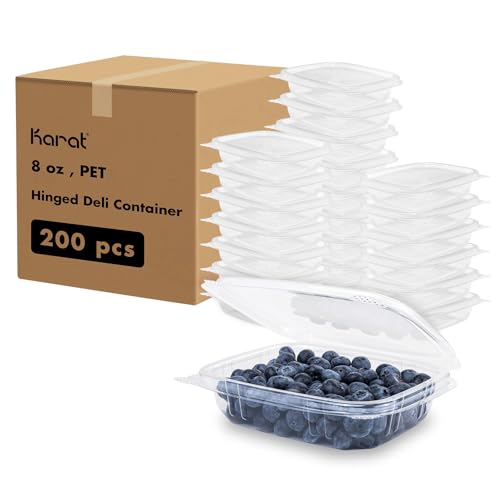
When I want microgreens to keep their shape without much fuss, this is the format I reach for first. The Karat 8oz Clear PET Clamshells make small harvests look neat right away, and the see-through lid helps when I’m sorting varieties or lining up a few packs in the fridge.
For hobby-scale growing, they make a lot of sense if I’m packing a handful of portions at a time for gifting, sharing, or keeping my own fridge organized. The size feels well matched to tender greens that need a little headroom but not a lot of bulk.
- Good headroom for delicate tops
- Very quick to pack neatly
- Clear lid shows contents instantly
- Stacks fairly cleanly in fridge
- Handy size for gifts or small shares
- More single-use in feel
- Per-container cost adds up
- Less appealing if you reuse everything
- 8oz size is limited for larger cuts
If I wanted one easy default for delicate microgreens, this would be my likely pick. It makes small harvests look cared for with very little effort, and the headroom helps avoid that flattened, pressed-down look.
The tradeoff is pretty straightforward: they have a more disposable feel than sturdier reusable containers, and buying in units adds an ongoing packing cost. Still, for tidy presentation and grab-and-go fridge organization, they’re hard to argue with.
Adjustable vent keeps humidity in check
BINO 6.8-Cup Produce Saver is the reusable container I’d pick when I’m harvesting a modest amount for my own fridge, not packing something to hand off. In my experience, the real difference here isn’t the size so much as the lift-out basket, which changes how the greens sit after washing.
If moisture collecting at the bottom is what keeps bothering you, this style makes a lot of sense. It feels more like a small produce bin than a grab-and-go package, so I see it as a practical home-storage option rather than a pretty one.
- Basket keeps greens above pooled moisture
- Reusable for regular home harvests
- Vent adds a bit of humidity control
- Taller shape uses fridge space less efficiently
- Less presentation-friendly than clamshells
- Not as tidy for gifting or display
Larger capacity for bulk storage
I think of the BINO 15.2-cup Produce Saver as the reusable step-up when my cut is bigger than a clamshell batch and the greens have a little backbone. The deeper tub gives me more room to work with, but only if I’m storing sturdier crops and leaving some breathing space instead of pressing the lid down over an overfilled pile.
- Large 3.6L capacity
- Adjustable air vent
- Basket lifts off moisture
- Good for sturdier mixes
- Easy to overpack
- Too deep for tender tops
- Takes more fridge space
- Not dishwasher safe
Market-style clamshells for larger packed portions
Bulk clamshells ideal for markets
When I want a cleaner handoff than a deli tub, these 1-pound vented clamshells feel like the polished option. The clear lid shows off the harvest, the shape stacks neatly during a busy packing session, and the size works well for regular shares, larger gifts, or a small market table.
I’d use them for greens that are dry on the surface and headed out fairly soon, since the vents help with airflow but also make them less forgiving for long fridge stretches. For anyone packing often, the 100-pack format looks especially practical.
- Clean, market-ready look
- Good headroom for loose packs
- Vents help reduce trapped moisture
- Fast to pack in batches
- 100-pack suits frequent harvests
- Venting can dry greens sooner
- Less ideal for long storage
- Bulk pack needs space
- Single-use feel
- Dense, stackable shape uses fridge space efficiently
- Reusable tubs work well for repeat harvests and meal prep
- Tight lids help with transport and general food storage
- 24-pack makes portioning easy if I harvest in batches
- Less headroom for tall, airy greens
- Overfilling can press down delicate tops
- More utilitarian than giftable or display-friendly
A good container can’t rescue a rough harvest
I’ve blamed a container before, then realized I’d already set the greens up to slump. Storage starts at harvest, not when the lid goes on.
If my microgreens go into the fridge wet or still warm, they usually collapse faster. Surface moisture adds weight, and trapped warmth turns even a roomy container into a humid little sauna.
The other easy mistake is packing with a heavy hand. Delicate tops don’t need much pressure to bend, and once I start “just fitting a little more,” the lid becomes the least of the problem.
What helps me most
- Harvest cool, dry greens whenever I can.
- Let washed greens drain and air-dry briefly before packing.
- Lower them in loosely instead of pressing down from the top.
- Stop filling when the greens still have a little spring and space above them.
For me, prep habits usually matter as much as the container choice. A modest tub with careful handling often beats a fancier box packed too wet, too warm, or too full.
If the greens feel cool, look dry, and sit below the lid line without pressure, I usually get a much nicer result.
Which container fits the greens I actually cut?
What works for tender brassica mixes?
I usually reach for the Karat 8oz clamshells first. They give light, fluffy greens some headroom without asking me to stack too high.
What about sturdier pea or sunflower shoots?
The larger BINO or the DuraHome tubs make more sense for me there. Those crops handle denser packing a bit better, especially for home-fridge storage.
Which ones feel nicest for gifting or selling?
Clear clamshells usually look more polished to me. I’d use the Karat for small gift portions and the Qinyoung when I want a market-style, fuller pack.
Which ones suit everyday fridge use?
For keeping my own harvests, I lean toward the BINO containers. The basket insert helps with moisture, and the reusable shape fits home use better than bulk sales.
How I’d choose in real life
When I’m deciding quickly, I start with fragility: for tender pea shoots, radish tops, or pretty salad mixes, I usually reach for the Karat 8oz Clear PET Clamshells, and the Qinyoung 1lb Vented Clamshells if I’m packing bigger portions to share or sell. Then I look at amount. For small home batches, the BINO 6.8-Cup works well; for heavier fridge storage, the larger BINO or DuraHome deli tubs make more sense.
My own bias is simple: clamshells usually keep shape nicest, while reusable bins and deli containers win when I care more about volume or reuse.

I liked that you separated “home fridge reality” from formal shelf-life testing, because honestly that’s how most of us actually choose containers.
One thing I was wondering though: why no glass options at all? I get that headroom matters and glass gets heavy fast, but I’ve seen people swear by rectangular glass meal-prep containers for pea shoots and sunflower. Were they left out because the lids sit too low, or just because they’re not practical once you’re doing repeat harvests?
Mostly practicality. I wanted picks that matched the way microgreens get packed and moved in real life: light weight, easy stacking, quick loading, and enough headroom without a heavy base.
Glass can work for some sturdier shoots, but a lot of common meal-prep lids sit fairly low and don’t give much margin if the greens are even slightly fluffed up. Once I factored in fridge space, handling, and washing a bunch of containers repeatedly, the plastic options in the post were just a better fit for the use cases I was comparing.
Yeah I tried glass for radish and it was fine until I stacked anything on top. Looked nice, used a ton of fridge real estate lol.
Can you do a budget ranking sometime? Like if someone only has $20-30 to spend and is storing small cuts for home use, which one would you actually buy first?
The 8oz clamshells look nice for gifting, but buying 200 when I’m just snipping for my kitchen feels… excessive 😅
That’s fair, and yes, pack size is one reason I framed the clamshells more as a repeat-harvest or sharing option than a casual starter buy.
If I had a tight budget for home use, I’d start with one reusable produce saver style container first, especially the smaller basket style if the harvests are modest. It gives you moisture separation and reuse without committing to a huge bulk pack.
For very occasional harvests, I’d honestly use what you already own first and focus on drying, cooling, and not overfilling. The container matters, but rough packing ruins more greens than the “wrong” container does.
Maybe I’m the odd one out but I wanted more on what you *didn’t* pick. No mention of silicone bags, no vacuum canisters, no mason jars… was that because they performed badly or because they just don’t fit the “don’t crush microgreens” goal?
The article made sense overall, especially the headroom + moisture control combo, but part of me read the 200-pack and 100-pack options and thought, cool cool, lemme just open my tiny apartment warehouse lol.
Surprised you included the DuraHome deli tubs but not the cambro-style square containers a lot of growers use. The deli tubs are cheap and stack great, sure, but for “don’t crush the tops” they seem like kind of a weird recommendation unless the greens are pretty sturdy.
Was cost the main reason, or were you trying to stay with stuff people can order in smaller quantities?