A mat can seem like a small choice until one tray comes up patchy, thirsty, and uneven.
One tray stays evenly damp; the next dries at the corners by lunch and leaves bare spots through the middle. That kind of flop often gets blamed on seed quality, but the mat underneath is doing quiet work from day one.
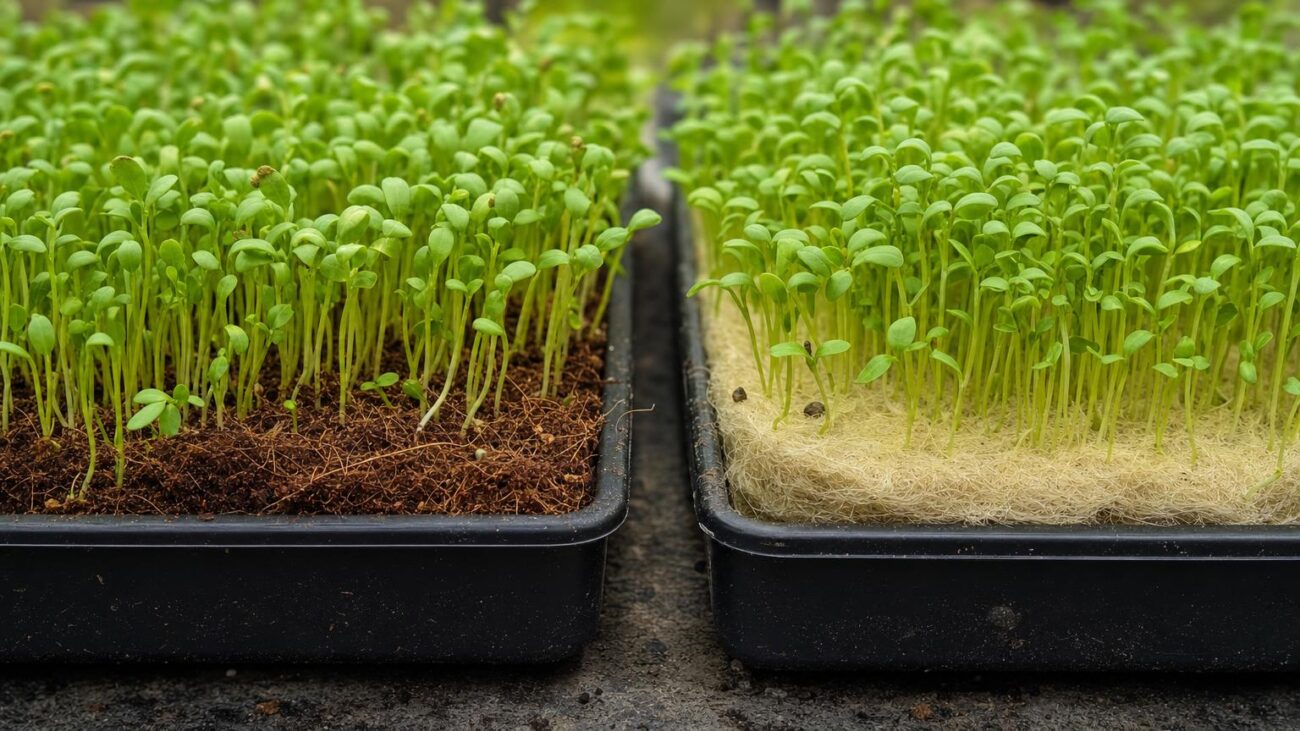
Watering rhythm, seed-to-surface contact, and moisture consistency all shift with the material. Hemp often lies flatter and can keep small seeds nestled in place during germination. Coir can feel springier and sometimes asks for a slightly different watering touch. Those small differences may be the reason one tray looks calm and uniform while another never quite evens out.
- In this lineup, the hemp option is aimed more at germination-focused use.
- The coir options lean toward larger tray counts, which may suit frequent sowing.
Hemp for starts, coir for volume


What matters in an actual tray
Real trays tend to reward seed-to-mat contact before anything else. If the surface is springy and evenly damp, germination usually looks more uniform; if it dries in patches or puddles, the tray shows it quickly.
That helps explain why hemp often stands out early. It usually feels softer and a bit more forgiving under dense sowing, which can help with even emergence. Coir often solves a different problem: a tougher woven pad that stays easier to lift, move, and manage in busy 1020 setups.
After sprouting, the useful questions become practical. How easily does the mat re-wet? Does extra water drain away cleanly? Does it sit flat, or leave edge gaps? For readers sorting through microgreens supplies and materials, this is often where the choice becomes clearer.
Cleanliness matters too. Hemp may shed a little less on some trays, while coir can feel sturdier but rougher. So the tradeoff is less about a universal winner and more about which tray problem needs solving first.
I use coir most often with smaller seeds in my stainless steel microgreens tray setup, where it gives delicate roots a better surface to anchor into.
Hemp tends to make sense when the goal is a smooth, even start.
Coir tends to make sense when sturdy handling and larger tray workflows matter more.
Hemp mat for patchy trays
High germination with excellent water retention
These 10″ x 20″ hemp pads fit growers who keep seeing thin corners and uneven starts. The surface tends to let small seed rest flatter against the mat, which can make early rooting feel a bit more consistent than with springier coir.
Handling also stays fairly tidy at sowing time, so scatter-prone seeds can be easier to keep in place. The tradeoff is simple: this style leans toward cleaner germination rather than bulky, rugged heft.
- Better seed-to-mat contact for small, light seed
- Cleaner handling than looser coir fibers
- Often suits more even early rooting
- Less bulk than thicker coir pads
- Can feel less rugged when fully soaked
For trays that regularly come up spotty, this hemp mat makes a sensible first switch. The main win is seed contact, especially with smaller varieties that do not like sitting on a bouncy surface. It gives up some of coir’s heft, so soaked trays may need a gentler touch.
Sturdier woven coir for standard 1020 trays
Large pack of sustainable coir mats
This woven coconut coir mat suits growers running regular 1020 trays and wanting a pad that holds together through repeated sowing and handling. The thicker, tougher feel is the main draw, especially in larger packs. Its tradeoff is a slightly fussier setup: coir tends to reward a proper pre-soak and a bit more attention during the first few watering cycles.
- Tougher tray handling
- Fits standard 1020s
- Large 25-pack value
- Compostable natural fiber
- Needs longer soaking
- Seed contact takes care
- Watering rhythm matters
- Slower to break down
For growers filling standard trays often, this coir pad makes a practical step up in toughness and pack size. The catch is technique: a full soak, good seed-to-mat contact, and measured watering tend to matter more here than with hemp. Once that rhythm settles in, coir can feel dependable and tray-friendly.
Budget coir liners for low-risk trial runs
Trusted, widely available coir liners
This 20-pack of 10×20 coir liners keeps the cost of experimenting fairly manageable. It suits growers who want a few rounds to compare coir against hemp or soil, especially when the goal is learning how mat growing behaves in standard trays rather than expecting every liner to feel identical.
- Lower-cost entry to mat growing
- Enough liners for repeat batches
- Made for common 10×20 trays
- Thickness can vary by pad
- Fit may need small adjustment
- Tray-to-tray consistency feels uneven
For growers curious about coir, this pack makes the learning phase easier to justify. The trade-off is variation: one tray may feel nicely packed, while the next may run a little thinner, looser, or slightly off in fit. That can be acceptable for casual testing and higher-volume practice.
Which mat fits common growing situations?
Which mat tends to suit small seeds?
Hemp often feels a little easier with small to medium seed because it lays flatter and improves seed-to-mat contact. That can translate to more even starts in crops like broccoli, cabbage, and kale.
What about peas or sunflower?
Coir’s tougher surface can be helpful with heavier seed and frequent handling. Even so, large-seed crops can be trickier on any mat than in soil, since they usually want stronger anchoring and closer moisture management.
Which option feels friendlier for a first tray?
A hemp pack is often the simpler starting point when the main goal is clean germination with less fiddling. Coir can still work well, especially in standard 1020 trays, but it usually benefits from a thorough pre-soak and steadier watering habits.
Which mat makes more sense for inconsistent watering?
Woven coir is often a safer match when trays are sometimes allowed to run a bit drier, since the pad stays sturdy when handled. Hemp can perform nicely too, but it tends to show missed watering sooner.
Which pick fits larger batch growing?
Coir multipacks make practical sense for growers filling several trays at once, especially when durability matters. Hemp is often chosen more for easy starts than for high-volume tray turnover.
A simple way to choose
A practical rule keeps this decision easy: hemp usually makes more sense when germination and even seed contact matter most, especially with small seeds. Coir often fits better when the goal is tougher mats, standard 1020 production, and less fuss over handling during bigger runs.
Even so, mat material is only part of the outcome. A grower who waters lightly and often may get different results than someone who lets trays dry a bit between checks, and crop choice can shift the winner too. Before buying a large pack, it helps to run one hemp tray and one coir tray side by side with the same seed, soak, weight, and blackout routine. That small trial usually says more than product claims. It also makes cleanup after using grow mats easier to judge, since mess and disposal can matter almost as much as sprouting performance.

Small seeds leaning hemp has been true for me too. Basil on coir was… character building lol.
I keep seeing people ask which material is “best,” but the watering style point is the real answer. If you’re the type who misses a check and comes back later, coir seems more forgiving. If you want the easiest starts and don’t mind staying on top of moisture, hemp makes more sense.
I’m still stuck on the “hemp for starts, coir for volume” part. If you had to pick just one for someone doing mostly radish + pea with occasional small seed trays, which one did you end up choosing?
I don’t mind a little extra watering, but I do mind patchy germination. That’s what drives me nuts.
If patchy germination is your main frustration, I’d lean hemp first. The flatter seed contact tends to help more on average, especially when you’re mixing in smaller seeds.
For radish and pea specifically, mats can still be a little finicky compared with soil or a very forgiving medium, so crop choice matters. If most of your trays are those larger seeds and you want rugged handling, coir starts making more sense.
I grow a lot of pea shoots and honestly I’d say coir only if you’re okay babysitting the soak/setup a bit more. Hemp gave me more even starts, but peas still did whatever they wanted sometimes 😅
This matched what I’ve seen pretty closely. Hemp usually gives me a nicer start with broccoli and kale because the seed sits flatter, and I don’t fight those weird dry pockets as much.
Coir has been better once I’m running several 1020s at the same time, mostly because it doesn’t feel like it’s going to fall apart when I lift a soaked tray. Different tools for different moods lol.
Appreciate that you didn’t oversell the coir just because it’s sturdier. A lot of reviews act like tougher automatically means better, but if germination is worse then that’s a real tradeoff.
For anyone who has used the Woven Coconut Coir Mats — 25 Pack 10×20, did you find the “more deliberate soaking” part annoying in practice, or just something you get used to after a tray or two?
For most growers it’s more of a routine issue than a deal-breaker. The woven coir pads usually benefit from a more thorough initial wetting, and if that step is rushed, the tray can establish unevenly.
Once you know that, it becomes pretty manageable. I’d call it mildly inconvenient rather than truly annoying, especially if you’re setting up multiple trays the same way each time.
I got used to it, but the first time I definitely under-soaked them and then blamed the mat 😂
After that I started pre-wetting a little longer and they behaved way better. Still not as “easy mode” as hemp for me though.
The bit about budget coir liners varying tray to tray was the most useful part for me. That’s exactly the kind of thing you only find out after buying a multipack and wondering why one tray fits nice and the next one looks like a wrinkled bath mat.
I tried a cheaper coir liner set last winter and the thickness was all over the place. Some held moisture fine, some stayed too wet in the center and dried at the corners. So yeah, “low-risk trial run” feels accurate, but I wouldn’t count on perfect consistency.
I bought the Premium Hemp Grow Mats ten-pack because I only do a couple trays at a time on a shelf in the laundry room. For that use, they’ve been easier.
My only gripe is exactly what you mentioned: once really saturated they feel kind of flimsy. Not unusable, just less confidence-inspiring when moving trays around.