
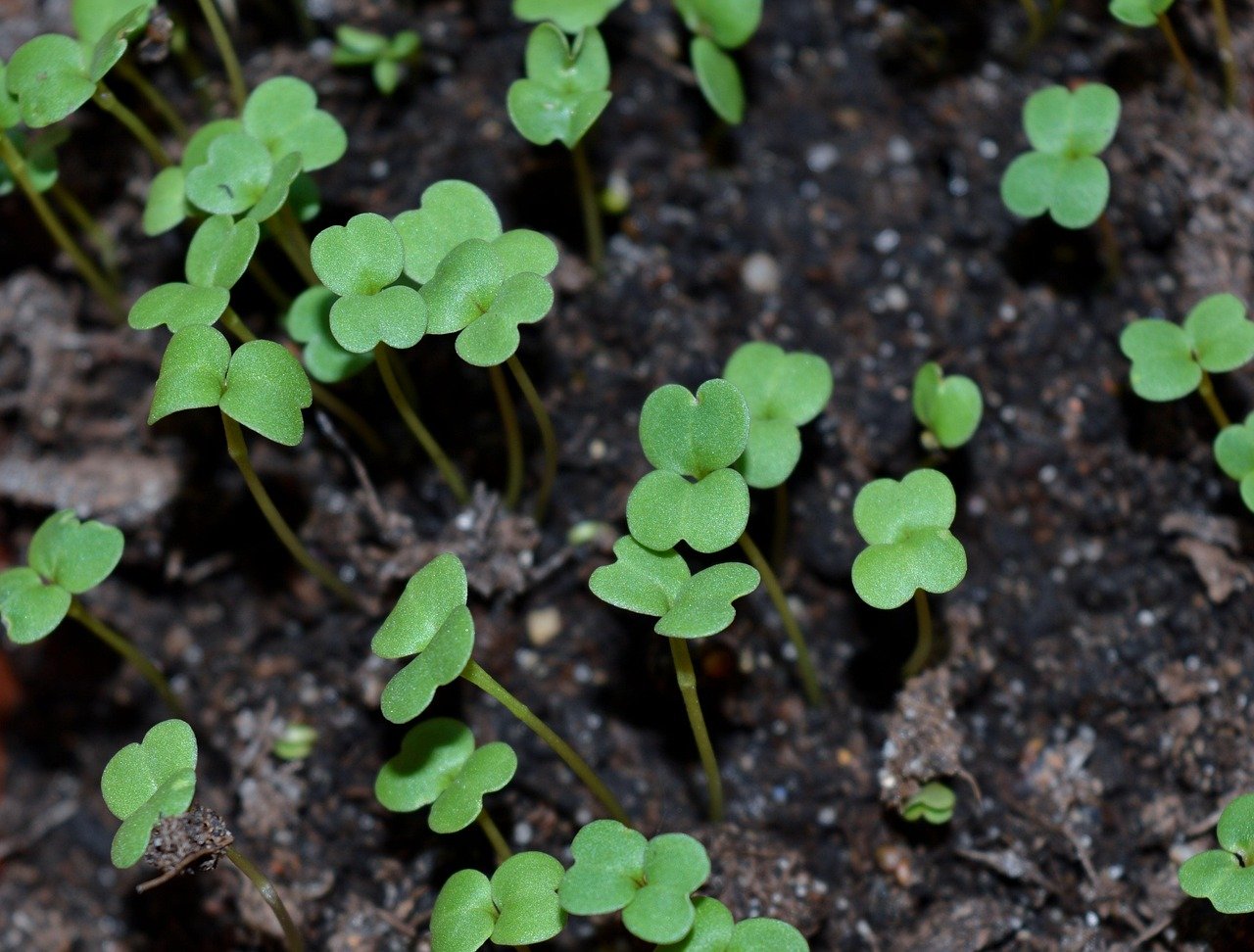
A lanky tray can look dramatic before it’s actually lost.
I’ve lifted the cover off a tray and had that oh no moment: stems suddenly look too tall, almost yellow, and one nudge makes the whole canopy sway. Right after blackout, some stretch is normal, so a pale, wobbly tray is not automatically a disaster.
What matters is how it changes once the lights go on. If they stay weak and keep leaning, it usually points to a light gap rather than instant failure. Quick action still helps—many trays perk up fast enough to avoid that full flop-over stage.
Figure out what kind of flop you’re seeing
-
Look at the color first
Freshly uncovered microgreens often come up pale yellow. If the stems are still upright and dry, that color usually means they need light, not a rescue plan.
-
Check how the stems are growing
True legginess looks like long, thin stems that lean or arc instead of standing fairly straight. I usually notice it most in crowded trays or when seedlings all stretch toward one side.
-
Inspect the stem base
If the stem narrows, looks wet, or turns mushy right at the growing medium, that points more toward rot or stem failure than simple stretching.
-
Use your nose and eyes
A sour smell, slimy surface, or fuzzy growth on the tray is another clue that excess moisture is involved. Leggy greens can be weak, but they usually do not smell bad.
-
Notice the speed of the collapse
Legginess tends to build gradually. A tray that falls over fast after seeming fine often has a moisture or disease issue mixed in.
Yellowing after blackout can be temporary and often improves once the tray gets light. Rot is different: mushy stems, a pinched base, slime, or a bad smell usually mean the problem is not solved by brighter light alone.
Act fast
-
Move light closer
-
Add gentle airflow
-
Water from below
-
Cool the room slightly
Stems stay long. I’m aiming for firmer growth, not a full reversal.
Rescue moves
Now Gardening covers quick tweaks for propping up stretched seedlings.
Why light is usually the real issue
A lot of the time, legginess comes down to not enough usable light where the plants actually are. I’ve had trays stretch under a perfectly decent shop light simply because the seedlings were too far below it, off to one side, or shaded by the tray rim. So the question is less “Do I own a grow light?” and more “Is enough light reaching the canopy?”
When I’m checking how far my light sits above microgreens, I watch the plants more than the fixture label. Seedlings usually tell the story pretty quickly:
- They lean hard in one direction instead of growing fairly upright
- Stems get long fast while the leaves stay small
- The tray looks uneven, with taller growth at the edges or corners
- Color improves slowly after blackout, even once lights are on
A useful comparison is this: with adequate light, microgreens tend to look compact and eager; with weak light, they look like they’re reaching for rescue.
I also try not to chase exact numbers first. In a home setup, practical cues can be more helpful than a spec sheet. If a tray perks up within a day after I lower the light, center it better, or increase coverage, that usually confirms the problem was light at canopy level, not seeds, watering, or some mysterious failure.
Don’t overdo blackout
Blackout covers can be useful. I’ve had good luck with them for more even germination and a tidy, lifted mat, but they’re easy to leave on a little too long. Once most seeds have sprouted and the tray is pushing up fairly evenly, extra darkness can keep stems reaching for height instead of thickening up.
A little post-blackout yellowing doesn’t concern me by itself. That pale color is a normal response to darkness, and many trays green up quickly after a day in decent light. The problem usually starts with that extra stretch time under the cover: shoots get taller, softer, and more likely to lean or flop after uncovering.
If the canopy looks evenly lifted and most hulls are up, I usually uncover then. Waiting for perfect uniformity can quietly trade a neater tray for weaker stems.
Crowding can make legginess worse
When I sow too heavily, the tray can turn into a tiny race for light. Seedlings bump shoulders, shade each other, and start climbing upward instead of building thicker stems. In patchy spots, the denser clumps often lean together, which makes the whole mat look floppier than it really is.
A few clues point to crowding:
- taller growth in the thickest patches
- stems bending where seeds landed in clumps
- outer edges looking sturdier than the middle
I’ve had better luck with a slightly lighter, more even layer of seed. It can feel sparse at sowing time, but the canopy usually fills in quickly and stands up better. If a tray keeps getting leggy even with decent light, uneven sowing is one of the first things I recheck.
It’s usually a combo
Light matters, but in my trays weak stems often come from a stack of smaller stressors. Still air, a constantly wet surface, warm room temps, and frequent top watering can all push growth toward soft, watery stems instead of sturdier ones.
A tray can look bright enough and still stay floppy if the canopy never dries a little between waterings. If the seed hulls and stems stay damp, the plants sit in a cozy, humid pocket. I’ve had better luck after making a few small airflow tweaks for weak stems and letting the surface dry slightly.
Small changes that add up
- Water from below when possible.
- Keep air moving gently, not blasting.
- Ease warmth a bit if the room runs hot.
- Skip misting once roots are established.
None of these changes is dramatic alone, but together they can help stems firm up.
A floppy tray can be bright enough yet still struggle if it stays warm, damp, and still. That combination often matters more than one single mistake.
- Harvest imperfect trays If a tray smells fresh and mostly stays upright, I’ll often harvest it a bit early instead of chasing a perfect stand.
- Reset true failures When stems keep collapsing, the bases turn mushy, or slime and sour smell show up, I usually call it and restart.
- Use the feedback My notes from a bad tray matter: light distance, blackout time, airflow, and seed density usually explain the next fix.
Save it, or start fresh
At the end, I make a simple call: save it for an early harvest or reset the tray. If it looks a little scruffy but greens up, smells clean, and stands with some support, it can still be worth cutting.
If it keeps flopping, feels slimy at the base, or smells off, I usually start over without much drama. For me, those trays are less a failure than a record of what to tweak next time: shorter blackout, lighter sowing, and closer light.

Maybe a dumb question, but how fast should they green up after blackout?
Mine usually go from pale yellow to decent green within a day under lights, but one radish tray stayed washed-out and kept stretching even after uncovering. Reading this, I’m guessing the light intensity at canopy level was the real problem, not the blackout itself.
Not a dumb question at all. Many trays start greening within hours and look noticeably better by the end of the first day, though exact timing varies by crop.
If they stay pale, keep reaching, or develop uneven height after uncovering, that points more toward insufficient usable light than normal post-blackout recovery. Getting the fixture closer is often the first thing to test.
Radish was the one that exposed my setup too. It grows so fast that weak light shows up almost immediately.
I appreciate that this didn’t pretend every floppy tray is salvageable. Sometimes the honest answer is “harvest early if you can, otherwise start over” and that’s actually helpful.
Good reminder that blackout is useful but not magic. I left covers on an extra day because life happened, and the tray came out looking like it had been raised in a cave lol.