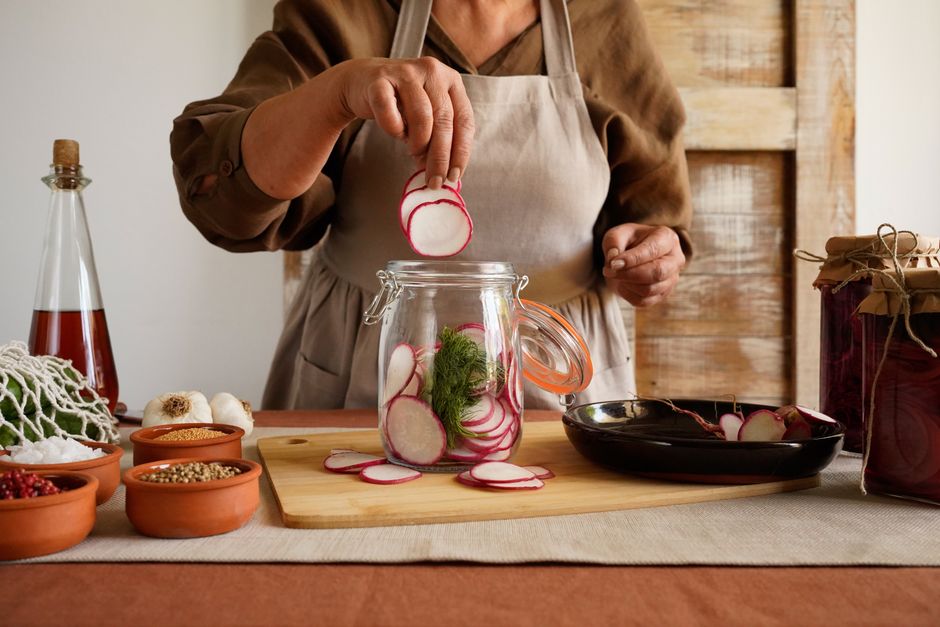
A bubbling jar can feel half kitchen project, half mystery pet.
On day two, a first batch of sauerkraut may hiss when opened, smell sharp, and push brine up the sides of the jar. That lively behavior can be exciting — and a little suspicious. Fermentation often looks active before it looks appetizing.
The safer habit is not guessing from one odd detail, but noticing patterns: a pleasantly sour smell, steady bubbles, vegetables staying under brine, and colors that deepen without fuzzy growth. A single surprise does not always mean trouble, but mold, rotten odors, slimy collapse, or visible contamination are signals to take seriously.
- Early bubbling is common in the first few days of vegetable ferments.
- Cloudy brine can be normal; fuzzy surface growth is more concerning.
- Clean tools and submerged ingredients make the jar easier to read.
Fermentation Is Controlled, Not Sterile
Fermentation can feel mysterious, but it is less like “food left out” and more like a small environment being nudged in a helpful direction. The main controls are salt, acidity, time, and limited oxygen. Together, they make conditions more comfortable for desirable microbes and less comfortable for many spoilage organisms.
Salt is especially important in vegetable ferments because it draws out liquid, helps create brine, and slows some unwanted growth. As fermentation progresses, beneficial bacteria produce acids that lower the pH, giving the ferment its tangy flavor and adding another layer of protection.
Limited oxygen also matters. Vegetables kept under brine have less contact with air, which is why weights, jars, and snug lids can be useful. This does not mean the jar is sterile. A ferment is alive, changing, and full of microbial activity.
That is why “normal or unsafe?” is not judged from one bubble, smell, or cloudy brine alone. It starts with the controls:
- Was enough salt used for the style of ferment?
- Are solids mostly below the brine?
- Has the smell become pleasantly sour rather than rotten?
- Is the change happening over days, not instantly?
Understanding these basics makes the signs easier to read.
Normal Signs That Can Look Alarming
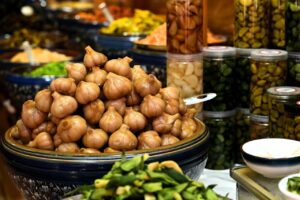
A healthy ferment can look messier than expected. Cloudy brine is common in vegetable ferments, especially cucumbers, cabbage, and garlic. It often comes from lactic acid bacteria, tiny vegetable particles, and dissolved minerals rather than spoilage.
Bubbles are another ordinary sign of activity. They may rise in steady streams, collect under cabbage leaves, or appear only when the jar is tapped. A little pressure under a lid can also build as carbon dioxide forms, which is why many fermenters “burp” sealed jars or use airlock lids.
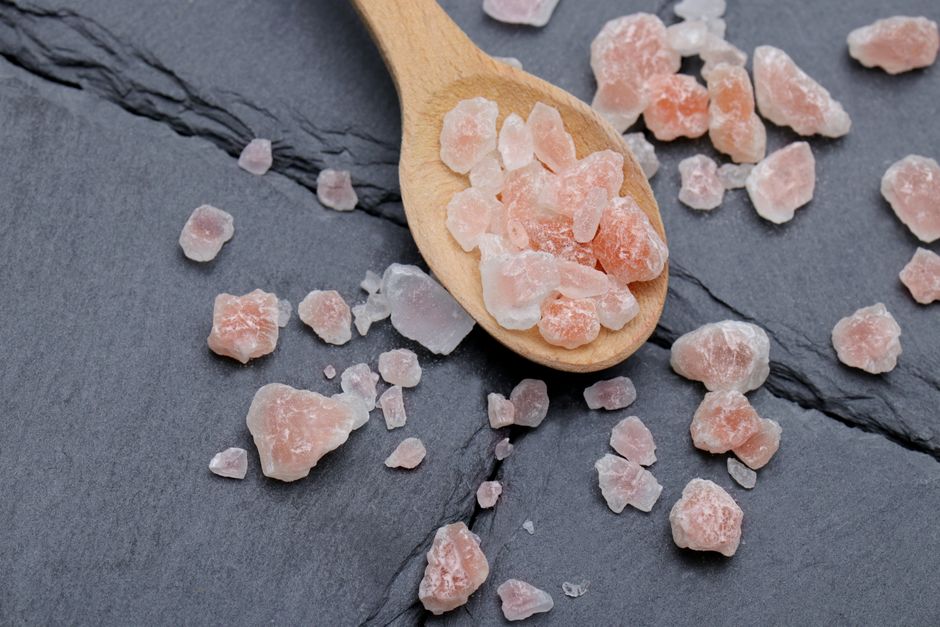
Sediment at the bottom is usually not dramatic. A pale layer can be spent bacteria, fine spices, starch, or vegetable solids settling out. Ferments with grated vegetables, ground pepper, turmeric, or cloudy sea salt often look especially busy.
A pleasant tangy, sour, or pickle-like aroma usually fits active fermentation. The smell may be sharp at first, then round out with time. Bright vegetables may also turn duller: green cucumbers become olive, purple cabbage can shift toward pink, and garlic may even turn blue-green in some acidic conditions.
Texture changes gradually, too. Vegetables often soften as salt draws out moisture and acids develop. What matters is the bigger picture: the ingredient, room temperature, salt level, age of the ferment, and whether the food stayed below the brine. One sign alone rarely tells the full story.
Many normal ferments look cloudy, bubbly, and less colorful than the starting vegetables. Context matters: a submerged, salty, sour-smelling ferment at day 5 tells a very different story from floating vegetables with an unpleasant odor.
Four Controls That Make Ferments Safer
A beginner ferment is easier to judge when it starts with a few measurable controls. Salt percentage is one of the most practical: many vegetable ferments use salt based on the weight of the vegetables, often around 2–3%, depending on the recipe. That salt slows many unwanted microbes while giving lactic acid bacteria time to take over.
Brine strength matters too, especially for whole vegetables or anything packed under liquid. A clear recipe may call for a brine such as 2% or 3% salt by water weight. Guessing by “a spoonful per jar” can lead to batches that are either too weak for comfort or too salty to ferment well.
Ingredient choice also affects the outcome. Fresh, unspoiled vegetables, clean water, and non-iodized salt are common choices because they reduce variables. Very old produce, heavily chlorinated water, or additives in salt can make fermentation slower or less predictable.
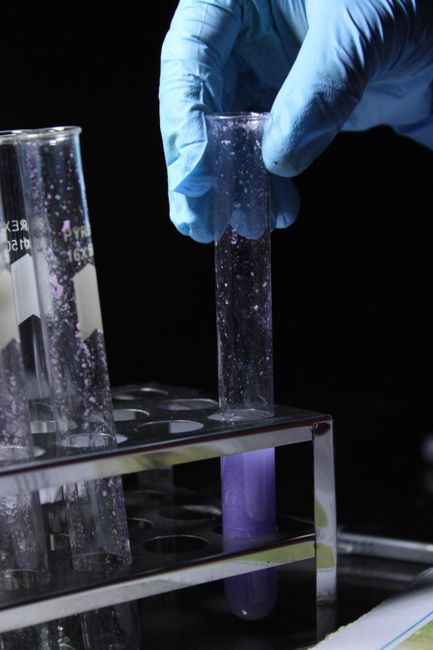
Appearance helps, but pH is often a clearer safety clue. A cloudy brine or dull cabbage can be normal; acidity shows whether the ferment is becoming sour enough to favor preservation. Simple pH strips or a calibrated meter can add useful confirmation, especially for cautious beginners, unusual recipes, or ferments that look fine but smell questionable.

The Surface Is Where Worry Usually Starts
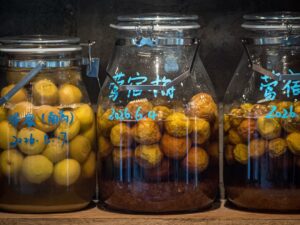
The top of a ferment gets the most oxygen, so it often becomes the “is this okay?” zone. A thin, pale, matte film can be kahm yeast, especially on vegetable ferments that have lost brine coverage or sat warm. It may look wrinkled or dusty, but it usually stays flat rather than fuzzy.
Floating spices, cabbage shreds, garlic, or pepper pieces are common. The concern is not the floating itself; it is that exposed food can dry out and give surface microbes a place to grow. Fermentation weights, a small brine-filled bag, or trimming oversized pieces can help keep solids submerged.
Possible mold needs closer attention. Signs that deserve more caution include:
- Fuzzy growth or hairlike texture
- Blue, green, black, pink, or orange patches
- Spots that rise above the surface rather than forming a flat film
- Musty, rotten, or strongly unpleasant odors alongside surface growth
When growth looks fuzzy or colorful, guessing is risky. Scraping the top may not address what has spread into soft food or brine. In beginner batches, a suspicious surface is often a cue to pause, compare carefully, and troubleshoot the process before tasting.
Sour Is Fine. Rotten Is Different.
A healthy vegetable ferment usually smells tangy, lactic, briny, or lightly funky. Sauerkraut may smell cabbagey at first, then sharper and more pickle-like. Kimchi can smell garlicky, fishy from added seafood ingredients, or pleasantly sour. Those aromas can be strong without suggesting decay.
Spoilage smells tend to feel different: rotten, putrid, fecal, garbage-like, or sharply sulfurous, like a drain, bad eggs, or decomposing vegetables. When an odor causes an immediate “do not eat that” reaction, that reaction deserves respect. Tasting is not a useful test when the smell already suggests something has gone wrong.
Texture matters too. Some vegetables naturally get softer, and okra, seaweed, or certain spices can make brine feel thicker. But ropey brine, long stringy strands, or unexplained slime spreading through a batch is a reason to stop and assess the ferment, especially if it appears with unpleasant odor or surface growth.
A practical pause list:
- Rotten, fecal, garbage, or drain-like smell
- Strong sulfur smell that does not fade after opening
- Ropey, stretchy brine
- Slime not explained by the ingredients
- Bad smell plus mold, gas pressure, or leaking
If a ferment smells rotten or has unexplained slime, tasting a small amount may not clarify safety. It is more useful to review the recipe, salt level, submersion, temperature, and timeline before deciding what to do next.

Botulism: Rare in the Right Ferments, Serious in the Wrong Conditions
Botulism deserves calm respect. The toxin linked to it is dangerous, but it does not appear simply because a jar is homemade or bubbling on the counter. Risk depends on the food, acidity, storage temperature, oxygen level, and whether the method has been tested or improvised.
Properly salted vegetable ferments usually become acidic as lactic acid bacteria work. That drop in pH is one reason sauerkraut-style ferments are different from low-acid foods packed in oil, canned without enough acid, or held warm in sealed conditions. For a deeper look at the concern, this explainer covers whether fermented foods can cause botulism and why context matters.
A practical safety habit is to treat pH below 4.6 as an important benchmark, especially for beginners or unusual recipes. Test strips or a basic pH meter can make this less mysterious, though meters need calibration to be useful.
A few low-stress guardrails can help:
- Use established recipes for vegetables, especially when new.
- Do not reduce salt or acid casually.
- Be cautious with garlic-in-oil, low-acid purées, meats, and fish.
- Refrigerate finished ferments when they taste pleasantly sour.
The goal is not fear. It is matching the method to the food.
Tools That Make Safety Checks Less Guessy
-
A scale for repeatable salt levels
A small digital scale makes salt percentage less dependent on spoon size, grain shape, or memory. It is especially helpful when switching between cabbage, cucumbers, and mixed vegetables.
Look forGram measurements for produce, water, and saltBe cautious withGuessing with heaped spoons -
Jars, lids, and weights that keep food submerged
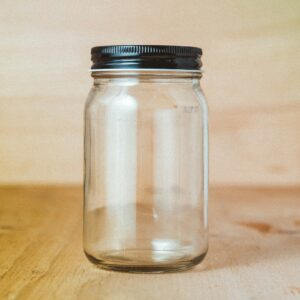
Clear glass jars make bubbles, brine level, and surface growth easier to notice. Fermentation weights or clean brine bags can reduce floating pieces that invite surface trouble.
Look forFood-safe glass and snug, clean weightsBe cautious withLoose scraps drying above the brine -
pH tools with calibration habits
Strips can give a rough reading; meters can be more precise when calibrated and stored properly. Either tool adds evidence, but smell, texture, recipe, and storage still matter.
Look forFresh strips or calibrated metersBe cautious withOld supplies treated as final proof -
Cleaning that leaves no questionable residue
After mold or spoilage, nonporous glass can often be cleaned more confidently than scratched plastic, wood, or cracked glaze. Older crocks deserve extra caution because damaged or unknown glazes may not be food-safe.
Look forRinsed, intact, nonporous containersBe cautious withCracks, odors, residue, or mystery glaze
A Simple Way to Decide: Keep, Watch, or Discard
-
Keep it when the pattern is expected
Cloudy brine, steady bubbles, sediment, a clean sour smell, and vegetables staying under brine usually point to ordinary fermentation. If the recipe, salt level, temperature, and timing all make sense, the jar has several reassuring signals working together.
-
Watch it when one detail is unclear
A thin surface film, slower bubbling, dull color, or a smell that is tangy but unfamiliar can be worth observing rather than immediately throwing away. Checking whether ingredients stayed submerged, looking for spreading growth, and testing pH can add useful context.
-
Pause before tasting anything questionable
Tasting is not a safety test for a ferment with warning signs. If the smell is rotten, the texture is ropey, the surface growth is fuzzy or brightly colored, or the process was far outside the recipe, it is safer to stop evaluating it by mouth.
-
Discard when several red flags line up
Major uncertainty matters: unknown salt amount, long warm storage, low-acid ingredients, a damaged container, or signs of spoilage all weaken confidence. When serious warning signs appear together, keeping the batch is rarely worth the worry.
-
Learn from the jar, then reset
A discarded batch is not a failed hobby. It can point to a simple adjustment next time, such as weighing salt, using a weight, filling the jar with less headspace, or labeling the start date.
- Normal ferments tend to show a pattern of small, consistent changes rather than one dramatic sign.
- Uncertainty is information: missing measurements, poor submersion, or unclear timing can make a batch harder to trust.
- A calm discard is sometimes the most practical choice, especially when safety clues conflict.
Fermentation safety becomes less stressful when each jar is judged by the whole picture: recipe, salt, acidity, time, smell, texture, and surface appearance. Many odd-looking changes are harmless, but serious spoilage signs or large gaps in the process deserve caution.
A useful beginner mindset is simple: keep what fits the expected pattern, watch what is unclear, and discard what raises real concern. That habit protects confidence as much as the batch itself.

The botulism section is the one that still freaks me out a bit. If pH 4.6 is the benchmark, should beginners just test every ferment before eating? Or is that overkill for basic cabbage/kimchi type stuff?
Not trying to be dramatic, I just don’t love the idea of trusting my nose when the scary thing apparently doesn’t always smell bad.
That’s not dramatic — it’s a reasonable concern. Botulism is serious, and smell is not a reliable way to rule it out.
For classic lactic-acid vegetable ferments made with adequate salt, submerged vegetables, and normal room-temperature fermentation, the risk is very low because the environment becomes acidic and competitive. But testing pH can be a helpful confidence-builder, especially when you’re new, changing recipes, using low-acid ingredients, or fermenting something outside the usual vegetable-salt-brine pattern.
So no, you don’t *have* to test every basic sauerkraut if you’re following a sound method, but pH strips or a meter can turn “I hope this is safe” into “I have another piece of evidence.”
Can you clarify the salt percentage thing? When people say 2% salt, is that 2% of just the cabbage weight, or cabbage + added water/brine?
I keep seeing both explanations online and it makes beginner advice feel way more confusing than it needs to be 😅
Great question, and yes, this is a common source of confusion.
For dry-salted vegetables like sauerkraut, 2% usually means salt as a percentage of the vegetable weight. So 1,000 g cabbage would get about 20 g salt.
For a separate brine, the percentage is typically based on the water weight: a 2% brine would be 20 g salt per 1,000 g water. If you’re fermenting chopped vegetables with added water, weighing the total vegetable + water can also work, but the key is to be consistent and follow a tested ratio for that style.
Small critique: I liked the article, but I think beginners also need more emphasis on container condition. I used an old jar with a tiny chip near the rim and could never get the lid/airlock to sit right. Ended up with surface growth twice before I figured out the jar was the problem, not my salt or cabbage.
The tools section mentioned it, but honestly that was my biggest lesson.
I appreciate the “keep, watch, discard” framing. The hard part for me is the “watch” category. Like… if there’s a thin white film on top but no fuzz and it smells pleasantly sour, do I skim it and continue, or is that already a discard?
I know you said surface oxygen is usually where the trouble starts, but I’m still not sure how brave I’m supposed to be here.
A thin, flat white film is often kahm yeast, especially if the ferment smells sour/yeasty rather than rotten and the vegetables were kept under brine. In that situation, many fermenters skim it, clean the rim, make sure everything is submerged, and continue watching closely.
That said, if it returns quickly, gets thick or wrinkly, develops color, grows fuzz, or comes with unpleasant odors or slime, I’d move it toward discard. “Watch” doesn’t mean ignore it — it means correct the oxygen exposure and see whether the overall pattern stays normal.
I’ve had kahm on peppers a couple times and it looked gross but smelled fine. Skimming helped, but using a real weight instead of the sad little cabbage leaf trick helped more 😂
I wish more recipes would include the “rotten vs sour” distinction with examples. I’ve tossed two jars because they smelled strong, but now I’m wondering if they were just doing normal fermentation things.
Tangy, cabbagey, yeasty, funky… those words are subjective. My husband thinks parmesan smells like feet, so sensory judgment is not exactly a precision instrument in our house.
This was actually reassuring. My first sauerkraut went cloudy on day 2 and I was 100% convinced I had created a jar of swamp poison. Good to know cloudy brine + bubbles isn’t automatically bad.