
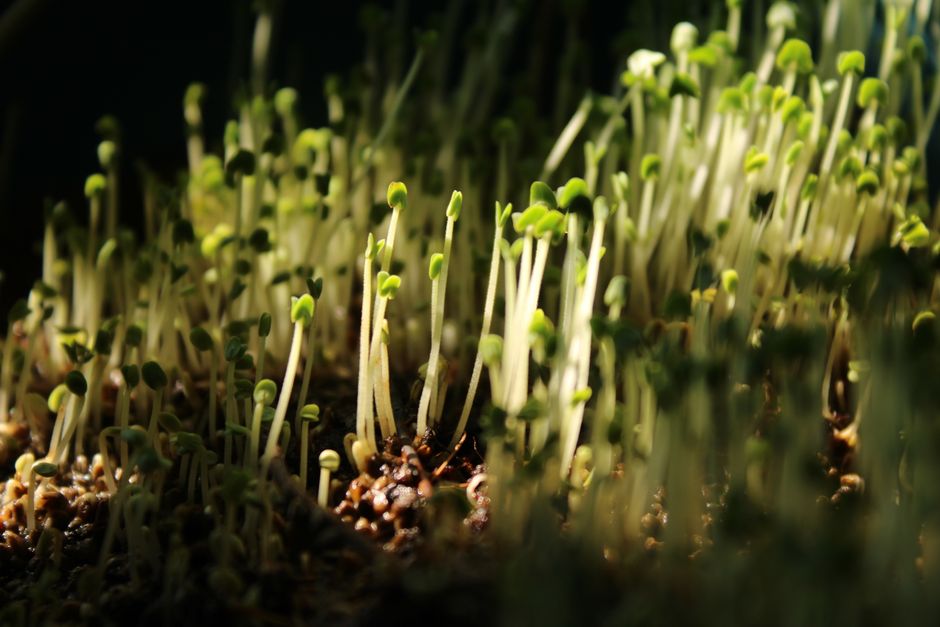
Blackout can feel like one small step that somehow decides the whole tray.
A freshly seeded tray can look promising: damp pad or soil, seeds spread evenly, lid on, and no obvious problems. Then the advice starts to clash. Some growers stack trays in the dark, some cover them with a towel, and others move straight to light once sprouts appear.
The worry is practical, not fussy. Too much darkness may leave stems long and weak. Too much moisture under a cover may invite fuzzy growth. Skipping blackout may mean patchy germination for some crops, while adding it when it is not needed can feel like extra handling for no clear gain. That uncertainty is where most hobby growers get stuck.
- Blackout usually means darkness plus gentle pressure or coverage, not drying the tray out.
- Many common microgreens use only a short blackout period, often measured in days rather than a week.
What “blackout” means in microgreens
- Blackout
A short early phase when seeded trays are kept away from light while the seeds take up water and begin to sprout. It belongs near the start of a grow, not across the whole cycle covered in a beginner guide to growing microgreens.
- Ordinary darkness
This simply means no light reaches the tray, such as when a dome, cover, cupboard, or stacked tray blocks it. The cover is not necessarily pressing on the crop.
- Weighted blackout
A darker, more active version where another tray or a light weight sits on top of the seeds. The gentle pressure can encourage roots to anchor and may help some crops lift their cover evenly.
- Sprouting stage
This is the brief window after sowing when roots emerge and shoots start pushing upward. Once seedlings are upright and ready to green up, light usually becomes part of the routine.
- Blackout period
The length varies by crop, seed freshness, temperature, and moisture. For many common microgreens, it is measured in days rather than weeks.
Is blackout necessary?
- Often helpful For many trays, a short covered start improves germination, keeps moisture steady, and helps seedlings push up more evenly. It is especially handy with crops that germinate over several days.
- Not universal Some fast, easy crops can sprout well without a formal blackout if they have steady moisture and are kept away from strong light at first. Peas, sunflowers, radish, broccoli, and similar beginner crops vary by seed lot and room conditions.
- Setup matters Blackout matters more when the growing area is dry, bright, cool, or unevenly lit. In a warm, humid, low-light corner, the same crop may need less covering time or none at all.
- Results decide Skipping blackout is usually acceptable when the tray germinates evenly, stays moist, and produces the texture and height desired. If sprouts are patchy or too short, adding a brief covered period is an easy adjustment.
Why darkness changes early growth
Seeds do not need light to begin germinating. In the first few days, they are mostly using stored energy inside the seed. When kept dark, many seedlings respond by stretching upward, as if searching for light. This can make stems a little longer and straighter before the tray goes under a lamp or onto a bright windowsill.
A cover also changes the tiny climate at the soil surface. It traps moisture around the seeds, which can help them soften, crack open, and sprout more evenly. For small seeds that dry out quickly, this extra humidity can make the difference between a patchy tray and a fuller one.
There is another practical benefit: some crops shed seed hulls more cleanly when they push against a lid or cover. Radish, broccoli, cabbage, and similar brassicas often benefit from that gentle resistance. Larger seeds, such as pea or sunflower, may use a weighted cover to encourage stronger rooting before shoots lift the tray.
The same conditions can become a problem if they last too long. Warmth, moisture, low airflow, and darkness are also friendly to fuzzy growth and sour smells. Overextended seedlings may flop when uncovered, especially if light is weak afterward.
A good rule is to treat blackout as a short starting phase, not a default hiding place. Once most seeds have sprouted and begun lifting the cover, light and airflow usually matter more than continued darkness.
If the tray is mostly sprouted, lightly colored, and starting to push up the cover, it is usually ready for light. If only a few seeds have cracked, more moisture and time may help.
When skipping blackout usually works fine
For many casual home growers, skipping blackout is a reasonable experiment rather than a mistake. If trays are kept in a steady, mild spot and seeds stay evenly moist during germination, several crops will sprout well under normal room light or gentle grow lights.
This tends to work especially well with forgiving, quick crops such as radish, broccoli, cabbage, kale, mustard, and arugula. These seeds usually germinate readily and do not need much coaxing to push upward. Pea shoots and sunflower can also be grown without a formal blackout, though they often benefit more from a cover or weight because of their larger seeds and hulls.
Skipping blackout is more likely to succeed when conditions are stable:
- Moisture is consistent, without the tray drying at the surface.
- Light is not harsh or hot during the first couple of days.
- Airflow is gentle, so humidity does not build into a stale pocket.
- Seed is spread evenly, avoiding thick clumps that stay wet.
The tradeoff is appearance. Greens started in light may be a little shorter, stockier, or less uniform than blackout-grown trays. For salads, sandwiches, and casual kitchen use, that difference may not matter much.
A simple side-by-side test is often more useful than a fixed rule: grow one tray with blackout and one without, then compare height, hulls, mold pressure, and flavor.
When blackout earns its place
Blackout becomes more useful when the tray surface dries before roots can settle. A loose cover or upside-down tray slows evaporation, giving seeds a steadier window to germinate. This can matter in winter rooms, near fans, under strong airflow, or in shallow trays where the top layer dries quickly.
It also helps when germination is patchy. If some seeds sprout early while others lag, a short covered period can keep the slower seeds moist without repeatedly misting. Crops with stubborn hulls, such as sunflower, buckwheat, cilantro, and some peas, often benefit from the extra humidity and gentle pressure that help loosen seed coats.
Seed size changes the equation too. Larger seeds need more consistent moisture around them, while tiny seeds can suffer if they are buried under too much weight or kept overly wet. Before covering a tray, it helps to check how tightly the seed is spread, because density affects both moisture and airflow.
A densely sown tray holds humidity well, but it can also trap stagnant air once sprouts emerge. A lighter sowing dries faster, yet usually breathes better. Blackout earns its place when it solves a real problem: dry surfaces, uneven starts, hulls that cling, or a grower’s preference for slightly taller, paler stems before light exposure.
Covering and weighting are not the same choice
A blackout setup often gets talked about as one step, but it is really two separate choices: blocking light and adding pressure. A flipped tray, lid, or dome can keep seeds dark while also trapping moisture around the surface. That can be enough for many small-seeded crops, especially when the goal is steady germination rather than extra push.
A weighted tray is different. It presses on the seeds and young shoots, which can improve soil contact and encourage sturdier stems in some crops. It is commonly used for larger seeds such as peas, sunflower, or popcorn shoots, where the sprouts can lift a cover naturally as they grow.
Small, delicate crops do not always appreciate that pressure. Mustard, broccoli, radish, and similar greens may do fine with only a loose cover, or no cover at all once germination is even. Too much weight can mat seedlings, trap excess moisture, or make tender stems grow unevenly.
For a broader look at blackout domes and darkness, it helps to treat weight as a crop-specific tool—not a universal upgrade.
When to take the cover off
-
Look for broad germination, not a date
Many trays are ready once most seeds have cracked and sent up visible shoots. That may be two days for quick brassicas, longer for peas, sunflowers, cilantro, or cooler rooms.
-
Notice seedlings pushing upward
A cover has done its job when the crop is lifting it slightly or pressing against it. Strong upward pressure is a better cue than the number of hours since sowing.
-
Check the stems
Pale, upright stems are normal after darkness and usually green quickly under light. If stems are very long, tangled, or leaning, the tray may have stayed covered a little too long.
-
Watch moisture and airflow
Condensation, sour smells, or fuzzy patches are signs to uncover sooner and improve air movement. A damp tray can recover better in light than under a sealed cover.
-
Move into light gently
Once uncovered, place the tray under steady light and let the seedlings color up over the next day or so. For more visual cues, compare with common signs that microgreens are ready as the tray develops.
Cover removal is a small adjustment, not a pass-or-fail moment. Crop, seed age, tray depth, temperature, and moisture all shift the timing.
Try a small side-by-side test
A simple trial often answers the blackout question better than a rule. Sow two small trays of the same seed, at the same density, with the same watering. Give one tray the usual cover or weight, and leave the other uncovered in normal grow conditions.
Compare them at cover-removal time and again near harvest:
- Germination: which tray sprouted more evenly?
- Height: did blackout add useful length, or did stems flop?
- Color recovery: did pale stems green up quickly under light?
- Hulls: were seed coats easier to shed in one tray?
- Fuzz: are white hairs on roots, not spreading mold on stems or media?
- Harvest ease: which tray cut cleaner and rinsed less?
If results are close, skipping blackout may be worth the simpler routine.
Common blackout worries
Are yellow seedlings a problem?
Usually not. Seedlings kept in darkness often look yellow because they have not greened up yet; after the cover comes off, light typically turns them greener within a day or two.
What if the stems are floppy and stretched?
That usually means the tray stayed dark a little too long, or the light was weak after uncovering. Move the tray into brighter indirect light or under a grow light, and uncover the next tray earlier.
Why does a covered tray smell sour or feel slimy?
A sour smell, slick surface, or slimy seeds points to too much moisture and not enough airflow. Remove the cover, increase ventilation, and avoid misting again until the surface begins to dry; badly slimy trays are often not worth saving.
Can seedlings dry out if blackout is skipped?
Yes, especially in warm rooms, dry air, or shallow trays. A loose clear lid, light misting, or checking moisture more often can help without fully blocking light.
Is blackout harder on a windowsill?
Windowsills can swing between cold nights, hot sun, and uneven side light, so trays may dry or lean faster. For more on that setup, see these notes on growing microgreens on a windowsill.
Blackout is a tool, not a rule
- Fast, forgiving crops often show whether blackout is worth the extra handling in a particular home setup.
- A short cover period can smooth out germination when trays dry unevenly or seeds shed hulls poorly.
- Weight is a separate step, most useful when larger seeds need firmer contact with the growing surface.
Blackout works best when treated as a small adjustment rather than a required ritual. For easy crops such as many brassicas, skipping it can be perfectly reasonable, especially when the tray stays evenly moist and conditions are steady.
For growers chasing more even trays, dealing with stubborn hulls, or starting larger seeds, a brief dark period may add consistency. Weighted blackout has a narrower role: it can help seeds press into the medium, but it is usually not needed for delicate or quick-germinating crops. The simplest answer is to match the cover to the crop, watch the tray closely, and let results guide the next batch.

Slightly skeptical take: I’ve done side-by-side tests and sometimes the blackout tray wins early, but by harvest day the difference is basically gone. Maybe my standards are low 😂
For home growers who aren’t selling, is there any real reason to chase the extra height from darkness? I get consistency matters commercially, but for a salad bowl I’m not sure it’s worth the extra handling and mold risk.
I appreciate the “tool, not rule” framing. Some YouTube growers make it sound like if you don’t blackout for exactly 3.72 days under a blessed tray, your crop is doomed.
One thing I’m wondering: if the goal is just humidity, could a clear dome work better than blackout for beginners? You’d keep moisture without encouraging as much stretching, right?
Do you think density changes the blackout decision more than crop type? I grow radish pretty thick because I like the full tray look, but the article’s point about moisture retention and airflow risk made me side-eye my own habits.
When I cover radish, it rockets upward but then sometimes gets that musty smell near harvest. If I seed lighter, would blackout be safer, or is radish just too fast to mess around with much?
Density can absolutely change the decision. A thick radish tray traps humidity and heat quickly, so a long cover period can push it toward sour smells or weak stems even if germination looks great at first. With radish, I’d either shorten the covered phase a lot or skip it in stable home conditions. If you want to keep the dense look, prioritize airflow once it’s uncovered.
I had the same musty radish issue and cutting the seeding rate fixed like 80% of it. Annoying because the lush trays look cooler, but eating them matters too lol.
What about sunflower? I know the article mentions larger seeds and hull-heavy trays, but sunflower seems like its own weird little beast.
I’ve had better hull shedding with weight, but also more mold when I stack too long. Is sunflower one where you’d do weight but very short blackout, or am I mixing up two different problems?
Sunflower is a good example where weight can be useful because it improves seed contact and gives stronger upward push, which helps with hull shedding. But yes, it’s also easy to overdo the covered period because those big seeds hold a lot of moisture. I’d think of it as: weight briefly for contact and uniform lift, then uncover as soon as the tray is pushing strongly and airflow becomes more important than humidity.