
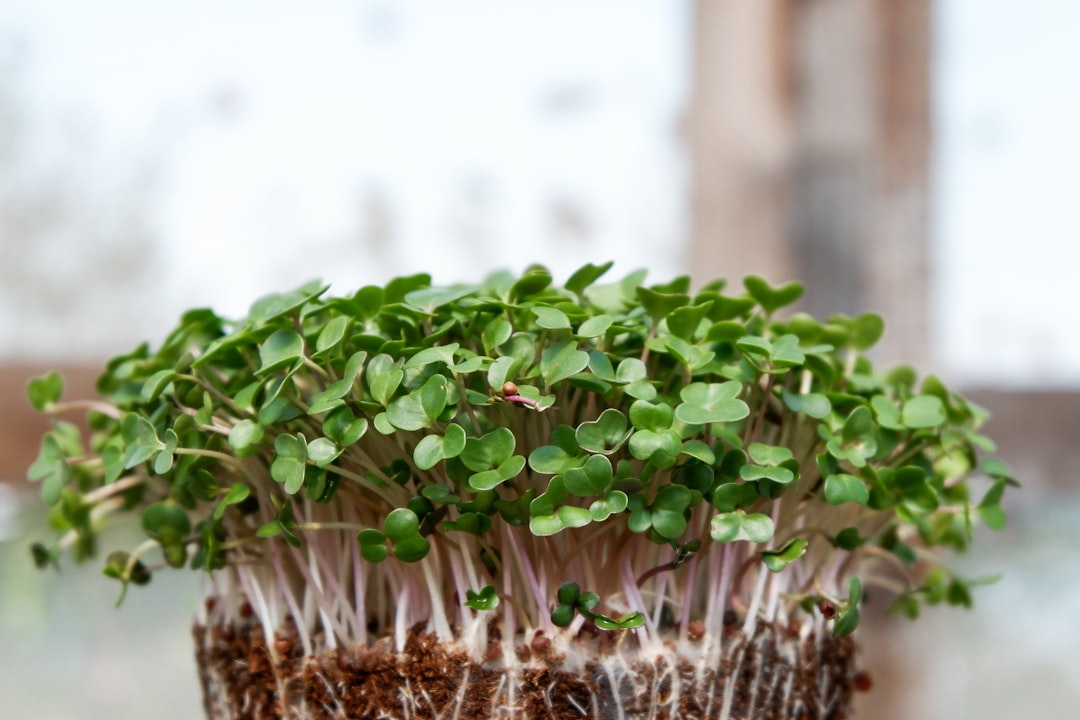
That white fuzz on a fresh tray is not always bad news.
On day three or four, a microgreens tray can go from promising to suspicious overnight: tiny stems up, seed hulls clinging, and a pale haze sitting near the soil line. The panic is understandable. Nobody wants to raise a tray of mold on the kitchen counter.
The useful first move is not a dramatic rescue. A few calm minutes under bright light can reveal a lot. Look at where the fuzz appears, whether it clings neatly to roots or spreads loosely across seeds, and whether it changes after a light mist. A musty smell, wet mats, or fast-spreading patches deserve attention; delicate fuzz around individual roots may simply be normal growth. Uncertainty at this stage is common—not a sign that the tray has already failed.
Two kinds of fuzz that look alike
Root hairs
Root hairs are tiny, pale growths that form close to young roots. They help seedlings take up water, so they are a normal sign of early growth rather than a tray problem.
Where root hairs show up
They usually sit in a neat halo around the root tip or along the lower part of a fresh sprout. Under bright light, they often look fine, short, and evenly arranged, almost like peach fuzz clinging to the root.
Mold
Mold is fungal growth that can spread over damp surfaces in a microgreens tray. It may appear on the growing mat, soil, seed hulls, unsprouted seeds, or even across stems when conditions stay too wet or stagnant.
How mold behaves
Unlike root hairs, mold tends to wander beyond one seedling. It can bridge gaps between seeds, form cottony patches, cling to bits of debris, or create a webby layer across the tray surface.
The simplest clue
Root hairs look attached to individual roots and stay close to them. Mold looks more like a separate fuzzy network spreading across whatever damp material is nearby.
The quickest visual check
A fast first pass is to ignore the color for a moment and study the shape and location of the fuzz. White fuzz can be harmless root hairs, but some molds also start out white. The more useful question is: what is it attached to, and does it stay in one zone?
Root hairs usually appear as a fine halo right around the tiny root, especially in the first few days after germination. They tend to look neat and even, almost like frost on the root tip. When the tray is misted, they often seem to flatten or disappear, then return as the surface dries.
Mold is less tidy. It may bridge across seeds, cling to seed hulls, creep over the growing mat, or form cloudy patches between stems. Instead of following individual roots, it spreads like a web over damp material.
A simple visual check:
- Mostly on roots: likely root hairs.
- On hulls, seeds, soil, pads, or stems: more suspicious for mold.
- Even, short, and localized: often root hair growth.
- Patchy, spreading, cobwebby, or clumped: more likely mold.
Color can still offer clues, especially if fuzz turns gray, blue-green, black, or dusty-looking. But color alone is a weak judge early on. A white patch on a radish root may be normal; a white patch spreading across sunflower hulls deserves closer inspection.
Timing changes the clue
In the first few days, especially during blackout or just after germination, a soft white halo around seeds often points to root hairs. At that stage, roots are searching for moisture and anchoring into the mat, so the fuzz may appear suddenly and evenly around sprouting seeds.
Suspicion rises when the tray conditions favor real mold. A tray that stays soggy, smells musty, or has little air movement gives spores an easier place to settle. Crowded seed, thick patches of wet hulls, and plant bits left on the surface can also make harmless-looking fuzz worth a closer look.
A useful timing check is to compare the fuzz with the crop’s progress:
- Day 1–3: white fuzz near emerging roots is commonly normal.
- After uncovering: fuzz that fades with light and airflow often behaves like root hairs.
- Later growth: fuzz spreading across stems, hulls, or the growing medium deserves more caution.
For a broader look at tray problems, the microgreens troubleshooting guide can help connect timing with watering, airflow, and seed density. The same fuzz can look less alarming—or more concerning—once the tray’s stage is taken into account.
Read the Seedlings Too
A fuzzy patch makes more sense when the rest of the tray is checked at the same time. Healthy root hairs usually appear alongside seedlings that are standing up, evenly colored, and continuing to grow. The fuzz stays close to the root zone, while the shoots look firm and fresh.
Concern rises when the tray shows several stress signs at once. None of these clues proves mold by itself, but together they make the fuzzy growth worth treating more cautiously:
- A musty or sour smell, especially when the lid comes off
- Slimy patches on seeds, hulls, or the growing mat
- Seedlings that look weak, collapsed, or pinched near the soil line
- Yellowing, brown tips, or small dead spots that spread
- Fuzz that moves quickly from one area to nearby seeds, stems, or tray edges
The useful question is not “Is there fuzz?” but “Does the tray look vigorous or stressed?” Upright, green seedlings with localized fuzz near roots often point toward normal growth. Fuzz paired with odor, slime, decline, and fast spread deserves closer attention before the tray is harvested or kept growing.
Three shortcuts that can mislead a mold check
Both young root hairs and early mold can look white. The better clue is where the fuzz starts and how it spreads.
Root hairs cling close to individual roots, often like tiny halos. Mold is less loyal: it can bridge seeds, hulls, soil, tray edges, and nearby stems.
Misting can flatten or hide fine hairs and light mold for a short time, so the tray may look cleaner than it is.
A better check is to look again after the surface dries slightly. Root hairs usually return in the same neat zones; mold may reappear in patches or continue spreading.
Air movement lowers risk, but wet mats, crowded seed, stuck hulls, and warm still pockets can still encourage mold.
A fan is only one part of tray conditions. For a fuller prevention view, see how airflow fits into mold control without making it the only safeguard.
When it looks like root hairs, keep the tray steady
-
Leave the seedlings in place
Root hairs are part of normal early growth, so there is usually no need to scrape, rinse, or toss the tray when the fuzz is attached only to the roots.
-
Move into light as planned
Continue the normal transition out of blackout or weight. Light helps seedlings green up and straighten, which also makes later changes easier to notice.
-
Water gently, not heavily
Keep moisture even without soaking the mat or pooling water around stems. A light touch supports watering without encouraging mold, especially while seedlings are still small.
-
Check the same spot later
Root hairs often look less dramatic as roots settle and stems lift. If fuzz begins spreading across hulls, tray edges, or seed leaves, the picture may be changing.
-
Avoid drastic fixes unless new signs appear
Strong sprays, extra handling, or sudden drying can stress a healthy tray. Odor, slime, collapse, or fast surface spread are better reasons to reassess.
A simple photo in the same lighting can make day-to-day changes easier to compare.
When mold seems likely
-
Separate the tray
Move the suspect tray away from healthy trays before handling it. This keeps spores and damp debris from being brushed across nearby greens while the tray is checked.
-
Increase gentle airflow
A small fan nearby, not blasting directly at the crop, can help stale, humid air move on. The goal is a lightly moving environment, not dried-out seedlings.
-
Let the surface back off from wet
Pause misting for a short while if the surface looks shiny or soggy. Bottom watering, when the crop is ready for it, often leaves less moisture sitting on hulls and stems.
-
Remove obvious trouble spots
Pick out moldy seed hulls, clumps, or collapsed patches with clean tweezers or a spoon. If fuzz is widespread through the tray, removal may not be enough to make it worth saving.
-
Use sprays cautiously
Some growers try mild, food-focused options, but sprays are not a reset button. They work unevenly if the tray stays crowded, wet, or poorly ventilated.
Even reasonable food-safe mold spray options have limits. A spray may knock back surface fuzz, but excess moisture, packed seed, old hulls, and still air can invite it right back.
If a tray smells sour, has slimy stems, or keeps declining after cleanup, it is safer to treat it as a failed tray rather than a harvest candidate.
When to Let a Tray Go
A small fuzzy patch on a few hulls can sometimes be managed, especially if the seedlings still look firm and upright. The calculation changes when the tray develops wide, webby mats, a sour or musty smell, slick stems, or seedlings that collapse in clusters.
At that point, disposal is often the cleaner choice. Keeping a failing tray around can spread spores to nearby batches and hide the real issue: overly wet surfaces, crowded seed, poor airflow, or debris left after sowing.
Repeated problems matter too. If the same crop molds again and again, it is worth looking at why mold keeps returning before starting another tray. Fresh seed, cleaner trays, lighter watering, and better ventilation often matter more than another rescue spray.
A Simple Tray-Side Habit
- Root hairs stay tied to young roots; mold is less loyal to one attachment point.
- Healthy, upright seedlings make root hairs more likely; odor, slime, collapse, or fast spread shifts concern toward mold.
- Texture matters: fine, even fuzz on roots differs from webby growth crossing hulls, soil, stems, and tray edges.
A good read comes from combining clues, not trusting one sign. Attachment, distribution, seedling vigor, smell, speed of spread, and texture together give a clearer answer than color alone.

I wish more guides emphasized plant condition like you did. The seedlings themselves tell a lot.
If they’re upright and perky, I’m way less panicked. If there’s fuzz plus that sad leaning/collapsing look, I don’t care what color it is — into the compost it goes.
What about trays that smell “earthy” but not rotten? I know sour or musty odor is a red flag, but some seed mixes smell like damp garden soil even when everything looks fine.
Is earthy smell normal, or should microgreens basically smell like nothing?
You mentioned airflow can mislead as a standalone test, and I’m glad you did. I’ve seen people online say “just add a fan and if it disappears it wasn’t mold,” but that seems… overly confident.
If fuzz shrinks after airflow, would you still avoid eating that tray if there had been odor earlier?
Would stale air alone cause mold even if the tray isn’t that wet? My sunflower trays are in a basement rack, and the surface dries okay, but the room itself is kind of stagnant.
No bad smell, no collapse, but I occasionally get a fuzzy patch near the corners where air probably doesn’t move much.
Corners are where I see it too. For me it wasn’t soaking wet surfaces as much as dead-air pockets plus seed hulls hanging around. A tiny clip fan across the shelf helped, not blasting the tray directly.
Yes, stale air can contribute even when the tray doesn’t look overly wet. Mold risk is about the whole tray environment: moisture, debris, crowding, airflow, temperature, and time.
A fuzzy corner patch with otherwise healthy seedlings isn’t automatically a lost tray, but I’d treat it as an early warning. Improve air exchange, remove obvious debris, and watch whether it stays localized or starts spreading across stems and surfaces.
For pea shoots, the hulls always make me nervous. Mold seems to love hiding around the cracked seed coats, but the plants can still look totally upright and happy.
Do you remove loose hulls early, or only if you already suspect mold? I worry I’m messing with the tray too much when I poke around.
Pea hulls can be a magnet for moisture and debris, so your concern is reasonable. I wouldn’t aggressively disturb the tray, but if loose hulls are sitting on top and staying wet, gently removing them can help reduce mold-friendly spots.
If the shoots are upright, smell fresh, and the fuzz is only on root zones, I’d mostly observe. If hulls are damp, fuzzy, and the fuzz is spreading beyond them, that’s when I’d separate the tray and improve airflow/drying.
The attachment-point tip makes sense, but what about seeds like basil or chia that get that gelatinous coating? I’ve had trays where the slimey seed gel plus root hairs looked exactly like a science experiment gone wrong.
Would you judge those the same way, or is mucilage its own annoying third category?
Great question — mucilaginous seeds can definitely look like a third category. For basil, chia, cress, etc., I’d still check where the fuzz is attached and whether seedlings are upright, but I’d also expect some normal gel around the seed hulls early on.
The warning signs are when that gel becomes sour-smelling, gray/brown, stringy beyond the seed area, or the seedlings start collapsing. With those crops, thinner seeding and avoiding over-misting matter even more.
The “misting response” part was useful but also a little frustrating because I used to use that as my main test 😅
Sometimes root hairs flatten after misting and then pop back up later. Mold also looks different after misting. So basically the tray is gaslighting me.
How fast is “rapid spread” in practical terms? Like, if I check in the morning and again after work and the fuzz doubled, is that mold territory?
I’m trying to build the tray-side habit you mentioned, but speed feels kinda subjective unless you’re staring at them all day like a weirdo. Which I absolutely am not doing. Mostly.
Speed is relative, but your morning-to-evening comparison is actually a useful window. If the fuzz is expanding across tray surfaces, hulls, or stems within that time — especially in patches not tied to roots — I’d treat it as suspicious.
Root hairs also “appear fast,” but they usually show up as little halos on young roots and remain associated with each seedling rather than forming a spreading film across the tray.
I appreciate the point about not relying on white color alone. I threw away a radish tray last winter because I saw white fuzz, and later realized it was probably just root hairs. Pain. Expensive tiny salad pain.