
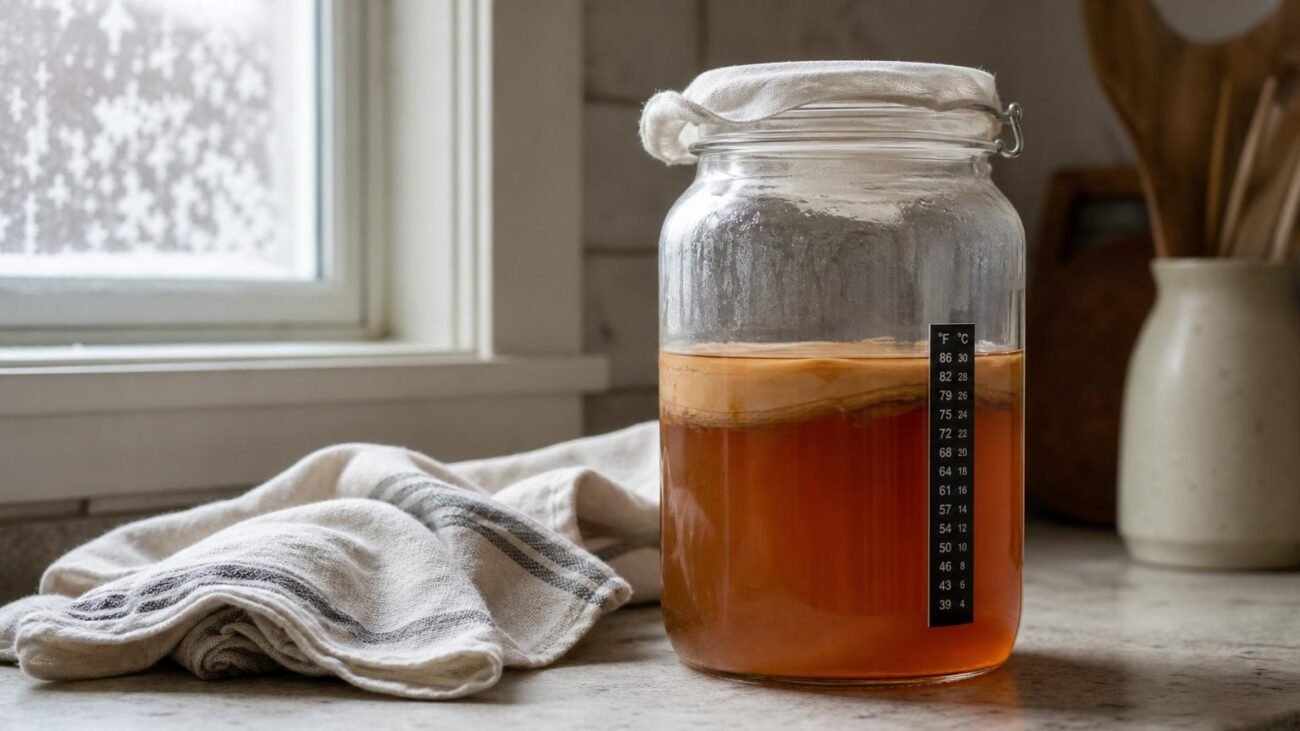
A quiet jar in January can look far worse than it is.
You peek at the jar on day four, and nothing seems to be happening—no busy fizz, no obvious new layer, just sweet tea looking back at you. I know that little jolt of panic: Did I waste the batch? Should I move it next to a heater? When my kitchen cools down in winter, fermentation often just slows to a crawl.
That slowdown is common, not an automatic sign of failure. Kombucha can look inactive before it suddenly shows a thin film or a sharper tang, and rushing to “fix” it can create bigger swings than the cold itself. A chilly room usually means slower, not ruined.
A workable temperature range for first fermentation
For first fermentation, I usually think of about 75–85°F (24–29°C) as the comfortable zone where kombucha tends to move along at a fairly predictable pace. Many home brewers, me included, also see decent results a bit below that, but once the room drops into the upper 60s to low 70s°F, things often become slower and less even.
That lower-temperature question matters because it can look like nothing is happening when the brew is simply taking its time. A cool jar may produce fewer bubbles, develop sourness more gradually, and need extra days before it tastes balanced. That is usually a timing issue, not an instant sign that the batch is ruined.
A simple way I frame it is:
- 75–85°F: steady, more predictable first fermentation
- 68–74°F: often still workable, but slower
- Below 68°F: progress can get noticeably sluggish and inconsistent
I try to remember that kombucha is not a switch that flips from “good” to “bad” the moment the temperature slips under the usual range. In a cold kitchen, the more common outcome is just patience testing me. If the brew smells normal and starts tasting gradually more tangy over time, that often points to slow fermentation rather than failure.
What the cold changes in the jar
Why it moves differently
When my kitchen is chilly, the whole brew tends to idle instead of hum along. Yeast usually starts by breaking some of the tea sugar into alcohol and carbon dioxide, and bacteria then turn part of that into the acids that give kombucha its tang. In cooler conditions, both jobs still happen, just more slowly.
That slower pace shows up in the flavor first. The jar can stay sweeter for longer because less sugar has been converted, and it may taste less tart because the acid level builds more gradually. I also notice the tea can seem a bit flatter early on, since fermentation gases are developing at a slower clip.
The culture itself often looks quieter too. A new pellicle may take longer to thicken, and bubbles can be sparse, which can make a healthy batch seem stalled when it is really just moving at a cold-room speed.
A simple check-in can help: if it smells gently vinegary and tastes like it is inching away from sweet tea, it is usually still progressing.
Check the temperature around the jar
-
Measure at the jar, not across the room
I like to put a small thermometer beside the vessel, or use a stick-on strip on the glass. The kitchen might read 72°F while the brew’s corner sits several degrees lower.
-
Look for tiny cold spots
A jar near a window, exterior wall, back door, or AC vent can live in its own little weather system. Even a bright counter can get chilly once the sun drops.
-
Notice what the jar is sitting on
Stone, tile, and metal counters can pull heat away faster than wood. If the glass always feels cool underneath, the surface may be part of the slowdown.
-
Check morning and evening
One afternoon reading can be misleading. I get a better picture by comparing the warmest part of the day with the coolest early-morning stretch.
-
Watch for drafty traffic lanes
Busy spots near doors, fans, and frequently opened cabinets can create repeated temperature dips. Small swings add up over a long first fermentation.
The air temperature on your thermostat is only part of the story. A jar on a cold counter by a drafty window can spend the night in a noticeably cooler pocket, even when the kitchen sounds “warm enough.”
What’s slow but normal, and what’s not
When my kitchen is chilly, I try not to judge a batch too early. A brew can stay sweet longer, take extra days to taste tart, and build only a thin or patchy new layer on top at first. None of that automatically means something has gone wrong.
A few signs that often still look normal in the cold:
- Slow tartness: the tea changes gradually instead of turning tangy quickly.
- Delayed surface growth: a new pellicle may form late, unevenly, or stay quite thin for a while.
- Mild fermentation smell: I usually look for a clean, slightly sweet, yeasty-vinegary aroma.
- Brown strings or cloudy bits: these can simply be yeast collecting in cooler, slower batches.
What gets my attention is less about slowness and more about the wrong kind of change.
- Fuzzy growth: anything that looks dry, hairy, or distinctly fuzzy is not a typical pellicle.
- Strong odd smells that persist: rotten, putrid, or sharply unpleasant odors are different from a normal sour-fermented smell.
- Bright colors on growth: green, blue, black, or pink patches deserve a closer look than cream, tan, or light brown surface layers.
If a batch is merely taking its time, I usually keep observing, smelling, and tasting small samples over several days. In a cold kitchen, patience often explains more than panic does.
A pellicle usually looks smooth, wet, and cream-to-tan. Fuzzy texture is the more important warning sign than an unusual shape.
Warm it gently, not quickly
Start with the spot
When my kitchen is chilly, I usually get more mileage from moving the jar than from adding lots of heat. A shelf away from windows, exterior walls, and cold counters often stays a few degrees steadier. I also like setting the jar on a folded towel or small wooden board so it is not pulling cold from below.
Add a little help
If the room still runs cool, mild warming can help more than a blast of heat. A brew wrap or gentle heating mats for cold kitchens can be useful when they warm gradually instead of creating one hot side. I find a simple thermometer strip helpful for checking whether the jar stays fairly even through the day and overnight.
Low-risk options I tend to favor:
- an interior shelf or pantry corner
- a towel or board under the jar
- a loose cloth around the jar body for a bit of insulation
- a gentle warming aid paired with temperature checks
Big swings usually cause more trouble than a setup that is just a little cool. I would be cautious with direct sun, radiators, oven tops, or appliance heat, since they can create fast spikes and uneven warming.
If I can choose between slightly cool but stable and warm for a few hours, then cold again, the stable setup usually feels safer for first fermentation. Kombucha tends to respond better to moderation than to sudden boosts.
Cold changes the timeline
In my colder kitchen, I’ve had batches look quiet for days and still turn out fine. What changed wasn’t the recipe so much as my expectations: cooler fermentation often needs patience.
If you want a clearer feel for how timing changes across temperatures, compare by taste. A batch that is still mostly sweet probably just needs more time; one that has a gentle tartness is moving along, even if it took longer than the usual day count.
If it still tastes sweet
Does lingering sweetness mean my SCOBY is weak?
Usually not. In a cold kitchen, sweetness more often means fermentation is simply moving slowly and the acids have not built up yet.
Should I wait or do something?
If the jar smells clean and looks normal, I usually give it more time. A small, steady increase in warmth can help more than swapping out the culture.
How can I tell whether it’s progressing?
I taste a little every day or two. If the flavor is shifting at all, even slowly, that often lines up with cold kombucha staying sweet longer.
When is sweetness more concerning?
I worry more about fuzzy colored growth or a truly rotten smell than about sweetness alone. If nothing changes after several warmer days, I’d start rechecking temperature and setup before blaming the SCOBY.
A sweet batch with only a little tang often points to incomplete acid development, not failure.
Sweet, but changing: keep monitoring Sweet and cold: gentle warming can help Sweet with no movement after warming: recheck the setupCold batches get easier fast
For my next batch, I’d start by checking the actual spot where the jar sits, not just the thermostat. Then I’d change one thing—move it off a cold counter, add a buffer underneath, or try a gentle warmer—and let that batch show me what changed.
In winter, kombucha can feel moody at first, but it gets much more predictable once I know how that corner of my kitchen behaves. A quick temperature note and a small taste as it develops usually teach me more than chasing a fixed day count.

My issue is overnight temp drops. The kitchen is maybe 72 in the afternoon but closer to 62 by morning. Is that normal-winter annoying, or is that enough swing to really mess with the culture?
I kind of wish more kombucha guides admitted how fuzzy the timelines are. “Ready in 7 days” has never once matched my house in January.
Have you found that colder batches end up tasting different in the end, or do they mostly just take longer to reach the same place?
The draft/counter/window thing is real. I moved my jar off the granite and onto a cutting board in a cabinet corner and suddenly the fermentation timeline made way more sense.
Do you think insulating underneath is enough for most people, or is air temp still the main driver?
When you say the jar can be colder than the room, how big of a difference are we talking? My thermostat says 68, but the jar sits on a stone counter near an outside wall, and now I’m wondering if I’ve basically been fermenting in a tiny cave.
It explains why mine stays super sweet forever, but I’m curious whether moving it just a few feet really makes that much difference.
It can be a surprisingly noticeable difference, especially on stone counters or near exterior walls and windows. A few feet can matter if it gets the jar away from drafts and cold surfaces. Putting a folded towel, cork mat, or wood board under the jar is often enough to make winter batches behave more normally.
I had a batch that formed only a really thin pellicle but tasted fine after about two weeks in a cold pantry. I tossed it anyway because the top looked kinda sad.
Reading this makes me think I might have dumped a perfectly good batch 😑
Can lingering sweetness ever just mean the starter tea ratio was too low, not just that the room is cold?
I’m asking because my winter batches are slow, but one of them also smelled fine and stayed sweet way longer than the others, so now I’m second-guessing whether temperature was the whole story.
This might be a dumb question, but if cold slows both yeast and bacteria, is there any reason to worry more about mold because the kombucha stays sweet longer?
I get nervous when a batch sits there looking boring for like 10 days.
Not a dumb question at all. A slower batch can spend more time in that early, sweet stage, so it makes sense to watch it more closely, but cold by itself does not mean mold is inevitable. The bigger things to watch are actual warning signs like fuzzy colored growth, and making sure the jar has a healthy starter and a good spot to ferment.
I appreciated the part about quiet jars not automatically meaning failure. Online advice always makes it sound like if you don’t see instant pellicle action, you’ve ruined everything by day 3 😅
Do you usually trust taste first, even if there’s barely any visible culture forming on top?
Yes—taste is usually more useful than surface appearance alone. In cooler conditions, a thin pellicle or delayed growth can still be completely normal, while the flavor tells you whether acidity is actually developing. If it is slowly getting less sweet and more tangy, that’s a good sign even if the top looks unimpressive.
What about using a seedling mat with a thermostat? You mention avoiding aggressive heat, which makes sense, but I can’t tell whether those count as “gentle” or whether they’re still overkill for a 1-gallon jar.
I’m not trying to cook the poor thing lol, just keep it out of the low 60s.
A seedling mat with temperature control can work well if it stays in a moderate range and doesn’t create hot spots. The key is steady, mild warmth rather than direct high heat. I’d still separate the jar from the mat a bit if needed and verify the actual jar-area temperature so it stays comfortably in a fermentation-friendly zone.
I tried the “warm it gently” approach by putting mine on top of the fridge instead of next to the window, and wow, way more stable. Not exactly tropical in my apartment, but at least the SCOBY stopped acting personally offended.
One thing I still can’t figure out: if the flavor improves really slowly, do you keep tasting every day, or does opening it too often become a problem?