
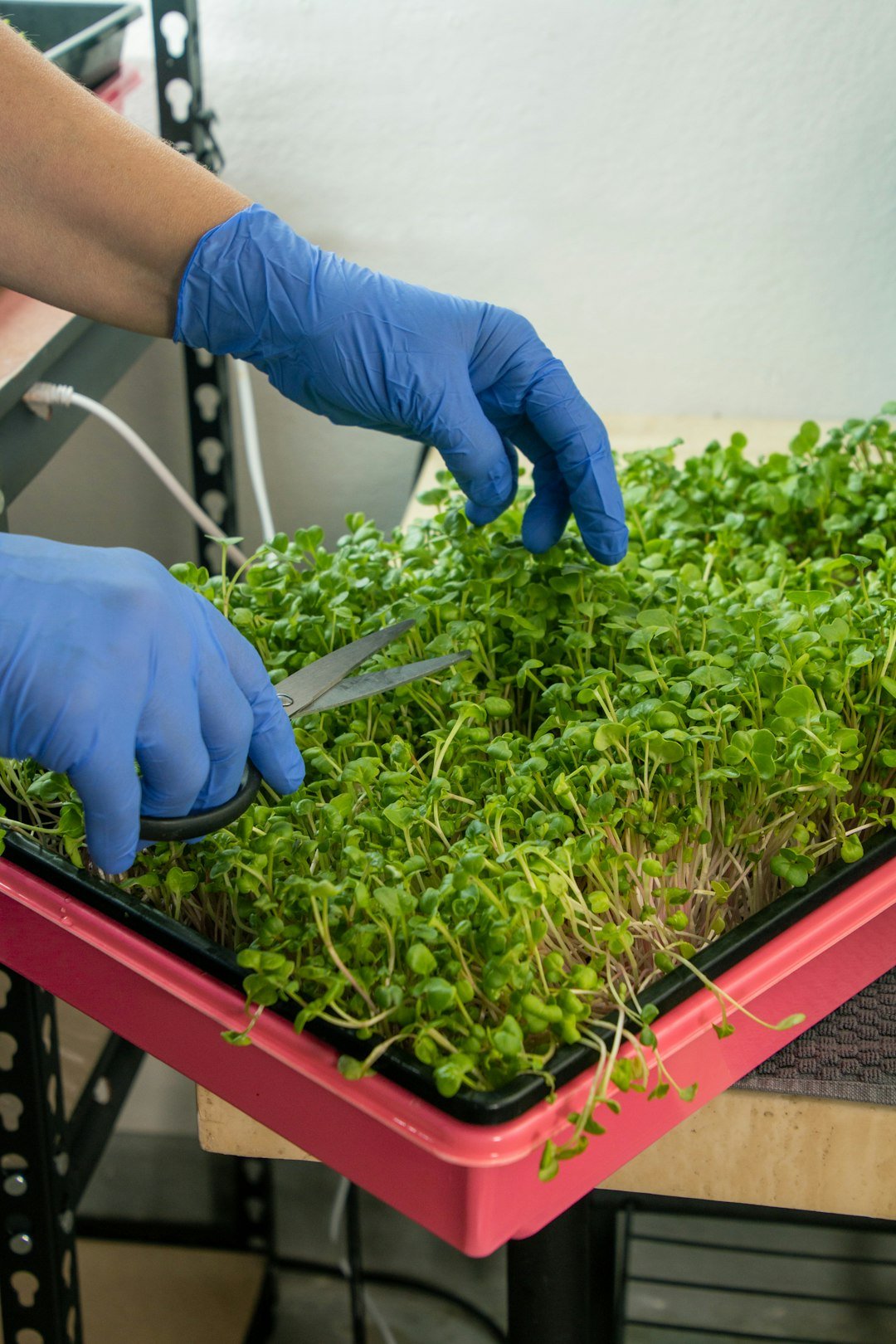
A chilly room doesn’t always mean your seeds are chilly too.
I notice this most in basements: the air seems fine, but the tray bottom feels surprisingly cold. That matters because seeds respond to the temperature of the media and tray, not the room label alone.
If the mix stays cool, germination can drag even at a “not that cold” room temp. A heat mat can help, but it’s not automatic gear for cold-room microgreens supplies; I treat it more like a fix for cold trays than a fix for every cool space.
- Tray underside colder than your hand usually matters more than the wall thermometer.
- Dense shelves, concrete floors, and metal racks can pull heat from trays.
When a heat mat actually helps
What counts as cold here?
For me, “cold” starts when the tray and soil feel cooler than the room suggests. A basement at 62°F can act colder if the tray sits over concrete or metal.
So do I need a heat mat?
Sometimes, yes—mostly for germination. If sprouting is slow or uneven, gentle bottom warmth can help the seed zone more than warming the whole room.
When is a mat probably unnecessary?
If seeds pop on time and the medium doesn’t feel chilled, I usually skip it. Many microgreens grow fine in a cool room once they’re up.
What should I check first?
I start with the tray bottom, shelf material, and moisture. Cold, wet media holds that chill longer, which is often the real slowdown.
Where bottom heat makes the biggest difference
At what stage does a heat mat usually help most?
In my experience, it matters most during germination. Once most seeds have popped, the tray often does fine without extra warmth unless the room stays quite chilly.
Which setups tend to benefit the most?
I notice the biggest gain when trays sit on concrete, stone, or metal shelving in a cool basement, garage, or porch room. Those surfaces can pull heat from the root zone even when the air itself seems acceptable.
How can I tell the tray is colder than the room?
A room thermometer can say 65°F, while the mix still feels cool to the touch. Slow, uneven sprouting is often the clue I notice first.
Can I skip the heat mat and use insulation instead?
Sometimes, yes. A piece of foam board, cardboard, cork, or even a folded towel under the tray can reduce heat loss enough to narrow the gap.
If the room is only a little cold, I usually try insulation first.
Put something non-conductive under the tray Check whether germination speeds up before adding heat After emergence, reassess rather than heating by defaultI also keep an eye on how different growing mats hold moisture and warmth, because a wetter surface can stay cooler than I expect.
When I usually skip the heat mat
Can microgreens handle a cool room?
Often, yes. If the room stays pretty steady and trays are sprouting on schedule, I usually leave the mat off.
What tells me extra heat isn’t needed?
I look for even germination, decent speed, and mix that stays moist without turning swampy. Those signs matter more to me than the room temperature by itself.
Can a heat mat cause problems?
It can. Bottom heat can dry the mix faster while a cover traps humidity above, which may lead to heavy condensation and uneven moisture.
What if the room feels chilly anyway?
I first check the surface under the tray. If it’s concrete or metal, a simple board or towel sometimes fixes the real cold spot without adding more heat.
In a cool but stable room, extra heat can make the tray harder to balance. I’ve seen warm bottoms, wet lids, and patchier growth show up together.
Before adding heat, I pay attention to cover time and blackout needs during germination. If seedlings are emerging evenly, adding warmth can create a problem that wasn’t there before.
A quick before-you-buy heat mat test
-
Check the tray, not just the room
I look at media temperature near the surface and at the tray bottom, especially in the morning or right after watering. A cool shelf, wet mix, or metal rack can make the root zone colder than the air feels.
-
Notice whether the problem is slow or uneven
If everything is simply a day or two late, cold may be part of it. If germination is patchy, I also suspect uneven watering, poor seed contact, or a tray that dries out at the edges.
-
Set up two matching trays
Use the same seed, sowing rate, medium, cover, and watering. Put one tray on bottom heat and leave the other off, so temperature is the only meaningful difference.
-
Keep the rest of the setup steady
I try not to change lighting, airflow, or shelf position during the test. If the surface underneath is very cold, I note that too, since insulation alone can sometimes change the result.
-
Compare speed and uniformity
If the warmed tray pops earlier and more evenly, a heat mat could help. If both trays act about the same, I’d also look into other reasons microgreens are not germinating before blaming temperature alone.
A small difference matters more than a dramatic one.
Delayed germination: often points to a cool tray or media. Patchy germination: can come from cold, but it also commonly shows up with uneven moisture or seeding.If only the heated tray improves, that’s a useful clue. If both trays struggle, I treat the heat mat as one possible factor, not the whole answer.
If I do use a heat mat, how do I keep it simple?
How warm should I run it?
I keep it modest rather than trying to make a cool room feel warm. The goal is usually to take the chill off the tray, not to push fast growth.
Do I need to check water more often?
Usually, yes. Bottom heat can dry the mix sooner, so I peek at moisture a bit more often and watch for dry tray edges.
When do I take the mat away?
For many microgreens, I start easing off once most seeds have emerged. After that point, the mat often matters less than steady light, airflow, and even moisture.
What rule of thumb do I use?
If trays sit on a genuinely cold surface and germination drags, a mat can help. If the room is just cool but trays are still sprouting well, I usually treat the mat as optional.
A small tool, not a default
- Use low, steady bottom heat.
- Check moisture sooner than usual.
- Reduce or remove heat after emergence.
When I use a heat mat, I treat it like a targeted fix for cold trays, not part of every setup. A gentle boost during germination can help, but it also makes me pay closer attention to drying and timing.
My simple rule: if the tray itself is staying cold, a mat can be useful. If seeds are already emerging reliably, I usually skip the extra heat.

I’m glad you mentioned that extra bottom heat can make drying worse, because that’s exactly what happened to me and everyone kept saying “just add heat.” 😅
My question is about the post-emergence part: once they’ve popped, do you remove the tray from the mat immediately or taper for another day or two? I grow in a spare room that swings a bit at night, so I’m never sure if taking them off right away is best or if that shocks them.
If emergence is underway and fairly even, I usually take them off right away or very soon after. For most microgreens, the main value of the mat is getting through germination, not continuing to warm the tray after that.
If your room dips at night, a short taper can be reasonable — for example, leaving them on only during the coldest period or for one extra day while watching moisture closely. The main thing is not letting the root zone stay warmer than necessary once the canopy is up, because that’s when drying and condensation problems tend to show up.
I leave mine on for one extra night max if the room is chilly. Any longer and I start getting that weird “top looks moist, mix is actually drying out underneath” situation.