
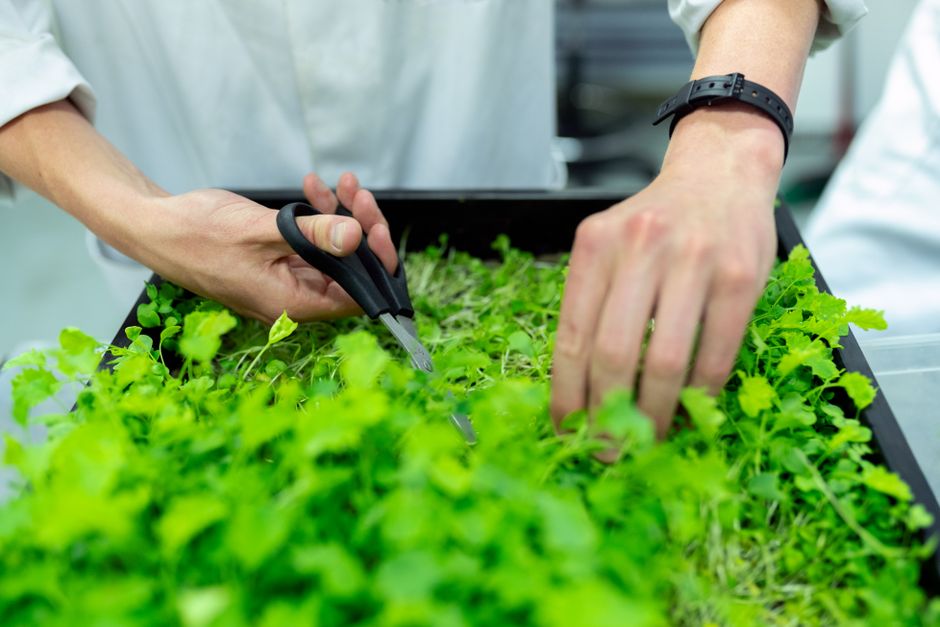
Microgreen timing feels tidy—until the tray starts growing on its own schedule.
A tray of radish, basil, or pea shoots can look almost identical on sowing day: damp mix, scattered seed, a cover on top. Then the guessing begins. One packet says harvest in 7 days, another says 14, and a cool windowsill may stretch both numbers longer than expected.
That uncertainty is normal. Microgreens follow a rough rhythm, but variety, temperature, light, seed density, and harvest preference all nudge the calendar. Fast brassicas can be ready while slower herbs are still finding their footing. The useful approach is to think in ranges rather than deadlines: timing can be planned, just not pinned to one universal number.
Most microgreens are ready in 1–2 weeks
- Typical range Many popular microgreens, including radish, broccoli, kale, cabbage, mustard, and arugula, are commonly cut about 7–14 days after sowing. Fast crops may be harvestable near the early end; cooler rooms or dimmer light can push them later.
- Slower crops Slower or larger-seeded crops often need more patience. Pea shoots, sunflower, cilantro, beet, basil, and some herbs may run closer to 14–21 days or beyond, especially when grown for taller stems or a fuller tray.
- Counting days Grow time usually means the span from sowing seed in the tray to cutting the greens. If seeds are soaked first, that soaking period may be listed separately. A broader home microgreens growing guide can help place timing alongside trays, light, and watering.
- Growth stages Most trays move through a short soak if needed, a germination or blackout period, then several days under light. Harvest is a window, not a single moment: stems lengthen, seed leaves open, and flavor can shift noticeably over a few days.
Why variety changes the timeline
Variety is usually the biggest reason one tray finishes before another. Each crop has its own seed size, germination rhythm, stem thickness, and pace of leaf development, so two trays grown side by side can still be ready days apart.
Fast brassicas such as broccoli, radish, mustard, and cabbage tend to sprout quickly and form usable leaves early. Many are harvested while the stems are still tender and the cotyledons look full, often before much true-leaf growth appears.
Slower crops take more patience for different reasons:
- Herbs such as basil, cilantro, and parsley often germinate unevenly and need more time to size up.
- Large-seeded crops like peas, sunflower, and nasturtium may produce thicker shoots that are harvested at a different stage.
- Delicate greens may be ready early but lose quality if left too long.
A shorter timeline is not automatically better. A quick radish tray can be crisp and spicy, while a slower pea shoot tray may offer more height, sweetness, and texture.
Microgreens timing chart by variety
The ranges below are useful for planning trays, but they are not harvest appointments. A cool room, dim light, old seed, thick sowing, or extra-large harvest size can easily add a few days. Warmer, brighter, well-ventilated setups often move faster.
“Blackout” usually means keeping the seeded tray covered and dark while roots anchor and stems stretch. Some growers uncover as soon as seedlings lift the cover; others wait until the crop looks sturdy enough to green up under light.
| Variety | Germination | Blackout | Typical harvest | Flavor and texture notes |
|---|---|---|---|---|
| Radish | 1–3 days | 2–4 days | 6–10 days | Crisp, juicy, peppery; one of the quicker trays. |
| Broccoli | 2–4 days | 3–5 days | 8–12 days | Mild brassica flavor, tender stems, forgiving for beginners. |
| Kale | 2–4 days | 3–5 days | 8–14 days | Mild, leafy, slightly cabbage-like; often harvested small and tender. |
| Mustard | 1–3 days | 2–4 days | 7–12 days | Sharp and spicy; heat can intensify with maturity. |
| Arugula | 2–4 days | 2–4 days | 8–14 days | Peppery, delicate leaves; prefers not to be overcrowded. |
| Pea shoots | 2–4 days, often after soaking | 3–5 days | 10–16 days | Sweet, crunchy shoots; can be harvested taller than many greens. |
| Sunflower shoots | 2–4 days, often after soaking | 3–5 days | 8–14 days | Nutty, thick, crisp stems; hulls may need brushing off. |
| Cilantro | 5–10 days | 5–8 days | 18–28+ days | Fresh, herbal, slower and more uneven than brassicas. |
| Basil | 4–7 days | 3–6 days | 16–25+ days | Fragrant, tender, warmth-loving; can stall in cool rooms. |
For a first few trays, fast brassicas such as radish, broccoli, kale, mustard, and arugula make the timing easier to read. They usually show clear progress each day, which helps with learning when to uncover, light, water, and harvest.
Slower crops are not harder in every way, but they ask for more patience. Peas and sunflowers take up more space and water, while cilantro and basil often need a gentler pace and more consistent warmth.
Fast microgreens for quick harvests
For a first tray or a low-patience week, brassicas and spicy greens are usually the friendliest choices. Radish and mustard are often the quickest, with sturdy stems, eager germination, and noticeable flavor even when the greens are still small. Broccoli, cabbage, and kale tend to be only a little slower, but they stay forgiving because they form an even, tender canopy without much fuss.
These crops finish fast because their seeds wake up readily and put energy into a simple stem-and-leaf structure right away. They do not need the longer root development of pea shoots or the slower, delicate growth pattern of many herbs. Under bright light, moderate moisture, and decent airflow, many trays reach a usable size in 7–10 days, though cooler rooms can stretch that window.
Spicy crops have an extra bit of flexibility: harvest timing changes the flavor. A young radish tray may taste crisp and sharp, while a later harvest can feel stronger, leafier, and a little more fibrous. Mustard and arugula behave similarly, so tasting a few stems is often more useful than watching the calendar alone.
Slower crops that still fit a weekly routine
Pea shoots, sunflower, wheatgrass, buckwheat, beet, chard, and lettuce-style mixes often land closer to the 10–21 day range. They are not difficult, but they reward a steadier setup: even moisture, moderate seed spacing, and enough airflow to keep thicker growth from staying damp.
Larger seeds usually benefit from soaking before sowing. Peas and sunflower seeds commonly plump up after several hours in water, which helps them start more evenly. Sunflower also needs a little observation as it grows, because the hulls can cling to the leaves; gentle brushing once the greens are upright often loosens them.
Pea shoots are usually harvested taller than many microgreens, often when they have sturdy stems and small tendrils. If they stretch too far in low light, stems may bend or feel stringy rather than crisp. Wheatgrass is different again: it grows as a dense blade crop, so airflow matters more than appearance.
Beet, chard, buckwheat, and lettuce-style mixes can be slower to size up, and stems may be finer at first. A slightly lighter tray can help them stand better, especially in humid rooms; the right sowing density for each variety makes a noticeable difference.
Specialty trays that take extra patience
Some trays sit outside the usual quick-harvest rhythm. Basil, cilantro, parsley, and celery often need more time to germinate and may grow unevenly at first. They can still make charming microgreens, but they are better treated as small flavor projects than dependable one-week crops.
Herb trays usually reward patience with a more distinct aroma. Cilantro may push up slowly, then suddenly look harvestable once true leaves begin to show. Parsley and celery can be even slower, sometimes feeling quiet for several days before visible growth catches up.
Delicate crops such as amaranth and beet can also be less predictable. Their thin stems and colorful leaves are beautiful, but they tend to be more sensitive to sowing density, moisture, and light. A tray that is too crowded or too wet may lean, mat, or struggle with airflow.
For these slower specialty choices, a relaxed harvest window helps. Expect roughly 14–25 days, with some trays taking longer depending on seed freshness and room temperature.
When a Tray Runs Early or Late
A tray that seems ahead or behind is usually responding to its surroundings, not breaking the rules. Warmth speeds germination and stem growth, while cool rooms can add several days, especially for peas, cilantro, basil, and other slower crops. Strong, close light keeps stems compact; weak or distant light often creates tall, pale greens that look “ready” by height but still feel thin.
Seed condition matters too. Older seed may sprout unevenly, and large seeds such as peas, sunflower, cilantro, and beet often benefit from soaking when the variety calls for it. Skipping a helpful soak can delay the tray; soaking tiny seeds that prefer to stay dry can cause clumping or poor airflow.
Moisture and air are the quiet timing controls. A tray that dries out repeatedly may stall, while a soggy tray can grow slowly and develop off smells. Shallow trays warm and dry faster; deeper trays or dense soil mixes hold more water, which can be helpful or troublesome depending on the crop.
The calendar is a guide, not the judge. Harvest when the greens look open, fresh, and evenly colored, and when the stems feel crisp rather than limp or stringy. For more detail, compare with harvest timing beyond height, especially for crops that taste better before they get tall.
A simple check can prevent guesswork: note the room temperature, light distance, watering pattern, and seed lot on the tray label. If the next tray is faster or slower, the likely cause is easier to spot.
Turn the timing ranges into a sowing calendar
-
Pick a harvest window
Start with the day or few days when fresh trays would be most useful, such as a weekend meal prep window.
-
Group crops by speed
Use fast crops for the first harvest, medium crops for the main rotation, and slow crops only if their longer wait fits the plan.
-
Count backward from harvest
For a 10-day radish tray, sow about 10 days before the target. For a 16-day pea tray, sow more than two weeks ahead.
-
Add a home-growing buffer
Cool rooms, dim light, dense sowing, or cautious watering can add a few days, so a 2–4 day cushion keeps the schedule relaxed.
-
Stagger small batches
Sowing one or two trays every few days usually gives steadier greens than starting everything at once.
- Start with the crop name, not the calendar date.
- Use the harvest range as a guide, then adjust for soaking crops and slower herbs.
- Cut when the tray looks upright, tender, and easy to use in a meal.
Microgreen timing gets much easier when the variety comes first. A tray of radish, broccoli, pea shoots, basil, or cilantro all follows a different rhythm, so the useful question is not a single harvest day, but the normal range for that crop.
From there, note any extra steps: soaking larger seeds, giving slow herbs more time, or waiting through uneven germination. Most trays offer a forgiving window once they are tall enough and still tender. If the greens look fresh, upright, and usable, the tray is probably ready to enjoy.

What about growing in a colder kitchen? The article mentions environment shifting trays early or late, but I’d love a rough rule of thumb.
My house sits around 64–66°F in winter, and almost everything takes longer than the internet claims. Radish is still fast, but basil and cilantro feel like I’m raising pets, not microgreens.
At 64–66°F, it’s normal for trays to run slower, especially herbs and larger seeds. A rough expectation would be adding a few days to common 7–14 day crops, and possibly more for basil, cilantro, parsley, and similar slower varieties.
The main thing is to avoid compensating with too much water, because cooler trays also dry out more slowly. Warmer germination conditions can help, but once growth starts, visual cues are still more reliable than the calendar.
The part about harvest based on texture cues instead of exact dates makes sense, but how do you decide that with pea shoots?
Mine always look “ready” around day 9-10, but the stems are still kind of floppy unless I let them go longer. Is that a density issue, or are peas just one of those slower crops where the window is more forgiving?
Pea shoots are definitely more forgiving than something like radish or mustard. If they look tall enough but feel floppy, density and light are usually the first things to check. Too-dense sowing can make them stretch and stay weaker, and low light after blackout can do the same.
For peas, I’d rather harvest a little later when the stems have firmed up than force them into a strict 10-day schedule. Also, a soak and good airflow help a lot with sturdier growth.
I appreciate the timing chart idea, but I’m still confused by blackout periods. If a crop germinates quickly, do you always end blackout early, or keep it dark for the full recommended range?
I’ve had broccoli get leggy when I forgot it for one extra day, but sunflower seems to shrug off my neglect like nothing happened 😂
Same experience here with broccoli. One extra day under blackout and it goes full spaghetti mode. I started checking twice a day once it’s germinated, especially with brassicas.
Does seed density change the harvest timing enough to matter for beginners, or is it more about quality?
I’ve seen charts that say X grams per tray, but then people online use wildly different amounts and somehow everyone claims theirs is correct. Microgreens math is weird.
I like the point that quick crops aren’t automatically better. Honestly, mustard in 7 days is fun, but sometimes it’s too intense unless I cut it earlier or mix it with milder greens.
Do you plan sowing calendars by flavor too, or just by speed group? Like, would you stagger spicy crops differently so you don’t end up with a whole fridge full of tiny horseradish vibes?
Yes, flavor is absolutely worth planning around. Speed groups are useful for timing, but a weekly tray plan works better if you balance quick spicy crops with milder ones like broccoli, cabbage, pea shoots, or sunflower.
For radish, mustard, and arugula, you can also harvest at slightly different stages to soften or intensify the flavor. I usually recommend smaller sowings of the punchier varieties unless you know you’ll use them quickly.
“Tiny horseradish vibes” is painfully accurate. I started doing half trays of radish because one full tray was basically a condiment commitment.
The specialty trays section was helpful, especially the note that herbs grow less uniformly. I tried basil once and thought I had ruined it because half the tray was ahead and half was just sitting there looking offended.
Would love a future post on which slow crops are actually worth the patience for home growers vs. ones that are better bought from someone else.