
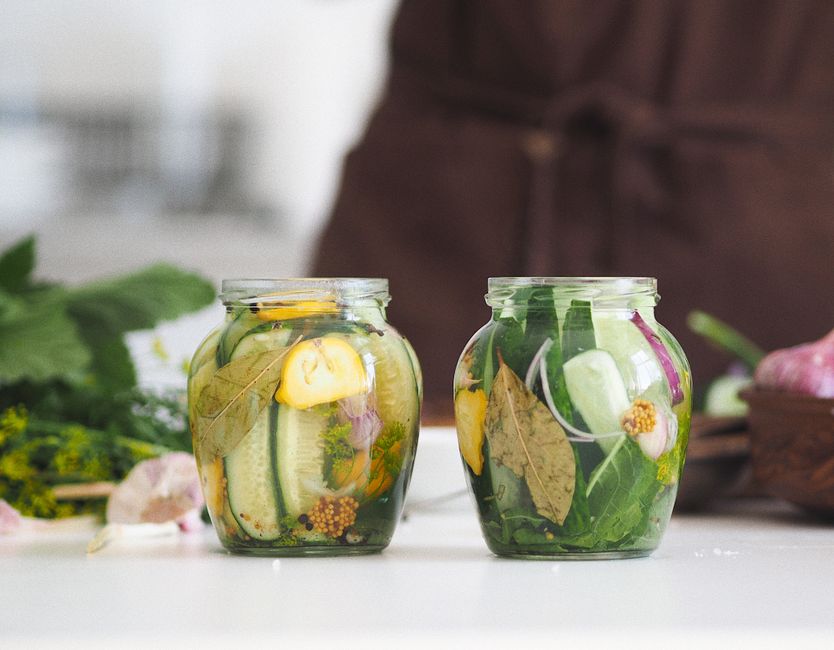
A fermenting jar is patient—right up until it is not.
A jar of cabbage or peppers often starts bubbling hardest on the same day the calendar fills up: meetings run late, groceries need picking up, and the counter gets ignored until bedtime. That is when a tiny maintenance task can turn into a sticky rim, a sharp sour smell in the kitchen, or brine creeping under the jar.
Fermentation lids are really about matching the jar to the amount of attention available. Pressure needs somewhere to go, but different lids handle that job differently. A soft silicone lid may quietly flex and vent with little fuss. A more traditional airlock-style setup can make activity easy to see, but may ask for a bit more space, setup, or cleaning. For a busy fermenter, the calmer choice is often the one that makes neglect less dramatic—not the one that looks most impressive on day one.
- Silicone self-burping lids tend to suit small kitchens, crowded counters, and quick cleanup routines.
- Auto-venting jar kits can appeal when a more visible, structured setup feels reassuring.
Fast match for busy fermenting


How the venting works
Fermentation lids have a simple job: let carbon dioxide escape while making it harder for fresh oxygen to drift back in. That matters because active vegetables can produce steady gas, especially in the first few days, and trapped pressure can push brine upward or make a jar messy to open.
Silicone self-burping lids usually handle this quietly. A lid such as the Heavy-Duty Silicone Self-Burping Jar Lids can flex as pressure builds, then release gas through a small valve or slit. There is often no dramatic bubbling to watch, which suits a low-fuss countertop routine.
Airlock-style lids make the same process easier to see. With a kit such as the Stainless Steel Auto-Venting Fermenter Kit for Jars, gas travels through a venting path or airlock chamber, so bubbling or movement gives a quick visual cue that fermentation is active. That visibility is one reason many people compare options when deciding whether an airlock is worth using.
Neither style fixes the basics. Clean jars, vegetables kept under brine, enough headspace, and a reasonably steady room temperature still do much of the work.
A lid can help manage pressure and oxygen exposure, but it is not a substitute for good setup. Floaters above the brine, dirty rims, or very warm rooms can still cause trouble.
|
Durable silicone pick
Heavy-Duty Silicone Self-Burping Jar Lids
|
VS |
Value airlock kit
Stainless Steel Auto-Venting Fermenter Kit for Jars
|
|---|---|---|
|
Press on
|
Setup time |
Assemble pieces
|
|
One-piece lid
|
Parts to track |
Lid, grommet, airlock
|
|
Few crevices
|
Cleaning friction |
More small spots
|
|
Stacks flat
|
Drawer storage |
Taller, fragile
|
|
Mostly hidden
|
Activity visibility |
Bubbles visible
|
| View | View |
Both styles are meant to make unattended fermenting calmer, but the lid-to-jar match is the quiet dealbreaker. A wide-mouth silicone lid that sits snugly can be wonderfully low-effort for a few days away; one that stretches poorly or rides up may feel fussy fast. Airlock kits are similar: the metal lid, silicone grommet, and airlock all need to seat cleanly, or the extra visibility stops feeling worth the added parts.
Regular-mouth and wide-mouth jars are not interchangeable, and even familiar jars can vary once weights, brine level, and headspace are involved. Anyone building a small setup may want to match lids with jars suited to fermentation lids before comparing vent styles.
For sheer forgiveness, silicone has an edge when simplicity matters: fewer pieces, quicker rinsing, flatter storage. Airlocks can feel more reassuring when visible bubbling helps confirm activity, especially with longer ferments or curious check-ins.
One-piece silicone lids for low-fuss jar ferments
Built for repeated, long-term fermenting
These Miniguysa wide-mouth silicone fermentation lids are aimed at the kind of small-batch routine built around mason jars, shredded cabbage, carrots, cucumbers, or a quick kimchi-style batch. The one-piece design keeps the setup familiar: stretch on the lid, let the self-burping vent do its job, and avoid storing extra caps, stems, or water-filled airlocks.
They make the most sense for casual vegetable ferments where countertop space and cleanup matter as much as fermentation theater. At roughly a five-pack price around $20, they also suit anyone keeping several jars going without turning the kitchen into a gear station.
- One-piece silicone design means fewer small parts to wash, lose, or reassemble between batches.
- Low profile helps jars fit more easily in crowded fridges, cabinets, or countertop corners.
- Flexible lids are easy to handle with wet hands and simple to rinse after salty brine splashes.
- A five-pack is handy for staggered small batches rather than one large crock.
- There is little visible bubbling, so progress is less obvious than with a water airlock.
- Performance depends on a snug wide-mouth jar fit and a seal that has not warped or lifted.
- Brine level still needs attention; exposed vegetables can spoil regardless of lid style.
- Soft silicone can pick up strong aromas over time, especially with garlic-heavy ferments.
For busy fermenters who mainly want fewer pieces and less cleanup, these silicone lids are a friendly middle ground. They are not as reassuring to watch as a bubbling airlock, but the compact shape and one-piece build fit well with small, repeatable batches.
The main caveat is that the lid cannot compensate for poor brine coverage or a loose seal. With those basics handled, they offer a tidy way to keep everyday jars moving.
A sturdier airlock setup for repeat wide-mouth batches
Top choice for frequent home fermenters
The Jillmo stainless steel auto-venting kit turns standard wide-mouth mason jars into a more deliberate fermentation station, with metal lids, silicone grommets, and separate airlocks included for four jars.
It suits fermenters who run pickles, kraut, kimchi, or similar jar batches often enough to appreciate dedicated hardware. Compared with a one-piece silicone lid, this setup feels more like traditional airlock fermenting: a bit more assembly, a bit more ritual, and more visible feedback as gas moves through the airlock.
- Four-jar kit feels practical for running multiple batches at once
- Stainless steel lids give the setup a more durable, reusable feel
- Included airlocks and grommets reduce the need to piece parts together
- Bubbling airlocks provide visible fermentation activity, which can be reassuring
- More parts to wash, dry, and store than one-piece silicone lids
- Setup takes a little more attention before each batch
- Airlocks can feel unnecessary for quick or occasional ferments
- Wide-mouth jar compatibility still needs to be checked before buying
The Jillmo kit is a solid middle ground for home fermenters who want reusable stainless lids and the clear feedback of airlocks without moving into bulky crock territory. It feels especially useful when several wide-mouth jars are in rotation.
The tradeoff is fuss: more pieces, more cleaning, and more storage than silicone caps. For frequent batches, that extra structure can feel worthwhile; for occasional jars, a simpler lid may be easier to live with.
What to watch when there is less to watch
Does bubbling prove the ferment is working?
Not by itself. Airlock bubbles show gas escaping, but speed changes with temperature, fill level, brine strength, and seal fit; quieter jars can still be active. For a deeper look, see common airlock bubbling issues.
What if there is no visible activity?
A calm lid after day one is not automatic failure. Subtler clues can matter more: tiny bubbles along the vegetables, a mild sour aroma, cloudy brine, or pressure release when a silicone lid flexes.
Do these lids prevent mold?
Silicone and airlock lids can reduce air exchange, which can help lower mold risk, but they do not make a jar maintenance-free. Clean rims, enough brine, and submerged ingredients still matter.
Are fermentation weights still useful?
Often, yes. A lid vents gas; a weight keeps cabbage, peppers, or cucumbers under brine where they are less exposed to oxygen. Weights are especially helpful with floaty cuts and tightly packed jars.
How often does a busy fermenter need to check?
A quick daily glance is usually enough early on, especially during active bubbling or warm weather. After activity settles, checks can be lighter: confirm the jar is not leaking, drying out, or pushing solids above brine.
A lid that keeps the next batch easy
Silicone self-burping lids make sense when the priority is fewer loose pieces, quick rinsing, and casual small batches that do not need much visual feedback. Heavy-duty silicone options keep the process compact and forgiving, especially where cabinet space and cleanup time matter.
An auto-venting or airlock-style kit earns its place when visible bubbling, firmer hardware, and repeat wide-mouth jar batches feel worth the extra washing. The stainless steel kit fits that lane: more parts, but also clearer activity cues. Among starter fermentation gear choices, the practical winner is usually the lid that makes checking, cleaning, and repeating the next batch feel easy enough to do again.

Which one did you end up choosing for your own kitchen? I’m torn because I like the idea of the Heavy-Duty Silicone Self-Burping Jar Lids, but I also know myself… if I can’t see bubbles I’ll assume I killed it 😂
Also appreciate the reminder about wide-mouth jar fit. I bought some random lids once and they technically fit, but not in a way that made me sleep peacefully.
For my own routine, I’d use silicone for small, casual vegetable ferments and the stainless airlock kit for repeat batches where I want more visible feedback. If seeing activity keeps you from second-guessing the jar, the airlock setup may be worth the extra parts to wash.
Same here. I tried silicone first and kept opening the cupboard like it owed me a status report. Airlocks made me calmer, even if washing the little pieces is mildly ridiculous.
For anyone doing weekly batches, I’d pick the stainless airlock kit. The visible bubbling is not just fun, it’s useful when you’re juggling a few jars and want a quick “yep, still active” check.
The extra cleanup is annoying, though. Not terrible, just enough that I don’t use it for random half-jar experiments.
I’ve used both, and I think the winner depends on whether you’re fermenting because it’s fun or because you want fermented vegetables with the least drama.
The Stainless Steel Auto-Venting Fermenter Kit feels sturdier and more “serious,” especially if I’m making multiple wide-mouth jars of kraut. I like the visible bubbling and the hardware feels reusable in a satisfying way.
But for one jar of radishes or cucumbers? Silicone all day. Less cleanup, less counter clutter, and no tiny airlock parts disappearing into the dishwasher abyss.
I’m skeptical of anything marketed as “self-burping” because I’ve had overflow disasters with hot pepper mash before. Maybe that was more about headspace than the lid, but still.
Does the silicone lid actually prevent pressure buildup well, or is it more like “works if you didn’t overfill the jar and your ferment behaves itself”?
Good question, and your instinct is right: the lid is only one part of the system. Silicone self-burping lids are designed to release gas, but they won’t save an overfilled jar or a very active ferment with too little headspace. For pepper mash or anything especially vigorous, I’d leave generous headspace, use a tray underneath, and check early activity closely.
I’ve used the silicone self-burping lids for kraut and small carrot batches, and they win for me purely because I can toss them in a drawer and forget about them.
That said, the article is right that there’s “less to watch.” The first time I used them I kept wondering if anything was happening because there was no cute little bubbling show. Had to learn to trust the smell + brine coverage instead of hovering like a nervous parent.
That’s exactly the tradeoff. Silicone lids are great when you want the batch to stay low-maintenance, but they don’t give much visual reassurance. I still recommend checking brine level, weights, and surface condition rather than relying on bubbles either way.
The storage point is underrated. I have a small kitchen and the airlock pieces somehow migrate into three different drawers like they’re trying to escape.
Silicone lids are boring, but boring is kind of what I need on a Tuesday night.