
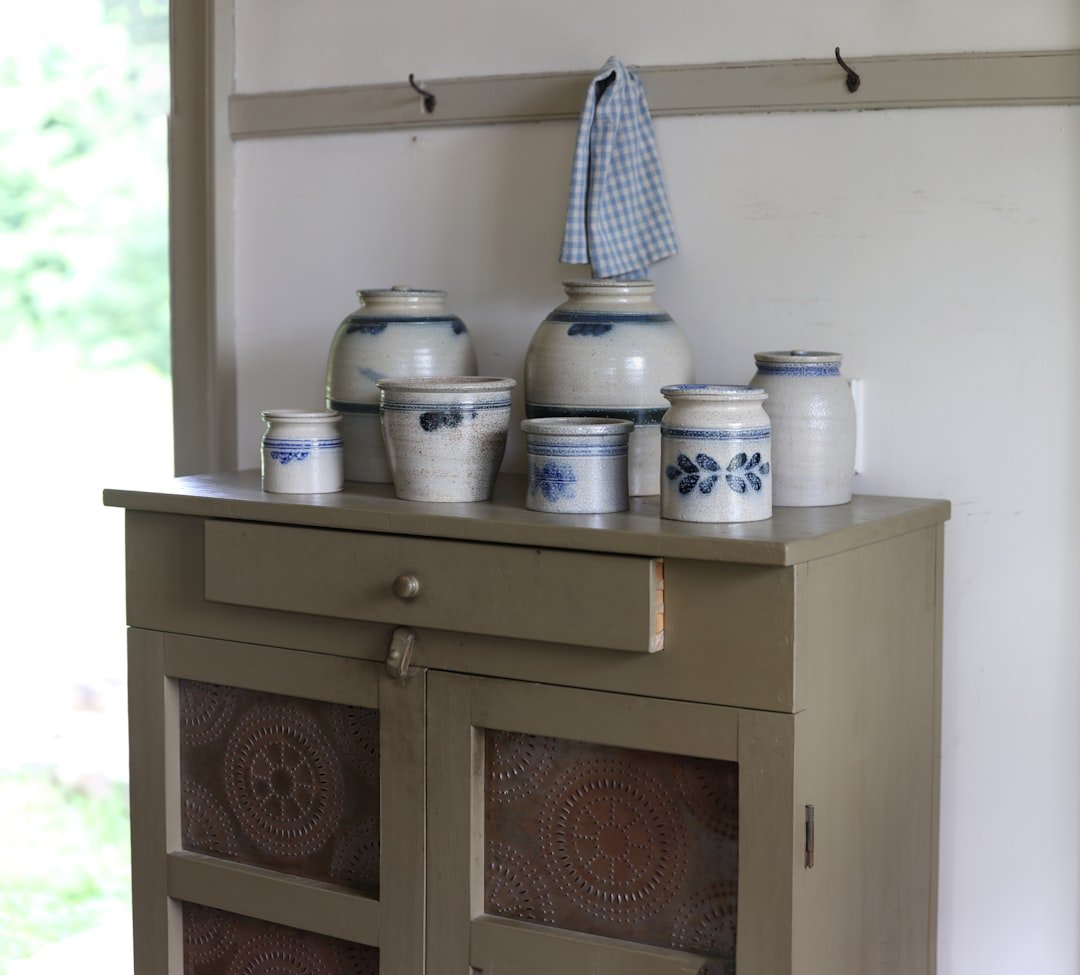
Old crocks can be lovely and worth checking first.
I get the pull of a vintage crock—the heft, the glaze, the story. Still, once food enters the picture, I treat charm as a clue, not a guarantee.
A calm pre-fill check can help sort usable from decorative. Hairline cracks, mystery glazes, and worn interiors are not instant deal-breakers, but they are fair reasons to pause, test, and decide before a batch sits there for weeks.


I test the crock, not the century
I stop asking whether antiques are safe in general. What helps more is a simple pass/fail screen for this exact crock at home.
-
Interior condition
I check for chips, crazing, worn glaze, and rough spots where food or brine could linger.
-
Leak and odor check
A water soak can reveal seepage, stubborn smells, or stains that make the piece feel less trustworthy for fermenting.
-
Working parts
If the rim, lid, or weights don’t fit cleanly, I treat that as a practical warning, not just vintage character.
This kind of home check can help catch obvious problems, but it isn’t lab certification. It also doesn’t give blanket approval to every old crock that looks fine at first glance.
My fast walk-away filter
-
Check the inside before anything else
I look past the pretty exterior and start with the interior. Chips, rough pitting, worn spots, or fine lines inside matter more to me than decorative glaze on the outside.
-
Treat repairs as a real pause
Glue lines, filler, metal staples, or shiny touch-up patches usually tell me the crock has already taken a hit. Even a tidy repair tends to move it out of my fermentation pile.
-
Give it a smell test
Musty, smoky, sour, or chemical odors can linger in ceramic and may not rinse away easily. If the smell makes me hesitate, I count that hesitation.
-
Don’t assume staining is harmless charm
Dark rings, rust-colored marks, and heavy crusty buildup can hide wear or long storage issues. I see deep staining as a reason to slow down, not a bonus.
-
Online, missing photos are their own warning
If a listing skips close-ups of the rim, base, handles, or full interior, I assume I still don’t know enough. Blurry photos and vague lines like ‘good vintage condition’ are enough for me to pause.
The easiest mistake I make is getting sold by the shape, stamp, or glaze color. For a working crock, interior damage, repairs, odors, staining, pitting, or missing detail shots can be enough to walk away early.
Material tells the real story
I’ve learned to trust the contact surface more than the seller’s backstory. “Old pickle crock,” “farmhouse find,” or “stored dry for years” can sound comforting, but none of that tells me what the glaze contains, how it was fired, or whether it was repaired later.
With fermentation, I care less about the romance and more about the chemistry. Plain stoneware bodies can be quite sturdy, but the glaze is what touches salt, acid, and time. If that glaze is unknown, worn thin, or visibly rough, I treat it as an open question—not a green light.
That’s especially true with decorative ceramics. A vessel can look heavy, old, and “rustic” and still be better suited to display than food contact. If I want a quick screen for possible lead concerns in an older crock, a surface swab can help, but I don’t read a single result as a full safety certificate.
A smooth, intact interior gives me more confidence than any charming origin story. A chipped, crazed, or mystery-glazed interior does the opposite.
A clean look, a reputable seller, or a claimed age range can’t confirm glaze chemistry. If the interior is worn or the piece was made for decoration, that uncertainty remains part of the risk picture.
Before use
-
Inspect
-
Tap
-
Soak
-
Watch
Assessing repaired crocks
Helpful for spotting minor fixes before ferment use.
Any seepage or sweating disqualifies it for food use.
Clean it before you judge it
Once the soak is done, I like to remove every old variable before deciding whether a crock is usable. Dust, cellar smell, dried brine, and mystery film can make a sound crock seem worse—or hide a problem that matters.
- Cleaning lifts soil. I usually use hot water, a soft brush, and unscented dish soap, then rinse well.
- Deodorizing tackles lingering smells. A brief baking-soda soak can help with mustiness; if odor stays deep in the clay, I treat that as a caution flag.
- Sanitizing comes last, after the crock is visibly clean. It can reduce surface microbes, but it does not fix cracks, questionable glaze, or absorbed contamination.
I try not to blend all three steps together. When each job is separate, it is much easier to tell whether the crock is actually improving—or just temporarily masked.
A safe crock can still be awkward
Even when a crock passes my safety checks, I still ask a simpler question: will I actually enjoy fermenting in it? A vessel can be perfectly sound and still make packing, weighting, and cleaning more annoying than it needs to be.
A wide mouth usually feels easier to work with. I can pack cabbage more evenly, place weights without scraping my knuckles, and wash the interior with less guesswork. Narrow openings and strong shoulders can trap food bits under the curve, which is frustrating if I’m trying to keep everything clean between batches.
The details that change daily use
Here’s what I look at before filling it:
- Mouth width: wide enough for my hand, weights, and a brush
- Shoulders: gentle curves are easier to clean than abrupt inward lips
- Lid fit: sits steadily and doesn’t wobble or leave obvious gaps
- Headspace: enough room for brine rise and bubbling without frequent overflow
- Real batch size: what it holds comfortably, not just its total volume
Lid fit matters because extra air exposure can make surface management fussier. And realistic batch size matters more than the crock’s full capacity; once I leave room for vegetables, weights, and headspace, usable volume shrinks. In practice, a slightly smaller crock that’s easy to pack and scrub can feel more convenient than a larger, awkward one.
What I’d prioritize when shopping
-
1. Interior condition comes first
If the food-contact surface looks clean, smooth, and boring, I’m interested. Chips, pitting, repairs, or worn glaze move it out of my comfort zone fast.
Look forA sound, intact interior with clear close-up photos.AvoidRomantic listings that skip the inside or hide damage in shadow. -
2. Seller clarity matters next
Good photos, dimensions, and honest notes save a lot of guesswork. I’d rather buy a plain crock with clear answers than a prettier one with vague history.
Look forMultiple photos, measurements, and direct disclosure of flaws.Avoid“Old farmhouse crock” stories with missing basics. -
3. Usability still counts
A crock can be safe enough to test and still be awkward to ferment in. Lid fit, headspace, and a shape that’s easy to clean make day-to-day use simpler.
Look forStable lid, practical opening, and room for weights or brine.AvoidNarrow, hard-to-clean forms or fussy lids. -
4. Let uncertainty decide the fallback
Price only matters after condition and clarity. When little doubts start stacking up, I usually stop chasing vintage and look at a modern crock instead.
Look forDocumented materials and features that reduce unknowns.AvoidA “deal” that depends on me overlooking unanswered questions.
A modern fallback I’d consider
If I wanted fewer unknowns, this one looks like a sensible pivot. The listing calls out high-fired porcelain, a 7L / 1.8-gallon capacity, included weights, and a water-seal moat designed to vent CO₂ while limiting outside air.
At around $90, it’s not the bargain route, but it may suit anyone who’d rather buy documented specs than decode an old glaze story.
A few gray-area calls
Is one overnight water test enough?
It catches obvious leaks, not every slow problem. I trust it more after a soak and dry-out, because acid and time can reveal seepage storage never did.
How much crazing starts to worry me?
I get cautious when lines hold stain, feel rough, or darken after soaking. Fine crackle can sit quietly on a shelf; brine and moisture may make it matter.
Can I ignore exterior chips or cracks?
A small outer chip may be cosmetic. A crack at the rim, base, or handle worries me more, since a full, wet crock keeps stress there.
Do small lid gaps matter?
Sometimes only a little. I look harder when the lid rocks, will not sit flat, or leaves food more exposed, because air management gets trickier over time.
-
Check the inside
I look for pitting, repairs, heavy crazing, or smells.
-
Ask one thing
If glaze or use history stays fuzzy, I count that as uncertainty.
-
Imagine brine time
Leaks, lid wobble, and awkward cleaning matter more than charm.
-
Give it a new job
If it fails food duty, it can still hold tools, flowers, or mail.
A simple yes-or-no test
At a thrift store, I try to leave with a calm answer: yes, this feels easy to trust or no, this can be useful another way. Passing on a questionable crock does not feel wasteful to me; it just moves that piece from fermentation gear to decor or storage.

The “clean it before you judge it” part made sense, but how aggressive would you get with an old crock that smells musty? I’ve seen people online act like baking soda fixes everything, and others basically say one weird odor means run away forever.
I don’t want to overreact, but I also don’t want cabbage that tastes like basement.
Not overreacting at all. First I’d do a normal cleaning to remove soil, then reassess the smell once it’s actually clean and dry. If the odor is mild and disappears, that’s different from a stubborn musty, oily, chemical, or sour smell that seems embedded in the material—those are bigger warnings, especially for fermentation where odors can show up in the batch.
“Cabbage that tastes like basement” is exactly the nightmare scenario 😅 I passed on one for that reason.
Okay dumb question maybe, but what does “sweating” actually look like during the soak test?
Like a full drip/leak is obvious, but if the outside just feels cool/damp in one spot after a while, is that already a no? I’ve got one from my grandma and I’m trying not to be sentimental about it lol
I liked the line about testing the crock, not the century.
But I’m still confused about unknown glazes. If the inside looks glossy and smooth with no wear, is that enough to treat it as lower risk, or is the whole point that you still can’t really know without testing?
Smooth and intact is better than worn, pitted, or decorative interior surfaces, but it still doesn’t tell you the glaze chemistry by itself. That’s why I frame it as lower-risk visually, not automatically safe. If the crock is old, undocumented, and you plan to use it for acidic fermentation, a quick test or choosing a modern crock can remove a lot of uncertainty.
The missing listing photos thing!!! Thank you.
I feel like half the online sellers give you one artsy side angle and zero interior shots, then write “great vintage condition” like that means anything. If there’s no photo of the inside bottom, rim, and lid seat, I’m out now.
This was super helpful because I keep seeing antique crocks at estate sales and never know if I’m being smart or just romantic 😂
When you say “hairline cracks,” do you mean only cracks I can feel with a fingernail, or even those super faint lines that only show up when the light hits them? I always second-guess myself on that part.
If a line catches your nail, shows moisture during a soak, or looks like it travels through the body rather than just sitting in surface glaze, I’d treat it more seriously. Very faint surface-only crazing can be a gray area, but for fermentation I lean cautious because brine, acid, and time tend to make small issues more meaningful.