
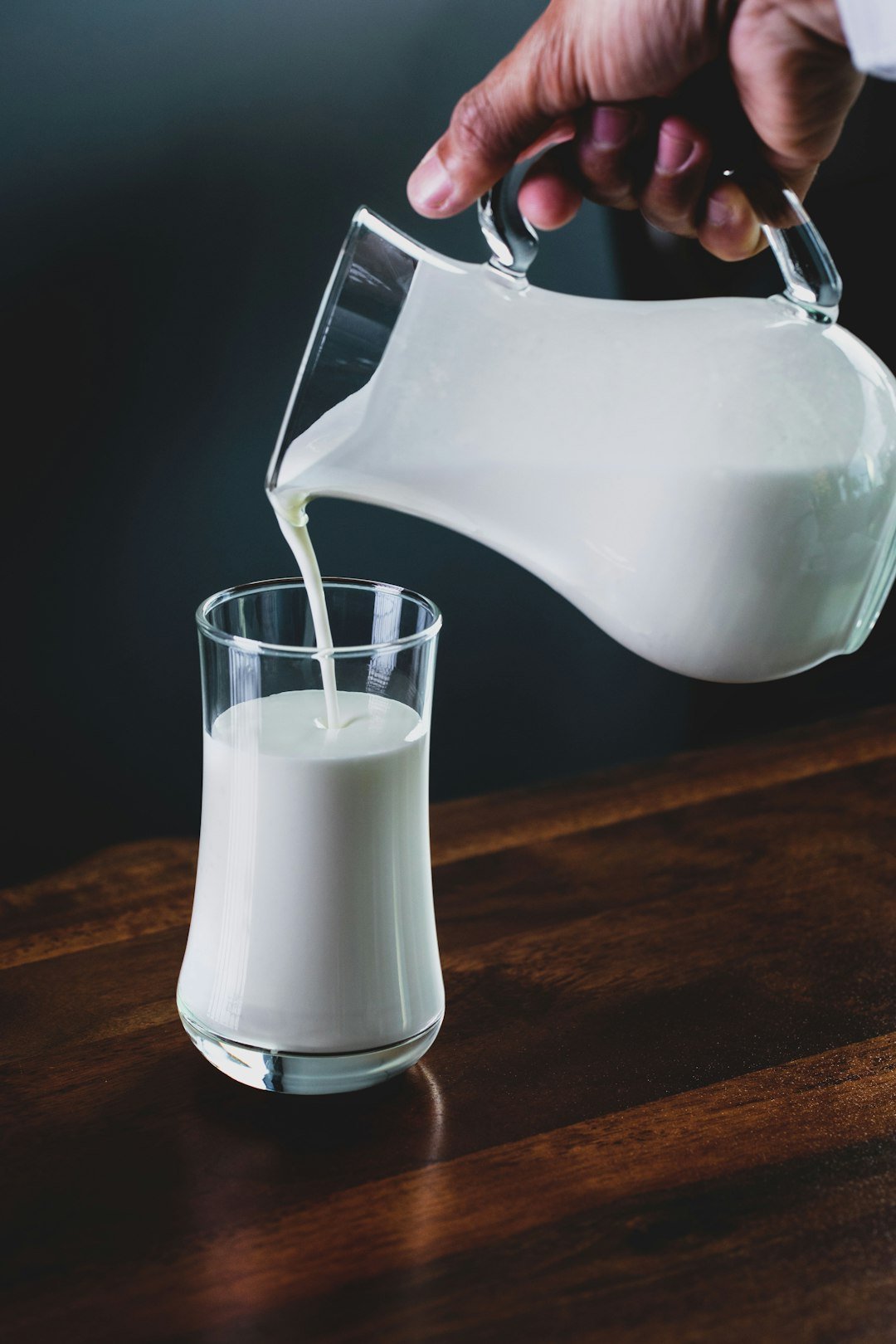
If kefir feels moody, the milk may be the culprit.
One jar turns thick in 18 hours, the next stays thin past a day—even though I used the same grains and the same counter spot. I’ve been stuck in that mystery batch loop too, and often it wasn’t bad luck at all; the milk had quietly changed the result.
Small differences matter. Fat level, how the milk was processed, and whether lactose is already split can all shift texture, tang, and timing. When I keep the milk type and brand steady, my kefir usually lands in a much narrower, more repeatable range.
- Whole milk often comes out creamier.
- 2% may ferment a bit lighter and sometimes a touch faster.
- Lactose-free milk can act differently because the sugars are already broken down.


What “consistent” looks like in a kefir jar
- Predictable timing
For me, consistency starts with a batch finishing in roughly the same window each round, not racing one day and dragging the next.
- Repeatable texture
I’m looking for a similar pour each time—creamy, drinkable, or lightly spoonable—without surprise curds and whey unless I changed the setup.
- Steady grains
Reliable grains usually smell clean and tangy, keep fermenting without drama, and may grow slowly instead of swinging between sluggish and overactive.
- Thick isn’t the same as reliable
A richer, thicker batch can come from higher fat, gentle overheating, or partial separation. Nice texture alone doesn’t mean the milk will behave the same way tomorrow.
- Room for small variation
Kefir still shifts a bit with season and room temperature, so I think in ranges rather than expecting every jar to be identical.
How I judge a milk before recommending it
For steadier batches, I start with milks I can replace easily and compare side by side. I also favor simple labels, since extra ingredients can blur whether a texture change came from the milk or the grains.
-
Easy to replace
Common store brands make troubleshooting simpler. If one carton behaves oddly, I can swap without changing my whole routine.
-
Plain ingredient list
Unflavored milk with fewer add-ins gives me a cleaner read on timing, separation, and texture.
-
Similar batch timing
I watch for milks that ferment on roughly the same schedule from carton to carton.
Weak grains can look like a milk issue. If a familiar milk suddenly acts strange, I sometimes revisit how to pick grains that tend to work well in milk before judging the carton.
The label scan I use in the dairy aisle
-
Plain dairy milk first
I start with regular cow’s milk, not a milk drink or a high-protein remix. The more standard the base milk is, the easier it is for me to predict batch timing.
Look forPasteurized milk labeled simply as whole, 2%, 1%, or skimAvoidMilk drinks, protein-enhanced blends, or products built to be different from standard milk -
A short ingredient line
When the ingredient list stays simple, my kefir usually behaves more predictably. Extra thickeners or milk solids can change body and make one batch feel less comparable to the next.
Look forMilk, with maybe vitamins addedAvoidGums, stabilizers, lots of added solids, or a long list of extras -
A familiar fat level
I usually stick with one fat level for a while instead of bouncing around. Whole and 2% tend to give me more comparable texture from batch to batch than constant switching.
Look forThe same fat percentage you plan to keep buyingAvoidFrequent jumps between skim, low-fat, and whole milk -
Processing or fortification flags
I pause when I see ultra-filtered, lactose-free, or heavily fortified labels. Those milks can still work, but they may ferment a bit differently and add another variable.
Look forStandard pasteurized or even UHT milk with modest fortificationAvoidUltra-filtered, lactose-free, or heavily fortified options when consistency is the goal
Why plain whole cow’s milk is my baseline
When I want a calm reference point, I usually reach for plain whole cow’s milk first. It tends to land in a very workable middle: enough fat for a rounder texture, but not so much richness that the batch starts behaving like cream. For everyday home kefir, that balance often makes timing and texture easier to read.
Another reason is simple: whole milk is usually sold in a very familiar form. Standard pasteurized cartons are common, easy to replace, and less likely to come with special processing quirks that can muddy the results. If I’m trying to figure out whether a change came from the grains or the milk, that predictability helps.
Why it’s such a useful test milk
- Balanced fat level: often gives a smoother body without pushing thickness too far
- Common processing: usually easier to find than niche or reformulated options
- Fewer edge cases: less guesswork than lactose-free, ultra-filtered, or heavily fortified milks
- Easy comparison: buying the same carton again is usually straightforward
That doesn’t mean whole milk is the only good choice. It just works well as a default baseline. If a batch goes off-script, starting again with plain whole milk can help narrow the variables before I blame the grains.
Extra protein can thicken kefir, but it may also make timing less predictable.
Ultra-filtered and protein-enhanced milks often shift the protein-to-sugar balance, so the jar can behave differently from batch to batch.
Plant-based options can ferment, but I usually see wider swings in texture and grain behavior over time.
Many use gums, starches, oils, or added sugars, and most do not feed grains the way dairy lactose does.
Add-ins can change separation, sweetness, and perceived thickness.
Sweeteners, stabilizers, and vitamin blends can mask whether a weird batch came from the milk or from stressed grains.
Why the same milk can still give different kefir
If I buy the same milk every time, why does the texture still move around?
In my kitchen, room temperature usually explains more than the carton does. A warmer counter speeds fermentation, while a cooler one slows it, so the same milk can finish thinner one day and much thicker the next.
How can I tell thin kefir from over-separated kefir?
Thin kefir is still mostly uniform and pourable, just lighter than expected. Over-separated kefir shows distinct curds and whey, often with a sharper smell and a bigger jump from “not ready” to “too far.”
Can grain ratio really change thickness that much?
Yes, sometimes more than I expect. More grains per cup of milk can push the batch along faster, which often means a thicker set at first and then sudden separation if I let it keep going.
Does ferment time matter even when I stop at roughly the same hour?
It can, because “24 hours” behaves differently at 68°F than at 75°F. If timing stays fixed but the room changes, the jar may not land in the same texture window.
When should I suspect grain health instead of the milk?
If batches stay erratic across several rounds of the same plain milk, I start watching the grains. Sluggish fermentation, very fragile grains, or recovery after storage can all make consistency harder to judge for a few batches.
A simple way I’d test for consistency
-
Start with plain whole milk
I’d begin with one familiar brand so I have a clear baseline.
-
Hold the rest steady
Use the same jar, grain amount, room temperature, and timing for 3–5 batches.
-
Judge the pattern, not one batch
What matters is similar thickening time, similar texture, and grains that stay calm.
-
Test one alternative at a time
If I try 2%, goat milk, or a different brand, I change only the milk.
-
Keep short notes
Dates, timing, and texture are usually enough to spot what’s actually repeatable.
Consistency is whatever repeats in your kitchen
If I wanted the least confusing starting point, I’d use plain whole milk and learn its rhythm before chasing extra thickness. If you’re brand new, the basic milk kefir process at home can help you get the setup right first.
After that, I’d judge each milk by repeatable timing and texture, not by one unusually thick batch.

Good article, but I’m still a little skeptical about whole milk being the default answer for everyone.
I get why it’s the baseline for troubleshooting, but in some areas the only whole milk available is ultra-pasteurized in shelf-stable style packaging, while the regular pasteurized option is 2%. In that case would you still pick whole for the fat level, or 2% for the simpler processing?
That tradeoff comes up a lot where I live, so I’m curious how you’d rank those factors.
Honestly the dairy aisle label scan is where I get lost.
Some brands add vitamins, some say cream top, some say homogenized, some brag about being filtered 3 different ways like it’s a NASA project 😂 If the ingredient list just says milk + vitamins, is that still simple enough? Or do you consider fortification one of those things that can muddy the results?
When you say “standard dairy milk,” do you mean regular pasteurized milk only, or is ultra-pasteurized still ok if that’s all my store has? I keep seeing people blame the grains for everything, but your point about stressed grains imitating inconsistency really hit home.
I’m trying to figure out whether my random results are from the milk or from me changing too many things at once 😅
By “standard dairy milk,” I mainly mean plain cow’s milk with a short ingredient list and a familiar fat level, usually whole milk as a baseline. Ultra-pasteurized can still work, but it sometimes makes behavior a little harder to read because timing and texture can shift more from batch to batch.
If that’s what you have access to, I’d use it consistently for several batches before judging it. The biggest mistake is changing milk, temperature, and timing all at once, because then it’s impossible to tell what actually caused the difference.
This was me lol. I switched jars, milk brand, AND room location in one week and then acted shocked when my kefir went weird. Keeping one thing steady helped a ton.
I appreciated the part about protein-boosted milk making things harder to read.
I tried one of those high-protein milks because I thought “more protein = better kefir,” which… maybe not. It got thick fast, but the grains seemed kinda sluggish after a few rounds. Are those milks a hard no, or just not ideal for testing?
Not a hard no, but definitely not my first choice when you’re trying to troubleshoot or compare results. Those milks can ferment, but the extra protein and modified formula often change thickness in a way that makes the kefir look more “successful” than it really is from a consistency standpoint.
If your grains seemed sluggish, I’d move them back to plain whole milk for a few batches and see whether timing becomes steadier again. That usually gives a clearer read on grain health.
Same experience here. It looked amazing for spoon pics, terrible for actually learning what the grains were doing lol.
I wish more kefir posts talked about temperature this directly. People online are always like “just use better milk” and I’m sitting here with a kitchen that goes from 68 to 78 depending on whether the oven was on.
Would you still test a baseline milk if room temp swings that much, or is that already too messy to learn anything useful?
So if thickness alone doesn’t prove consistency, what signs are you personally watching for in the jar? Mine sometimes gets super thick on top but watery underneath, and I can’t tell if that means “done” or “oops.”
This might be a dumb question, but does lactose-free milk automatically make timing less predictable? The article says to be cautious with lactose treatment, and I wasn’t sure if that meant “avoid” or just “don’t use it as your baseline.”