A good first ferment can be wonderfully low-tech.
If you’ve ever paused at a recipe because it wanted airlocks, weights, and a special crock, I get it. My first hot sauce batches worked with a plain jar, a salt brine, and a little patience.
Once I started thinking of them as part of the wider family of fermented sauces and condiments, they felt less precious. What mattered was simpler: clean gear, enough salt, a bit of headspace, and keeping the peppers under the brine so mold had fewer chances. The rest was mostly waiting, sniffing, and noticing the happy bubbles.
How I keep it easy without getting careless
What I do not simplify is checking in. I look for a clean sour smell, some bubbles, and anything clearly off, like fuzzy growth above the brine. Keeping the process easy helps me stay consistent, which usually matters more than making it impressive.
You probably need less than you think
I used to assume fermented hot sauce required a special pepper run and a bunch of dedicated tools. In practice, a first batch can be very ordinary: peppers, salt, water, a jar, and maybe garlic or a little onion if I want more flavor.
For mixing peppers, I keep it simple instead of chasing an exact formula:
- Mild-to-medium base: jalapeño, Fresno, or serrano
- Heat boost: 1–2 habaneros, or a small handful of Thai chiles
- Flavor support: red bell pepper for sweetness, carrot for body, garlic in small amounts
A mix that feels approachable to me is mostly medium peppers with a smaller share of hotter ones. That usually gives me a sauce with some depth and heat, without turning the whole jar into a dare.
Frozen peppers are also more usable than people often expect. I’ve combined thawed garden peppers with fresh ones and still gotten a lively batch. They tend to go softer faster, but for a home ferment, that can be completely workable when pepper season and sauce-making energy don’t happen at the same time.
My quick, unfussy prep routine
-
Rinse, trim, and roughly chop
I wash the peppers, remove anything soft or damaged, and cut them into chunks. Neat pieces do not matter much here.
-
Pack the jar loosely
I add peppers, garlic, or onion in layers and leave a little room at the top. Tight packing can make bubbling messier later.
-
Mix a simple brine
I stir salt into water until it dissolves, then pour it over the peppers. If you want a fuller look at the brine salt range I keep in mind, that can help make the numbers feel less mysterious.
-
Keep everything under the liquid
I press the peppers down, add a weight if needed, and make sure no bits are floating high and dry. Then I leave some headspace for activity.
-
Let the jar do the work
After that, it is mostly waiting and checking. I look for bubbles, a slightly tangy smell, and peppers that stay submerged.
I usually keep it pretty simple:
By total weight: around 2% to 2.5% salt for the peppers and water together By water volume: about 20 to 25 grams salt per liter of waterThat range has felt approachable and steady for home batches. If a room is especially warm, some people edge a little higher, closer to 3%, to slow things down a bit.
Pack the jar loosely
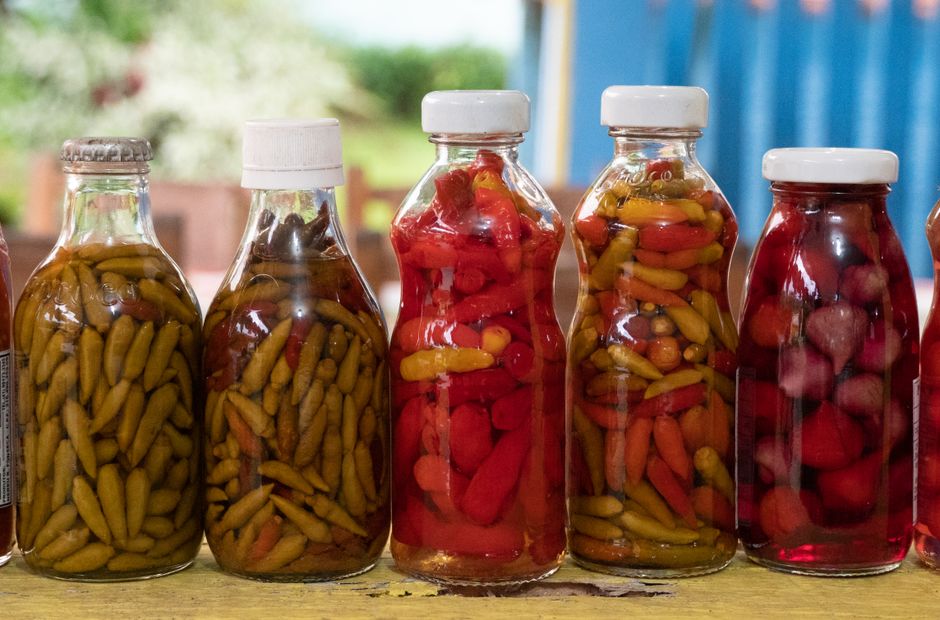
I pack loosely, keep solids under brine, and leave headspace so bubbles can rise without a mess.
No weights? A cabbage leaf helps.
Simple jar packing
Good visual for loose packing and headspace.
What I expect to see — and what makes me stop
Is cloudy brine a bad sign?
Usually, no. My jars often turn cloudy as the ferment gets going, and a little sediment at the bottom is normal too.
What about bubbles, hissing, or brine creeping up?
That’s usually active fermentation doing its thing. I expect some fizz, a slightly sour smell, and sometimes a little overflow if I packed the jar generously.
I see a thin white film on top. Is that mold?
Not always. A flat, pale film can be kahm yeast, which is common and more annoying than dangerous, though it can affect flavor; fuzzy growth in green, blue, black, pink, or orange is the line where I toss the batch.
How should it smell?
I look for sour, sharp, peppery, or a little funky in a clean way. If it smells rotten, meaty, or like garbage, I don’t try to talk myself into keeping it.
Do softer peppers mean it failed?
No — peppers usually soften as they ferment. I only get concerned when the texture turns slimy in a way that feels clearly off, especially alongside bad smell or visible mold.
Fermentation looks messy before it looks convincing. Once I know the peppers are submerged, the jar has headspace, and the smell stays in the sour-pepper zone, I mostly let time do the work.
How I turn the mash into sauce
-
Save the brine before I blend
I lift the fermented peppers out first, then keep the brine next to me instead of dumping it. That gives me an easy way to loosen the sauce later without guessing.
-
Start thicker than I think I need
I blend the peppers and any garlic or onion from the jar in short bursts. A thick mash is easier to thin than a watery sauce is to fix.
-
Adjust the texture a little at a time
If the blender struggles, I add brine by the spoonful, not in big pours. I stop when it moves easily but still has some body, because I usually like hot sauce that feels a little alive rather than perfectly smooth.
-
Tweak the tang to match my taste
This is the part I keep personal. If it tastes bright enough already, I leave it alone; if I want more edge, a small splash of vinegar can sharpen it without changing everything.
-
Strain only if I want a smoother bottle
Sometimes I strain out the skins and seeds, sometimes I do not. A rustic sauce can taste just as good, so I treat smoothness as a preference, not a requirement.
The flavor often settles after a day in the fridge, so I try it again before changing too much.
When a sauce is nearly done, even tiny additions can shift it a lot. I get better results by adjusting in small steps, tasting, and stopping as soon as it feels right to me.
Once it tastes good to me, I pour it into a clean bottle or jar and move it to the fridge. The cold can slow things down, and the flavor often settles after a day or two. A sauce that feels a little sharp, salty, or uneven right after blending can come together nicely with a little time.
For me, a successful first batch is not about making a perfect sauce. It is about ending up with something I will actually use and learning what I like. I try to jot down the peppers, salt range, any vinegar or brine I added, and what I might change next time—thinner, brighter, hotter, smokier, or less funky. That small note usually helps the next batch feel much more dialed in.

I appreciated the part about kahm yeast because every other article acts like one pale film means immediate doom lol. Mine gets that thin white layer sometimes, and I usually skim it and keep going if it still smells right.
I tried your loose packing advice after previously stuffing jars way too tight, and wow… yes, overflow was less dramatic this time.
Before, I kept basically making pepper volcanoes on my counter. Leaving headspace and not cramming every last piece in there made a huge difference. Still active, still bubbly, just less chaos.