
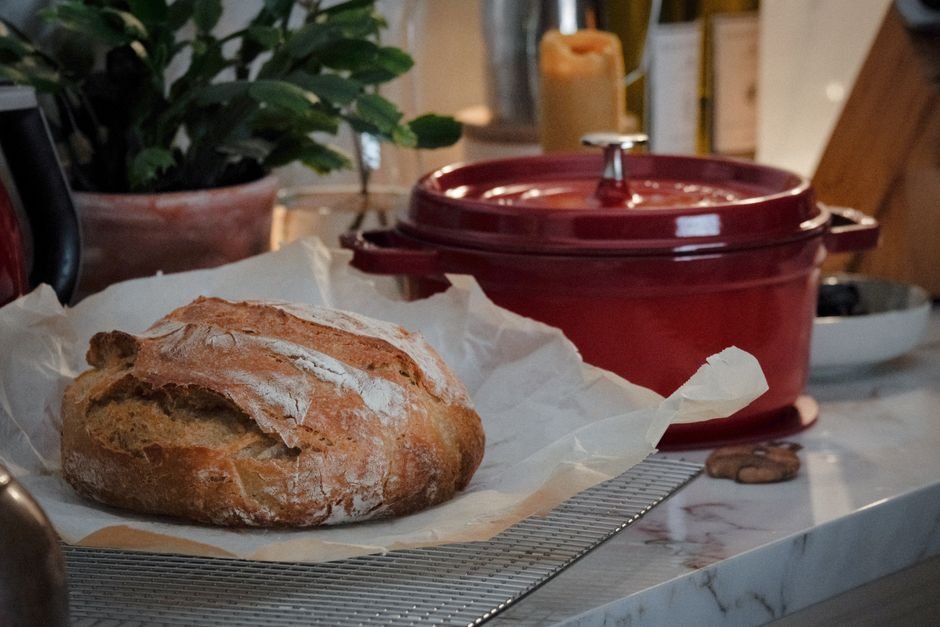
Sometimes the loaf isn’t the only thing working against your oven spring.
You lift the lid expecting height and a nice ear, and instead the dough has lounged outward like it gave up halfway. I’ve had bakes like that after doing everything that seemed right—active starter, careful shaping, a clean score. In that moment, it’s easy to blame fermentation or gluten alone. Those are often part of it, but the pot can quietly make the problem look worse.
A dough with marginal strength may still rise better in a snug, thoroughly preheated vessel. A pot that’s too wide gives slack dough more room to spread before the crust sets, and one that heats slowly can delay that early lift even more. That’s why, beyond the essential sourdough baking guide, I pay attention to the shape, diameter, and heat retention of the Dutch oven itself. Weak dough is real—but sometimes the vessel is amplifying the flat-loaf drama.
The short list I’d start with for flatter loaves


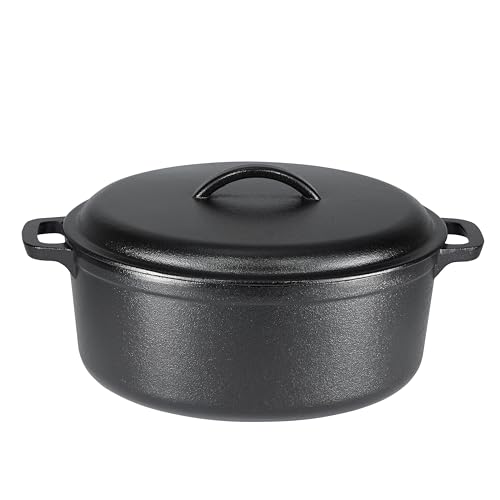

A good pot can improve oven spring, but it has limits.
Concentrated heat and trapped steam can support bloom and early lift, especially versus a wide, slow pot. But if the dough is overproofed, weakly shaped, or very wet, the loaf may still spread low.
What matters more than quart size
-
Footprint and walls
When dough tends to relax outward, I pay more attention to base width than total capacity. A slightly tighter floor and taller walls can help the loaf set upward instead of drifting sideways.
Look forModerate diameter, straighter or taller sidesAvoidWide floor and low, flared walls -
Thermal mass
Heavier cast iron usually stores and returns heat more steadily, which can help the loaf firm up earlier. That matters more to me than simply buying a larger pot.
Look forThick iron with solid preheat behaviorAvoidThin walls or lots of empty space -
Lid fit
A snug lid holds steam and heat close to the dough during the first part of the bake. If the lid sits loosely, spring can look a little flatter and drier.
Look forClose, stable lid sealAvoidLoose lid with visible wiggle -
Handles and surface
Safe handles matter when I’m lowering dough into a hot pot. For the interior, enamel is easier to live with, while bare cast iron is simpler and tougher but needs more routine care.
Look forEasy-grip handles; finish you’ll maintainAvoidTiny handles or high-maintenance mismatch
A roomier 7-quart oven is not automatically better for sourdough. For flatter loaves, a smaller 5- to 6-quart pot with a better diameter often gives more shape support and wastes less heat on empty air.
What I looked for beyond quart size
I compared these as bread pots, not just general Dutch ovens. In my kitchen, the useful differences showed up in preheat confidence, how awkward loading felt with soft dough, how much bloom clearance the lid allowed, and how forgiving the pot was when shaping or proofing was a little off.
-
Heat I could trust
Heavy iron and a steady lid mattered because a thoroughly hot pot can give flatter, weaker dough a fairer start.
-
Less clumsy loading
I paid attention to opening width, depth, and handle shape, since deep pots can make a parchment drop feel more stressful than it needs to.
-
Space for spring
I leaned toward shapes with enough wall height and lid room for expansion, while still offering some side support.
If you’re deciding between vessels, loaf weight and banneton diameter matter almost as much as pot volume.
A balanced enameled pick for regular sourdough baking
01
Colorful, durable enameled heat retention
If I wanted one Dutch oven that felt easy to keep reaching for, this Lodge would be high on my list. The 6-quart enameled cast iron build fits many home bakers well, especially if they want one pot for sourdough, soups, and everyday cooking.
- Dependable heat retention
- Steam-friendly lid design
- Manageable 6-quart size
- No seasoning routine
- No rust worries
- Enamel can chip
- Usually heavier than it looks
- Less rugged than bare iron
- Not especially budget-light
For flat-prone dough, I like the balance here: steady heat, useful depth, and a size that feels practical rather than bulky. The enameled interior can make cleanup and day-to-day maintenance simpler, which often means this pot actually gets used more often.
The trade-off is durability over time. Compared with bare cast iron, enamel can be less forgiving if it gets knocked around, but for many home bakers, the convenience is worth that compromise.
Traditional cast-iron workhorse: Lodge Classic 7-Quart
Heavy-duty, oven-ready cast iron workhorse
If I wanted the most old-school, no-frills option in this group, this is the one I’d look at first. The Lodge Classic 7-Quart leans into bare cast iron, a roomy but still bread-friendly shape, and the kind of substantial feel some bakers really prefer. It makes the most sense for someone who wants a durable pot with a traditional cast-iron baking experience rather than a lighter, lower-fuss enameled piece.
- High thermal mass can help soft dough set sooner
- Bare cast iron gives a classic, traditional baking feel
- Pre-seasoned surface is simpler than fully raw iron
- 7-quart size leaves useful headroom for taller loaves
- Very heavy at about 17.6 pounds
- Hand-wash care and ongoing seasoning are part of ownership
- Loading and unloading can feel intimidating with slack dough
- Bare iron is less low-maintenance than enamel
Budget raw-iron entry: Amazon Basics 7-Quart
Budget-friendly, high-capacity cast iron pot
If I just wanted to test the raw cast-iron sourdough method without spending much, this is the kind of pot I’d start with. It gives you the basic setup many home bakers want: a heavy covered pot, a roomy 7-quart shape, and the heat-holding character cast iron is known for.
For occasional loaves, that can be enough to see whether the method helps your dough bake taller and set better. I’d just go in expecting a more utilitarian piece than a long-haul favorite.
- Low entry price
- Solid heat retention
- Roomy 7-quart capacity
- Pre-seasoned to start
- Utilitarian finish quality
- Heavy for dough loading
- Hand-wash upkeep
- Long-term confidence feels modest
Compact dome-lid choice for smaller boules: AHJ 5QT
Domed lid for superior steam retention
When I want a pot built around smaller, rounder loaves, this 5-quart AHJ makes more sense than a roomier oven. The tighter chamber and domed lid are aimed at bakers like me who care more about giving a modest boule a little upward encouragement than making room for a big loaf. I’d look here if my dough tends to look lost in a wide 6- or 7-quart pot.
- Tighter chamber can favor taller small boules
- Domed lid suits steam-heavy bread baking
- Bare cast iron offers solid heat at a low price
- Less accommodating for large boules or batards
- Narrow use case for everyday cooking
- Budget fit and finish may feel basic
Budget enamel pot with a bread-first shape
Enameled finish tuned for bread baking
The Nuovva 6-quart sits in a useful middle ground. It gives me the easier-cleaning appeal of enamel, but the shape feels more tuned to boule baking than a generic stew pot. If I wanted cast-iron heat without the extra fuss of seasoning, this is the kind of affordable bread pot I’d look at.
- Bread-oriented shape
- Enameled interior
- Manageable 6-quart size
- Good steam potential
- Fit and finish unknowns
- Results may vary
- Hand-wash only
- Enamel lifespan unclear
- Easiest cleanup: Lodge Enameled 6-Quart
- Most stored heat: Lodge Classic 7-Quart
- Smaller boules: 5QT Dome-Lid tighter chamber helpfully contains spreader shapes slightly better than wider ovens while keeping steam close.
If I were narrowing this list fast, I’d start with the Lodge Enameled 6-Quart Dutch Oven for easiest upkeep and the most rounded everyday choice. If heat retention is the priority, the Lodge Classic 7-Quart Cast Iron Dutch Oven still looks strongest to me; that extra iron can give flatter dough a steadier, more forceful bake. For smaller boules that tend to relax outward, the 5QT Pre-Seasoned Dome-Lid Cast Iron Dutch Oven is the more purposeful fit because the chamber stays tighter around the loaf. If I just wanted a low-cost trial run, I’d look at the Amazon Basics Pre-Seasoned 7-Quart first, or the Nuovva 6-Quart Enameled Bread Pot if I wanted easier cleanup on a similar budget.
What usually moves the needle most, though, is pairing the pot with dough that’s reasonably fermented and shaped with some tension. A better-matched pot can help spread-prone loaves; it usually can’t fully cover for weak structure.

Glad you called out handling. A 17.6-pound pot is great until you’re trying to load a sticky boule into it while not branding your forearm for the 12th time 😂
I keep seeing people recommend giant cast iron like weight is automatically better, but the easier-handling point felt very real to me.
I appreciate that you said smaller steam-trapping pots can HELP but won’t magically save overproofed dough. More bread gear reviews should be that honest lol.
That said, why include the Nuovva bread pot over something like Le Creuset? Is it just because this article is specifically about shape-for-value rather than overall premium quality?
Exactly that. If I were ranking overall premium cookware quality, the conversation would look different.
The Nuovva made sense here because of the bread-first form factor and lower price tier. The article was aimed more at people trying to improve spring on flatter loaves without jumping straight to premium pricing, so I prioritized shape, chamber behavior, and accessibility over brand prestige.
Le Creuset is awesome but kinda painful if you mostly want it for bread. I read this list as “what helps the loaf most for the money,” not “best luxury pot.”
For a true budget-first buyer, would you personally go Amazon Basics 7qt or the Nuovva 6qt?
I know one is bare iron and one is enamel, so not apples to apples. But if the main goal is helping a slightly slack sourdough get better oven spring without spending much, I’m curious which compromise you think is smarter.
The AHJ 5QT being framed as a better choice for smaller boules was helpful. Most reviews act like bigger is always safer, when sometimes bigger just means more room for my dough to spread out and embarrass me.
Have you tried using that style for batards at all, or is it basically a boule-only setup?
Why wasn’t the Emile Henry bread cloche included? Different material obviously, but for flatter doughs I’ve actually had better results in ceramic than in my big wide Dutch oven.
Not saying you’re wrong, just curious if you excluded ceramic on purpose or if it simply didn’t fit the “thermal mass” criteria you were using.
Interesting angle focusing on width + wall height instead of just shouting “get a 7qt.” That actually explains why my dough keeps pancaking in a super wide pot.
One thing I wondered though: why no Challenger-style bread pan in the comparison? Was it skipped because this was strictly Dutch ovens, or because you think the narrower/taller chamber matters more for flatter loaves?