
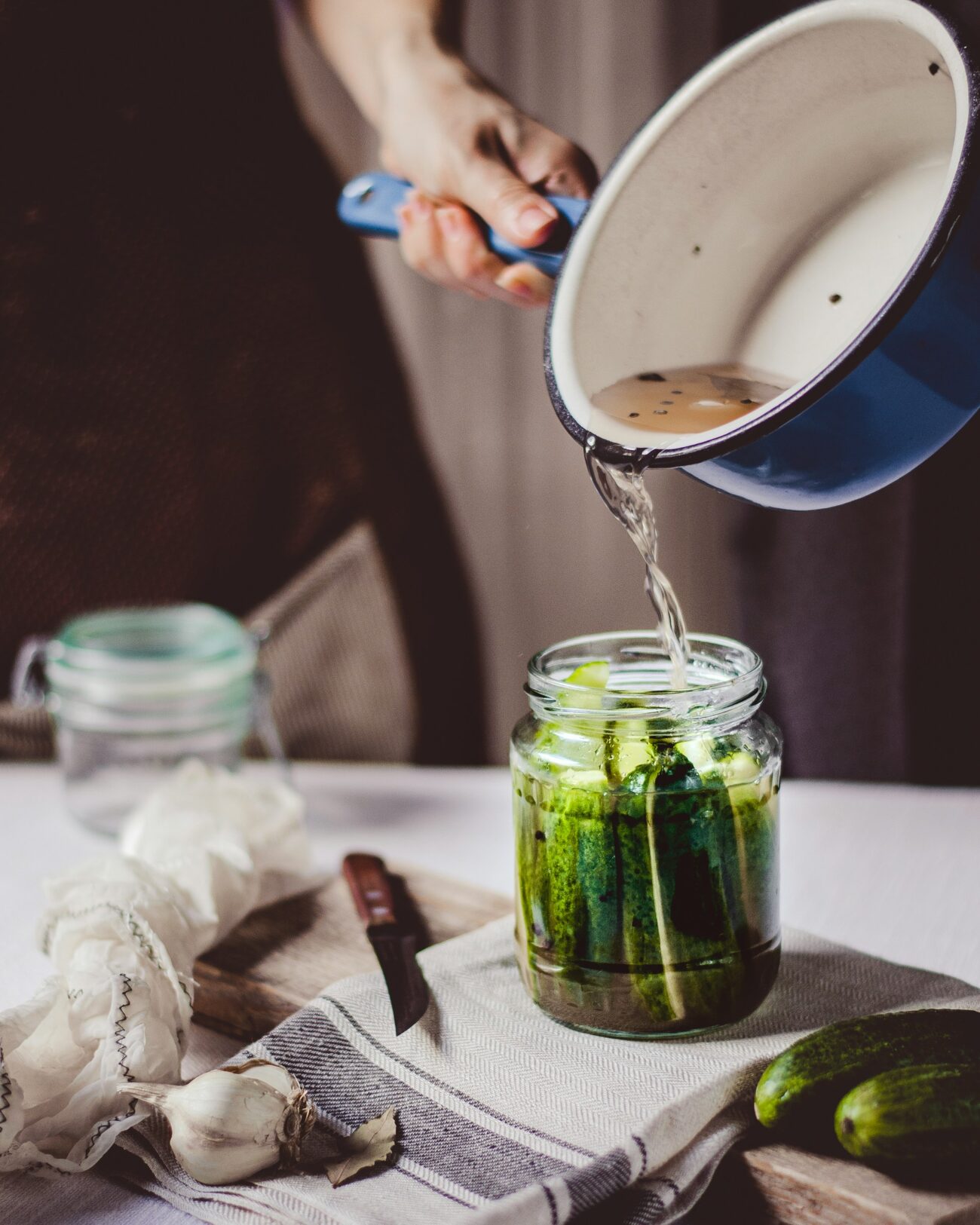
A simple percentage turns pickle brine from folk wisdom into a repeatable kitchen note.
One recipe calls for 2 tablespoons of salt, another swears by 3, and a neighbor’s handwritten card says “make it taste like the sea.” The confusion gets worse because salts are not equal by volume: a spoonful of fine table salt can weigh much more than a spoonful of flaky kosher salt. Suddenly a simple jar of cucumbers feels like a guessing game.
A percentage-based brine cuts through that noise. Instead of measuring salt by spoonfuls, the salt is weighed against the water, so the jar starts from the same place each time. That makes fermentation feel calmer and more repeatable: fewer mystery variables, clearer notes, and an easier path to adjusting flavor while keeping the process grounded in a known ratio.
- A 2% brine means 20 g salt for every 1,000 g water.
- A 3% brine means 30 g salt for every 1,000 g water.
- A small digital scale can make different salt textures less confusing.
What the ratio is actually measuring
- Salt-brine ratio
A salt-brine ratio is the salt amount compared with the liquid used to cover the cucumbers, usually written as a percentage by weight. For example, 30 grams of salt in 1,000 grams of water makes a 3% brine.
- Water-weight brine
This method calculates salt only against the water weight, not the cucumbers. It is the common approach for whole-cucumber pickles packed in a jar and covered with prepared brine.
- Total-ferment salting
Some ferments calculate salt against everything in the vessel: vegetables plus water or their own released juices. That style is common in shredded or chopped ferments, but it gives different numbers than a water-weight cucumber brine.
- Method consistency
Ratios are most useful when the same method is used each time. Switching between water-only and total-weight calculations can make two “3%” ferments behave quite differently.
- Whole-cucumber focus
For whole pickling cucumbers, the brine surrounds the vegetables while salt slowly moves inward. This article stays with that jar-brine approach, within the wider context of vegetable fermentation basics.
A useful range for cucumber pickles
For cucumber pickles, a 3% to 5% salt brine is a practical working range for many home ferments. It does not guarantee safety on its own, because temperature, cleanliness, vegetable quality, and keeping cucumbers submerged all matter. Still, this range gives the ferment a reasonable starting environment for lactic acid bacteria while slowing many less-welcome microbes.
A brine around 3.5% is often treated as a comfortable middle ground. It is salty enough to support a steady ferment in many kitchens, but not so salty that fermentation becomes noticeably sluggish. For a simple water-based brine, that means 35 grams of salt per 1,000 grams of water.
Lower brines, such as 2% to 3%, can ferment more quickly and taste less salty. They may be appealing for half-sour styles or short ferments, especially in cooler conditions. The tradeoff is that softer texture, surface yeast, or murkier aromas may show up sooner if the jar gets warm or the cucumbers are not fully covered.
Higher brines, around 4% to 5%, tend to slow fermentation and can help cucumbers stay firmer. They also taste saltier and may take longer to develop a rounded sour flavor. Very salty brines can make the process feel stalled rather than lively.
A handy starting point: 3.5% brine = 35 g salt + 1,000 g water. Adjust future batches based on temperature, texture, and how salty the finished pickles taste.
Why salt helps the right microbes take over
Salt does not “sterilize” a pickle jar. Instead, it changes the starting conditions. Many spoilage microbes, especially softening bacteria and some surface-loving yeasts, struggle more in a salty environment than lactic acid bacteria do. Those lactic acid bacteria are naturally present on cucumbers and in the kitchen environment, and they can keep working while the brine becomes gradually more acidic.
That acid shift is the heart of fermentation. As lactic acid builds, the brine becomes less friendly to many organisms that cause off smells, mushy texture, or visible growth. Salt gives the acid-producing microbes a useful head start, but it is only one part of the system.
Submersion matters just as much. Cucumbers exposed to air are more likely to grow film yeast or mold, even in a well-salted brine. A clean weight, a snug jar setup, or another food-safe way to keep pieces below the liquid can help reduce that risk.
Temperature also changes the pace. Warmer rooms usually speed fermentation, while cooler rooms slow it down. A steady, moderate spot often gives the brine time to sour without rushing texture loss.
Calculate the brine by weight
-
Choose the target percentage
Pick the brine strength first, such as 3.5% for a middle-of-the-road cucumber ferment. The same math works for a pint jar, a quart jar, or a crock.
-
Weigh the water in grams
After the cucumbers and spices are packed, add enough water to cover them, then pour that water into a bowl and weigh it. Since 1 milliliter of water is about 1 gram, a scale makes the number easy to use.
-
Multiply by the percentage
Use this formula: water weight × brine percentage = salt weight. For 800 g water at 3.5%, the math is 800 × 0.035 = 28 g salt.
-
Dissolve, then pour back
Stir the measured salt into the weighed water until it dissolves, then return the brine to the jar. The vegetables still need to stay fully submerged under the surface.
-
Write the number down
A small note on the jar—date, salt percentage, and temperature range—makes the next batch easier to compare. Small changes are easier to understand when the salt math stays consistent.
Tablespoons can be surprisingly misleading. Fine salt, coarse sea salt, and kosher salt can fill the same spoon with very different weights, which changes the actual brine strength.
A digital kitchen scale removes most of that guesswork. It also makes switching salts easier, especially when comparing salt choices for fermentation or scaling a favorite jar up to a larger batch.
Match the salt level to the pickle style
-
Fresh, quick half-sours
A lower brine, around 3%, suits cucumbers meant to stay crisp, bright, and only lightly tangy. Many fermenters use this brine for half-sour pickles when the jar will be watched closely and eaten fairly soon.
Look forLight salt, fast bubbling, fresh cucumber flavor, and a short fermentation window.AvoidLeaving a low-salt jar warm for too long and expecting full-sour stability. -
Balanced everyday sours
Around 3.5% is a practical middle lane: salty enough to give lactic acid bacteria time to work, but not so salty that fermentation feels stalled. It is a useful choice when the goal is a clearly sour pickle without pushing saltiness too far.
Look forModerate saltiness, steady souring, and good repeatability from batch to batch.AvoidChanging salt, temperature, and cucumber size all at once, which makes results hard to read. -
Tangier full-sours
A 4–5% brine slows the jar down and tends to taste saltier, but it can support a longer ferment with firmer texture. This range fits pickles meant to become deeply sour rather than fresh and cucumbery.
Look forA slower ferment, stronger tang, and more tolerance for a longer time in the crock.AvoidUsing the higher range when a mild, snackable pickle is the real goal. -
Warm rooms and slow storage
Temperature changes the feel of any ratio. In a warm kitchen, a slightly higher brine may give the batch more margin; in a cool room, the same brine may ferment noticeably more slowly.
Look forSalt level chosen together with room temperature, jar size, and expected ferment time.AvoidJudging a ratio by the calendar alone instead of aroma, bubbles, cloudiness, and taste.
Salt is only part of the crunch
A good salt percentage gives fermented pickles a strong start, but it cannot make up for tired cucumbers or a warm, neglected jar. The brine ratio works alongside a few simple details that affect both safety signals and texture.
Fresh, firm cucumbers usually ferment more cleanly than soft or bruised ones. Trimming a thin slice from the blossom end can also help, because that end may carry enzymes linked with softening. Small cucumbers tend to stay crisper than large, seedy ones.
Temperature matters, too. A moderate room temperature encourages steady fermentation; hotter conditions can speed bubbling but also increase the chance of mushy texture or surface growth. Cooler spots slow the process, which may be useful for a longer, tangier ferment.
A few jar habits help the brine do its job:
- Keep cucumbers fully submerged with a clean weight.
- Leave enough headspace for bubbles and brine movement.
- Add tannin-rich leaves, such as grape or oak, for possible texture support.
- Check that active fermentation does not push vegetables above the liquid.
These steps do not replace the salt calculation. They simply make the chosen brine percentage more reliable.
Ratio mistakes that sneak into pickle jars
Taste can be misleading, especially once garlic, dill, vinegar residue, or cucumber juices enter the jar. A weighed brine is easier to trust than a tongue test.
Most drift starts small: a fluffy tablespoon of kosher salt, a compact spoonful of fine salt, or a quick top-up with plain water after brine spills over.
Top-up liquid is usually better treated as brine at the same percentage as the original batch, or a little stronger if the jar was recently diluted.
Adding water lowers the salt level around the vegetables. If caught early, the batch can often be corrected by replacing the liquid with freshly mixed brine at the intended percentage.
Salt adjustments can correct math errors, but they do not erase visible spoilage or a long period at an unknown ratio.
If the brine smells rotten, feels slimy or ropey, shows fuzzy mold, or has pink, orange, black, or blue-green growth, the safer call is to stop treating it as food.
A jar that was slightly mismeasured and caught early is very different from one that has sat warm, weak, and partly exposed for several days. Re-mixing brine can help with a clean-looking, normal-smelling batch, but it is not a reset button.
When in doubt, the visible and sensory clues carry weight: fuzzy growth, rotten odor, unusual colors, or a slippery, stringy brine are reasons to discard rather than adjust.
Common jar worries
Is cloudy brine a bad sign?
Cloudiness often comes from active lactic acid bacteria and fine cucumber particles. If the aroma is cleanly sour and the vegetables stay submerged, it is usually part of normal fermentation.
What is the white film on top?
A thin, flat white film is often kahm yeast. It can taste stale, so skimming it off and cleaning the rim can help; fuzzy, colored, or raised growth is a different concern.
What if actual mold appears?
Visible mold is usually treated as a failed jar in small home ferments. Scooping off the top does not make the rest reliably safe, especially if the brine smells rotten or the pickles feel slimy.
Are very salty pickles unsafe?
Harsh saltiness is more often a flavor and fermentation-speed issue than a danger sign. After fermentation, a short rinse or soak before serving can mellow the bite; diluting an active jar changes the brine balance.
Can pickle brine be reused?
Old brine may be pleasantly sour, but its salt level, acidity, and cleanliness are uncertain. It works better as a flavoring splash than as the main liquid for a new batch.
- A small notebook or jar label turns each ferment into usable feedback for the next batch.
- Tasting across several days teaches more than aiming for one fixed “perfect” ratio.
A steady pickle routine is simple: choose a salt percentage, weigh the water, calculate the salt, dissolve it fully, keep the cucumbers under brine, and label the jar with the date and ratio. From there, the batch becomes a record rather than a guess.
Taste as the ferment changes, noting texture, sourness, saltiness, and room temperature. If 3.5% tastes too mild, the next jar can move slightly higher; if it ferments too slowly or tastes harsh, it can move lower. Safe, satisfying pickles usually come from repeatable habits, not one magic number.

The plain-water top-up warning was painfully relevant. I always lose a little liquid out of my jars during the first bubbly stage and then panic-add water like a chaos goblin.
If I top up with a matching 3.5% brine instead, is that fine even after fermentation has started? Or does opening the jar and adding more oxygen create a separate problem?
Topping up with the same-strength brine is the better move. Briefly opening the jar isn’t usually a major issue, especially early on, but try to do it cleanly and avoid stirring everything around.
If you’re getting overflow often, leave a little more headspace next time or use a tray under the jar. The goal is steady submersion without repeatedly diluting the salt and acid environment.
I’ve been doing 2.5% for “half-sours” because I like them crunchy and not too salty, but now I’m wondering if I’ve just been getting lucky 😅
They ferment on my counter around 72–74°F and are usually done in 3 days. Is 2.5% too low if they’re eaten quickly, or would you still suggest bumping it closer to 3%?
I’ve done 2.5% too, but only when I’m watching them like a hawk and fridge them early. At 74°F they can get weird fast in my kitchen. 3% tastes basically the same to me after a day or two in the fridge, for what it’s worth.
The crunch section was useful. I knew about grape leaves/tannins, but I didn’t realize temperature mattered that much. Explains why my July pickles go soft even when I use the exact same 4% brine as in October.
This cleared up a thing I’ve always been confused about: brine % vs salting the whole contents of the jar. If I pack the cucumbers super tightly and only need a little brine, am I effectively using less total salt than someone with a looser pack?
Would that change safety, or is the water-based % still the main thing because the cucumbers eventually equalize with the brine?
Good question. For cucumber pickles, the water-based brine percentage is the practical control point because the cucumbers release and absorb liquid as the ferment progresses, and the brine becomes the shared environment around them.
A very tight pack can mean less starting brine, but as long as the cucumbers are fully submerged and the brine was mixed accurately, it’s still a useful and repeatable method. If someone is doing a dry-salted or shredded ferment, then total ingredient weight becomes more important.
I appreciate the gram formula, but I wish more recipes would stop saying “1 tablespoon salt” like that means anything. My kosher salt and my friend’s sea salt are wildly different by volume. We made the same recipe once and hers tasted like ocean water while mine tasted like cucumber spa water.