
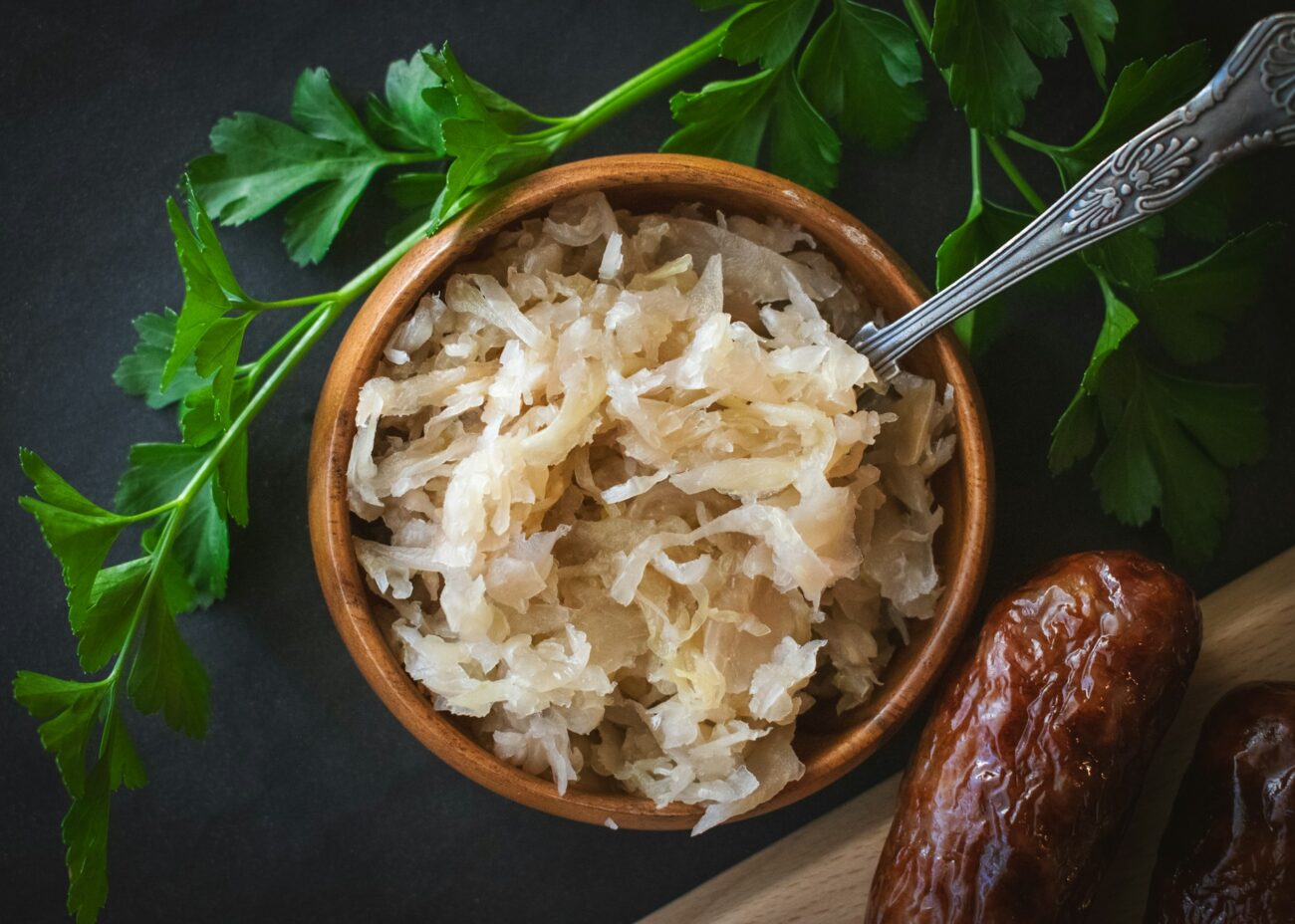
Good sauerkraut is less about luck and more about a few small conditions staying in balance.
A jar of cabbage can look promising on day one, then turn dry at the top, oddly soft, sharply salty, or disappointingly flat a week later. That frustration is common because sauerkraut has a short ingredient list but a fairly particular environment.
The real work is not complicated: salt needs to draw out enough brine, the cabbage needs to stay under that brine, oxygen needs to be kept away from the surface, and the jar needs a steady, moderate room temperature. Time matters too. Fermentation that is rushed may taste raw and bland; fermentation left too warm or too long can drift toward mushy. Once those pieces are treated as dials that can be adjusted, the process feels much less mysterious.
- Many home batches begin around 2% salt by cabbage weight.
- A room temperature near 65–72°F / 18–22°C often gives steady, manageable fermentation.
- Visible cabbage above the brine is usually where surface problems begin.
Start with sturdy cabbage and a clean setup
A dependable batch starts before the first shred. Fresh, firm cabbage releases juice more readily, holds texture better, and is less likely to bring along soft spots that can turn unpleasant in the jar. Heads that feel heavy for their size, with tight leaves and a clean, mild smell, are usually easier to work with; limp leaves, deep cracks, or browned patches are worth trimming away or avoiding. For a closer look at varieties and texture, see how to choose cabbage that works well for sauerkraut.
The equipment does not need to be fancy. A clean cutting board, knife, large bowl, jar or crock, and a weight are enough for a small batch. Washing with hot, soapy water and rinsing well is generally the goal; strong chemical smells or soap residue can make the ferment less pleasant.
The main job of the equipment is simple: keep cabbage under brine while letting gas escape. As fermentation begins, carbon dioxide builds up. A loosely fitted lid, fermentation lid, or airlock can let that gas out without inviting too much fresh air in.
Helpful options include:
- A glass jar for easy viewing.
- A fermentation weight or clean small jar to hold cabbage down.
- A shallow tray under the jar in case brine bubbles over.
With firm cabbage and clean, practical tools ready, the salting and packing steps become much easier.
Measure salt by weight
Salt does more than season the cabbage. It pulls water from the shredded leaves to make brine, helps the cabbage stay pleasantly crisp, and gives lactic acid bacteria a better starting environment than many spoilage microbes.
A practical baseline is 2% salt by total cabbage weight. That means 20 grams of salt for 1,000 grams of trimmed cabbage, or about 2 grams for every 100 grams. A kitchen scale makes this far more repeatable than tablespoons, since salt crystal size varies a lot.
For a small batch, place the bowl on the scale, tare it, add the sliced cabbage, then multiply the cabbage weight by 0.02. Sprinkle that amount of salt over the cabbage and massage or toss until the leaves soften and glossy brine collects. This same method makes it easier to dial in the sauerkraut salt ratio when scaling a recipe up or down.
Fine sea salt, kosher salt, or pickling salt can all work if they are plain. Iodized salt and salts with anti-caking additives are often avoided by fermenters because they can cloud brine or add off flavors.
No calculator handy? Move the decimal two places left, then double it: 850 g cabbage → 8.5 → 17 g salt.
Massage until the cabbage turns glossy
After salting, the cabbage needs a little pressure before it is ready for the jar. A large bowl makes this easier: squeeze, fold, and press the shreds with clean hands for several minutes. The cabbage will go from crisp and springy to softer, darker, and slightly translucent at the edges.
A useful sign is the sound and feel. At first, the bowl may seem dry and squeaky. As the salt draws out moisture, the cabbage starts to slip through the fingers, and liquid pools at the bottom when it is pressed to one side.
Look for these cues before packing:
- Glossy shreds that bend rather than snap
- A small puddle of brine in the bottom of the bowl
- Juicy handfuls that drip when squeezed firmly
- Reduced volume, often noticeably less bulky than when first cut
If the cabbage stays stubbornly dry, time can help. Cover the bowl and let it rest for 20–30 minutes, then massage again. Older or very dense cabbage may need a second rest. The goal is enough natural brine to cover the packed cabbage once it is pressed down in the jar.
Keep everything under the brine
Pack firmly, pressing out air pockets. Add all brine. Top with a cabbage leaf and weight so shreds stay submerged; floating bits are the usual troublemakers.
Sauerkraut packing tips
Yang’s Nourishing Kitchen shares practical sauerkraut tips for steadier home ferments.
Exposed shreds can mold first.
Read the fermentation signs
Sauerkraut usually becomes pleasantly sour in 5 to 14 days, depending on room temperature, salt, cabbage moisture, and personal taste. A cooler kitchen may take two weeks or longer; a warm room can move quickly in less than a week. This same timing logic applies to fermenting vegetables with less guesswork: temperature changes the pace more than almost anything else.
Early activity can look lively. Small bubbles may rise through the cabbage, the brine may turn cloudy, and a jar with a tight lid may build pressure. That is normal gas from fermentation, but pressure needs a way out through an airlock, loose lid, or careful burping.
The aroma should shift from salty cabbage toward tangy, sour, and mildly funky. Color often softens too, moving from bright green or purple toward paler yellow-green, beige, or muted pink. These changes are common and not a problem on their own.
Temperature affects the finished texture as much as timing. Around 60–68°F / 16–20°C, sauerkraut often ferments more slowly and stays crisper with a cleaner aroma. Around 70–75°F / 21–24°C, it may sour faster, soften sooner, and smell stronger. Once it tastes pleasantly tart, refrigeration can slow the fermentation down.
What went wrong? Common sauerkraut problems
What if there is no brine after packing?
Dry cabbage often needs more time and pressure. Letting the salted shreds rest, then massaging again, can draw out more liquid. If the jar is already packed and the cabbage sits above the liquid, a small amount of 2% salt brine can help cover it.
Is a thin white film on top always mold?
A flat, pale, powdery film may be kahm yeast, which is common in open-air ferments and usually smells yeasty rather than rotten. It can be skimmed off, but the kraut below still deserves a cautious smell and texture check. Fuzzy growth, bright colors, or unpleasant odors are different concerns.
When is mold a serious warning sign?
Fuzzy patches, blue, green, pink, or black spots, or growth that returns quickly after skimming are warning signs. Mold can spread beyond what is visible, so questionable batches are not worth treating casually. When the appearance or smell raises doubt, discarding is the safer practical choice.
Can oversalted sauerkraut still ferment?
Too much salt can slow fermentation and leave cabbage tasting harsh or limp rather than pleasantly sour. If the batch is only slightly salty, extra time may mellow it a little. Very salty jars may never ferment actively, and rinsing after fermentation changes flavor more than it fixes the process.
Why did the sauerkraut turn mushy?
Soft texture can come from warm temperatures, too little salt, old cabbage, very fine slicing, or a long ferment. Mushy kraut with a clean sour smell may be unappealing but not automatically spoiled. Mushiness with slime, mold, or foul odor is a stronger reason to stop tasting and discard.
Decide when it tastes done
Sauerkraut is ready when its flavor and texture seem pleasant, not when a calendar says so. Some batches taste bright and lightly tangy after a week; others need two, three, or more weeks to become sour enough. A cool kitchen slows things down, while a warm room can push the same jar along quickly.
Use a clean fork or tongs each time a taste is taken. This helps avoid introducing crumbs, oils, or stray microbes into the jar. After tasting, press the cabbage back down so the solids stay covered.
When the kraut has the balance of crunch and sourness desired, move it to the refrigerator. Cold storage does not stop fermentation completely, but it slows it dramatically, helping the flavor stay steadier for longer. Keep the cabbage tucked under its brine in the fridge, too; good coverage helps protect texture, color, and aroma.
A Simple Formula Worth Repeating
- Use 2% salt by cabbage weight.
- Keep cabbage submerged from day one.
- Taste before refrigerating.
Good sauerkraut is less a lucky accident than a small set of repeatable conditions: fresh cabbage, clean tools, measured salt, enough brine, limited air, steady room warmth, and time. When those pieces line up, the jar usually becomes easier to read: bubbles, sour aroma, cloudy brine, and a gradually brighter flavor.
For anyone wondering whether sauerkraut needs a starter culture, traditional cabbage ferments commonly rely on the lactic acid bacteria already present on the cabbage. A starter can be used, but it is usually optional for a simple batch. Careful salt, submersion, and patience do most of the work.

This worked! I finally weighed the salt instead of doing the “eh, a spoonful looks right” method and my jar actually bubbled by day 2.
The 2% salt note was the missing piece for me. Texture stayed crunchy and it didn’t get that weird swamp smell I had last time. Thank you 🙌
Question about temperature: my kitchen sits around 76–78°F in summer. The article says warmth speeds things up and can make smells stronger, which I definitely noticed.
Mine was very sour by day 5 but also softer than I wanted. Should I start tasting earlier, or is there a trick for keeping it crunchier in a warm apartment?
At 76–78°F, I’d start tasting around day 3 or 4. Warm ferments move quickly, and cabbage can soften faster than expected.
For crunch, use the freshest firm cabbage you can, keep the salt at 2%, pack it tightly, and move it to the fridge as soon as it tastes pleasantly sour. If you have a cooler spot like a basement, pantry floor, or even a cooler with a small ice pack nearby, that can help moderate the temperature.
I was skeptical about not needing starter culture, but my plain cabbage + salt batch fermented just fine. Took about 10 days in my chilly kitchen and tasted way better than the rushed jar I made with whey years ago.
Patient timing really is annoying advice because it’s true 😅
Step 3 didn’t really work for me. I massaged the cabbage for probably 8 minutes and it got glossy-ish, but I still didn’t have enough brine to cover everything once packed.
I used a very firm green cabbage from the grocery store and weighed the salt correctly. Is it okay to add extra brine, or does that mess up the percentage?
Yes, you can add extra brine if the cabbage doesn’t release enough on its own. Use the same 2% ratio for the added brine: 20g salt per 1 liter of water, or scale it down as needed.
Very firm or slightly older cabbage can be stubborn. Letting the salted shreds rest 20–30 minutes before packing often helps a lot too.
I appreciate the mold warning because every other recipe online seems to say “just scrape it off” like we’re all trying to build character in a pioneer village.
I had a blue fuzzy spot on a batch last month and tossed it, but felt wasteful. After reading this I feel less guilty. Cabbage is cheaper than a bad stomach week lol.
Same here. I used to be way too casual with kraut until one jar smelled like old gym socks and regret. Now if it’s fuzzy or weirdly colored, it’s gone.
The “keep everything under the brine” part is where I always fail. I used a cabbage leaf cover and a little glass weight, but somehow tiny shreds still floated up around the sides.
No mold, just a thin white film on top after about a week. I skimmed it and the kraut underneath smelled clean and sour, so I kept it. Still nervous though. Fermentation is basically a trust exercise with vegetables.
Tiny floaters are very common, even with a weight. Try packing the jar a little lower next time so there’s more headspace, then tuck the leaf cover down around the edges like a lid before adding the weight.
A thin white film is often kahm yeast, especially if it smells yeasty rather than rotten or moldy. Skimming it and refrigerating once the flavor is where you want it is reasonable, as long as there’s no fuzz, bright colors, or unpleasant odor.
I started using one of those silicone pickle pipes and it helped a ton with the film issue. Not magic, but less oxygen sneaking in = less drama.