
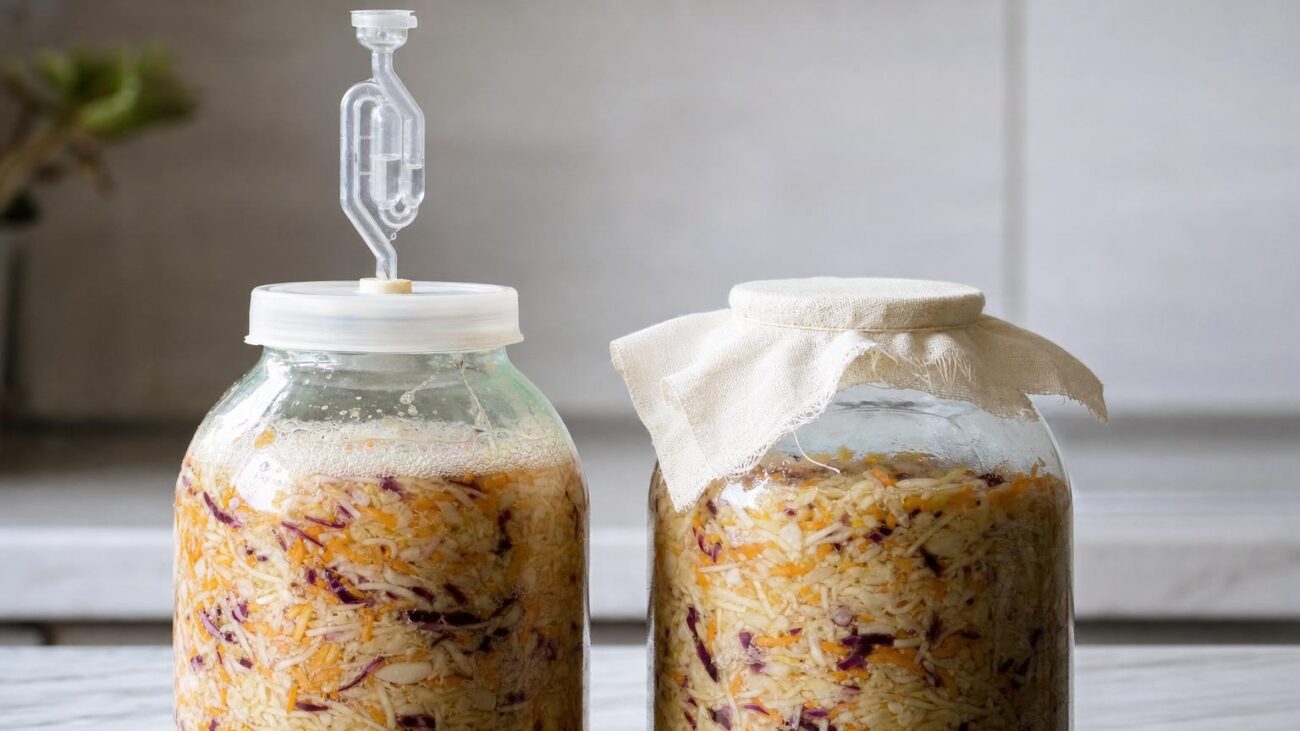
That little plastic valve can look far more mandatory than it really is.
A jar of cabbage on the counter, bubbles starting, lid in one hand and an airlock in the other—that is where plenty of first batches feel wobbly. The worry is familiar: mold, trapped pressure, sneaky leaks, or some tiny mistake that ruins everything.
The confusing part is that airlocks do solve real problems, but not in every setup. They can help when a vessel is mostly sealed and gas needs a safe way out while keeping extra air away. Other ferments manage fine with a looser system. So the mixed advice is normal, not a sign that something obvious is being missed.
No, but the ferment still needs the basics
Is an airlock required for vegetable fermentation?
Usually not. Many simple vegetable ferments do fine without one, provided the vegetables stay fully under brine and the container lets fermentation gas escape instead of trapping pressure.
What matters more than the airlock itself?
Keeping solids submerged matters more than owning a special lid. A weight, a folded cabbage leaf, or a smaller insert jar can help hold stray bits below the surface, where spoilage is less likely to start.
Can a regular lid still work?
Yes, if it is left loose enough to vent or opened carefully from time to time. The tradeoff is more hands-on attention and a bit more exposure whenever the jar is disturbed.
What an airlock changes in practice
What does an airlock actually do?
An airlock works like a one-way valve: carbon dioxide bubbles out, while most outside air stays out. For anyone sorting through basic fermentation gear, that makes the appeal easier to see—it reduces fiddling rather than performing any magic.
When does an airlock start to feel worth having?
It tends to feel more worthwhile on warmer counters, longer ferments, or batches that foam enthusiastically. In those situations, it acts as a convenience and risk-reducer, helping with overflow, surface exposure, and pressure.
Does an airlock guarantee a good batch?
No. It can lower a few common hassles, but it cannot fix poor salt balance, dirty equipment, or vegetables floating above the brine.
A fully tightened lid can trap pressure. An airlock helps because gas leaves automatically, while a loose lid depends on the container already having enough room to vent safely.
What can replace an airlock?
What is the simplest mason-jar substitute?
A regular two-piece mason-jar lid, tightened only to fingertip pressure, is a common stand-in. Gas often slips out around the threads, but this setup is less predictable than an airlock and may need occasional checking.
Can a jar just be “burped” instead?
Yes, many home fermenters loosen a standard lid briefly once or twice a day during active bubbling. It can work well for short vegetable ferments, but it asks for consistency and is easier to forget.
Are cloth covers or coffee filters enough?
They can work for open-crock fermentation, but they are usually a weaker choice for mason jars. They keep dust out, yet do little to limit oxygen, so surface yeast or mold becomes more likely if anything rises above the brine.
What about silicone venting lids?
Silicone self-venting lids are a practical middle ground. They are usually simpler than a classic airlock and more hands-off than manual burping, though results can vary with lid design and how active the ferment becomes.
Not every ferment wants the same setup
Do all ferments benefit from less oxygen?
No. Brined vegetables often do well with limited air once everything stays below the liquid, while kombucha, vinegar, and some wild ferments rely on oxygen at the surface. Treating every project like sealed sauerkraut can create the wrong conditions.
Can an airlock make up for weak brine or floating food?
Not really. If pieces rise above the brine, mold risk can increase whether an airlock is present or not. Salt level and full submersion still do most of the protective work.
Does cleanliness still matter if the jar has an airlock?
Yes. An airlock limits extra outside exposure, but it cannot undo residue, dirty tools, or a rim that was not cleaned well. Good prep still matters more than the attachment.
What about ferments that need airflow?
Those belong in a different lane. For ferments left more open to air, a breathable cover can make more sense than sealing the vessel tightly. The goal depends on the ferment, not the gadget.
An airlock can help with gas release and reduce fuss.
It cannot reliably fix:
weak brine floating food dirty equipment a poor lid or gasket sealA simple way to choose
-
Name the ferment
Brined vegetables and other mostly low-oxygen jars often do fine with a loose lid or simple vent. Ferments that need airflow, like some vinegar or kombucha setups, are a different case.
-
Check submersion
If the food will stay under brine, the jar is already in better shape. Floating bits are usually a bigger concern than the lack of an airlock.
-
Consider how long it will sit
A jar that gets checked daily may only need occasional burping. If it may sit unattended for days, an airlock can help reduce overflow and pressure surprises.
-
Choose the tradeoff
Simple setups mean fewer parts and easy cleanup. Airlocks mostly help by cutting down on monitoring and making conditions feel more consistent.
-
Read more than bubbles
Some active jars stay quiet, especially early on or in cooler rooms. If there is little or no bubbling in the airlock, smell, cloudiness, and gentle brine movement often say more than constant popping.
Does a first batch need an airlock?
Not usually. If the ferment suits a mostly closed jar, stays submerged, and gets checked regularly, a loose lid can work perfectly well.
When does an airlock help most?
It tends to help with fuller jars, warmer rooms, and stretches when nobody will be nearby. It can also make day-to-day care feel less fiddly.
Can an airlock fix a shaky setup?
No. It cannot keep solids under brine, correct a poor salt ratio, or replace clean equipment and a sound lid.
What is a steady beginner rule of thumb?
If the jar is simple, the ferment matches the setup, and everything stays submerged, going without an airlock is often fine. Airlocks mostly add convenience, consistency, and peace of mind.
A calm default: quiet jars are not automatically failing jars. When the ferment fits the vessel, stays submerged, and can be checked now and then, a basic setup often works; an airlock mainly makes the process easier to leave alone.

I actually prefer a loose lid over an airlock for small batches because I can check things faster without feeling like I’m running a lab experiment.
That said, the “manual burping” advice online always sounds easier than it is. Miss one busy day and suddenly the jar is acting like it’s offended lol. For people who travel or forget stuff, I still think some kind of vented setup is worth it just for peace of mind.
This made me feel a lot less weird about not owning an airlock yet 😅
One thing I’m still unsure about: if the jar looks totally still, no bubbles, no fizz, does that usually mean it stalled? You mentioned bubble-free jars can still be active, but how do you personally tell the difference between “quiet but fine” and “something went wrong”?
A lack of visible bubbles doesn’t automatically mean fermentation stopped. Temperature, jar shape, how tightly things are packed, and even how much dissolved gas stays in the brine can all change what you see.
I usually judge by a few signs together: smell, whether the brine is staying stable, any gradual souring over time, and whether the vegetables still look properly submerged. If it smells pleasantly tangy rather than rotten, and the texture/brine look normal, it’s often still on track even without dramatic bubbling.
Good overview, but I wish more posts would talk about smell in apartments.
My last batch of kraut was fine safety-wise, I think, but wowww the sulfur phase was rough. Does using an airlock vs a cloth cover noticeably change odor escaping into the room, or is that mostly just about the ferment itself?
In my experience, yes, a cloth cover lets way more smell out. Airlock/loose lid still smells some when you open it, but the constant funk was definitely less for me.
Question on the “some ferments need oxygen” part:
Would you put things like vinegar making and kombucha in a completely different decision tree from cucumbers/kraut? I ask because newer guides sometimes mash all fermentation together, and that’s where people get confused. An airlock seems useful for one category and kind of wrong for another.
Yes — I’d separate them mentally right away. Vegetable ferments like kraut, pickles, and similar brined projects usually benefit from limiting extra oxygen while keeping everything submerged and able to vent.
Ferments like kombucha or vinegar production depend on oxygen exposure for the organisms doing the work, so a breathable cover makes more sense there. That’s why “do I need an airlock?” can’t really be answered without first asking what, exactly, is fermenting.
Maybe dumb question, but how much headspace is *too much* if you’re using a loose lid instead of an airlock? I had a half-full jar because I didn’t have enough cabbage, and it fermented, but the top looked a little sketchy after a few days.
Not sure if the issue was the extra air, not enough brine, or me being impatient and opening it every 6 hours 🙃
The submersion point is the part beginners underestimate. People get hung up on gadgets, but if bits are floating around at the top, an airlock isn’t going to magically save the batch.
I learned that the annoying way after trying to ferment shredded carrots with no weight. Tiny orange escape artists everywhere 😂