
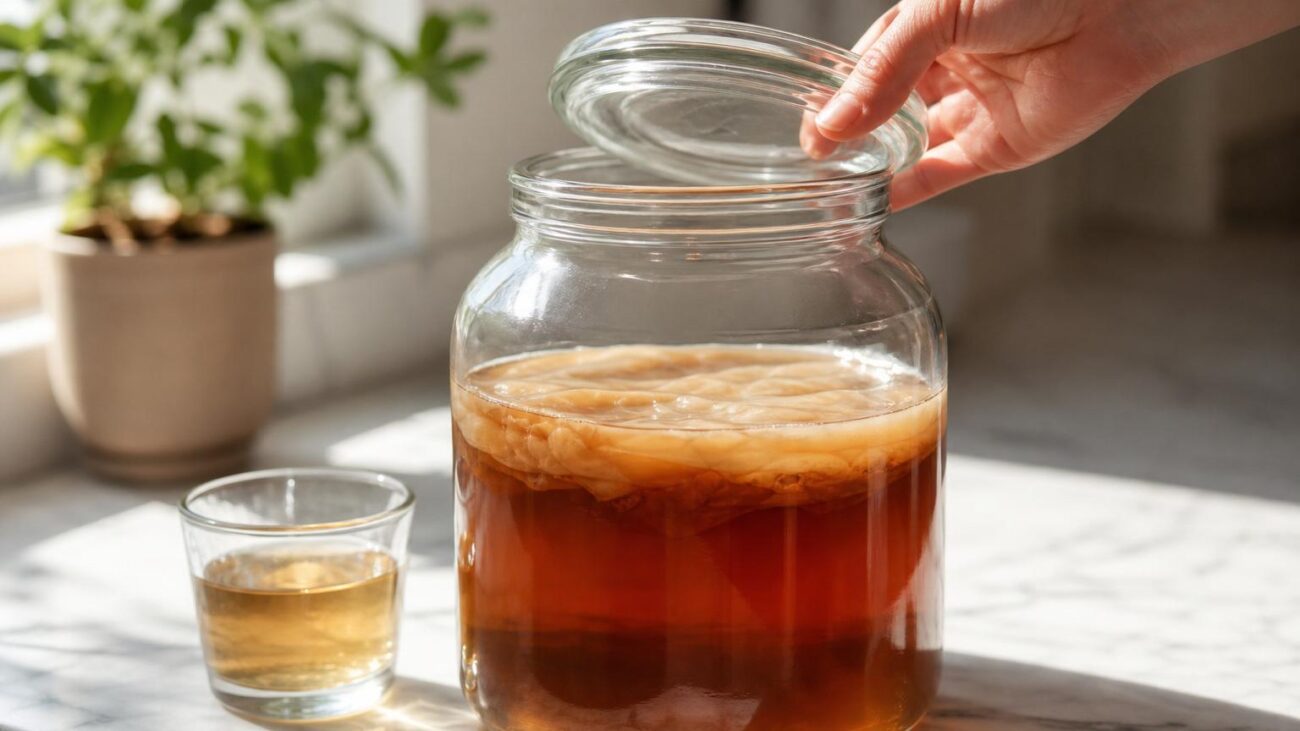
The hardest part is often the day it tastes almost right.
Day 5, 7, or 10 often brings the same scene: a home brewer leaning over the jar, wondering whether another 24 hours will add pleasant tang or tip the batch into something sharp and tiring to drink. That nerves-on-the-counter moment is normal, because kombucha can seem to change slowly for days and then all at once.
It helps to think less about a perfect number of days and more about a window. Early in that window, tea sweetness still shows up. In the middle, the flavor usually lands in the sweet-tart zone many people enjoy. Leave it too long, and the acidity can turn harsher, with a stronger vinegar note and a finish that lingers more than it refreshes. The real goal is catching that middle stretch before “tart” becomes too sour.
What “too sour” really means
“Too sour” is not a fixed failure point. For most home brewers, it simply means the flavor has moved past pleasant tartness and into a sharper, more vinegar-like edge than they enjoy. Another person might still like that same batch, especially if it will be served cold or mixed with fruit.
That change is a normal part of first fermentation, the stage in the usual home kombucha brewing cycle when yeast and bacteria gradually consume sugar. As sweetness fades, acidity stands out more. The brew typically moves from mild and tea-like to bright, tangy, and then increasingly dry and puckering.
In the bigger brewing rhythm, this is simply the point before bottling, flavoring, or a second ferment changes the profile again. A batch that tastes too sharp on its own is not automatically spoiled; it may just have crossed a personal preference line.
Common clues that it has gone past that line include:
- very little sweetness left
- a stronger vinegar or cider-like aroma
- a dry, lingering finish
- less balance than it had a day or two earlier
A realistic fermentation window
Most kombucha batches land somewhere around 7 to 14 days, but that range is more of a useful guide than a rule. A lively SCOBY, strong starter tea, or a warm kitchen can push the brew toward tartness sooner. In a cooler room, the same recipe may still taste fairly sweet after a week.
A simple way to think about it:
- Days 5–7: often still noticeably sweet, with light tang
- Days 7–10: commonly the balanced zone for many home brews
- Days 10–14: sharper, drier, and more vinegary for some batches
- Beyond 14 days: can become quite sour, especially in warm conditions
Temperature makes a big difference. Fermenting near the warmer end of the usual room-temperature range often speeds things up, while cooler setups can slow yeast and bacteria activity enough to add several days.
Batch personality matters too. More sugar to start, tea strength, jar size, airflow, and how active the culture is can all shift the timeline a little. That is why tasting along the way usually tells the story more reliably than the calendar alone.
Two batches started the same day can finish at different speeds if the room temperature changes even slightly.
Why one batch races while another crawls
Two jars made from the same recipe can land in very different places by the end of the week. Kombucha reacts to its surroundings, so a familiar method may finish quickly in one kitchen and stay mild much longer in another.
- Temperature: Warm rooms usually push fermentation along. A jar at 76–80°F often turns tart faster than one sitting at 68–70°F, especially if it lives near a stove, sunny window, or warm appliance.
- Starter strength: A strong, mature starter liquid tends to acidify a new batch sooner. A weaker or less active culture can take longer to build momentum.
- Vessel shape: A wide jar exposes more surface area to oxygen, which can encourage sharper acidity. Taller, narrower vessels often move a bit more slowly.
- Batch size: Small batches often change faster because the tea mass is easier for the culture to work through. Larger batches can take extra days to reach the same balance.
- Sugar and tea type: More sugar can give the culture more fuel, though results still vary. Black tea often ferments steadily, while green tea or mixed blends may taste lighter for longer.
Because of these shifts, the calendar is only a rough guide. Near the expected finish, taste tends to tell the story better than the recipe does.
Taste the batch, not the calendar
A calendar can give a rough window, but flavor is the real marker. A batch that tastes bright and balanced on day 6 may already seem harsh by day 8, especially in a warm kitchen.
A small sample usually tells more than the number of days. The easiest check is to notice what remains after the sip:
- Lingering sweetness: some soft tea-and-sugar character still hangs around after swallowing
- Pleasant tartness: the acidity feels crisp, refreshing, and clean rather than punishing
- Vinegar-like sharpness: the sourness hits hard, dominates the mouth, and keeps building
- Aroma: it still smells fruity, yeasty, or gently tangy instead of aggressively acidic
What balanced kombucha tends to feel like
When kombucha is still in a good range, the sourness usually arrives with a little roundness. It may pucker the mouth slightly, but it does not erase every trace of sweetness.
Once it tips too far, the sample often smells harsher before it even tastes harsher. The finish gets thin, pointed, and almost salad-dressing-like. That is often the moment to stop watching the clock and call the batch done.
A simple taste-based decision guide
-
Still tastes noticeably sweet
If the sip reads more like sweet tea than kombucha, the batch likely needs more time. A light tang and soft finish usually mean waiting another day or two.
-
Sweetness and tartness feel balanced
This is the bottling zone many people aim for. The flavor feels bright, the aroma stays pleasant, and the finish is crisp rather than severe.
-
Mostly dry, with a firm acidic edge
This is often the last stop before the brew turns sharper than refreshing. Bottling here can suit anyone who likes a brisk, less sweet kombucha.
-
Little sweetness, long lingering bite
If the tartness hangs on and starts to sting at the sides of the tongue, the batch is likely moving past easy sipping. It can still be usable, but balance is fading.
-
Distinct vinegar smell or harsh finish
That usually signals the brew has gone beyond the range many drinkers want for plain kombucha. Later bottling rarely makes that sharpness disappear; it mostly locks it in.
A warm kitchen can push kombucha from pleasantly tart to noticeably sharp in about 24 hours. Near the end of first fermentation, a small sample in a clean cup often gives a clearer read than a quick sip from the jar.
Looks can mislead
Fizz shows fermentation activity, not whether the sweet-tart balance is where it tastes pleasant.
Bubble levels swing with temperature, yeast activity, and how much the jar was moved. A lively-looking batch can already taste sharp, while a quieter one may still be balanced.
SCOBY thickness says more about growth conditions than about flavor.
Pellicles can build quickly in warm kitchens or after several strong batches. A thin new layer can sit on top of kombucha that is already quite tart.
Cloudiness usually comes from yeast and fine particles, not from a reliable stage of sourness.
Some batches stay hazy from start to finish; others clear up even while sugar remains. Haze can accompany good fermentation, but it cannot show whether the flavor still has enough softness.
Bubbles, a thick pellicle, and haze can all appear in healthy fermentation. None of them can reveal the exact point where sweetness, tartness, and vinegar notes feel balanced.
When sour is still usable
An over-sour batch is often a flavor problem before anything else. If the smell stays clean and vinegary, and the liquid looks typical for kombucha, it has usually just fermented past the sweet-tart balance many people like.
Very tart kombucha can still earn a place in the kitchen:
- dilute it with sparkling water for a softer drink
- mix a small amount with juice at serving time
- use it in salad dressing or a quick marinade
- let it keep going and treat it like kombucha vinegar for cooking
The key is telling strong acidity apart from obvious spoilage. A sharp, puckering taste is common in over-fermented kombucha. Fuzzy growth, unusual bright colors, or a foul smell belong in a different category entirely.
If growth looks fuzzy or dry, or shows green, blue, black, or vivid pink/orange tones, that points to contamination rather than harmless sourness. In that case, the batch is generally considered a discard.
- Taste early In warm rooms, start tasting around day 5 or 6.
- Common window Many batches reach a pleasant sweet-tart balance around days 7–10.
- Flavor wins Use the calendar as a clue, but let flavor make the call.
A quick note on day count, room temperature, and taste can make the next batch much easier to time.
A simple rule to keep in mind
A handy rule is easy to remember: in warmer kitchens, begin tasting earlier, and expect many batches to fall into a pleasant range around day 7 to 10. After that, sourness can build surprisingly fast.
The date helps, but the cup matters more. If the flavor is balanced and appealing, that is usually the signal to stop. Simple notes on the day, temperature, and taste often reveal a batch’s pattern after only a few rounds.

The part about days 5–10 being where people hesitate is SO real. That’s exactly when mine goes from “maybe needs another day” to “wow ok hello vinegar” lol.
Do you usually start tasting daily once it hits day 5, or twice a day if the room is really warm? I’m in a pretty hot apartment in summer and the calendar feels almost useless.
If your apartment runs warm, daily checks starting around day 5 are a good baseline, and twice-daily tasting can make sense once it seems close. The goal isn’t to follow a strict schedule so much as to catch that flavor shift before it runs past your preference.
A small sample in the morning and evening is often enough in hot conditions. Keeping simple notes on temperature and taste can help you predict the pattern of future batches.
I do exactly that in summer. Morning tasted great, evening tasted… aggressive 😂 so now I stop trusting the calendar and just keep a straw nearby.
Maybe this is a dumb question, but when you say aroma should stay inviting… how “yeasty” is too yeasty?
I had one batch that looked fine, no mold, no neon colors, nothing gross, but the smell was kind of bread-ish and the flavor never got that clean tartness you described. Not foul, just off. I’m never sure if that means patience, weak starter, or I somehow annoyed the SCOBY gods 😅
What about cooler houses where it takes forever? Mine can sit there looking active-ish for like 12 days and still taste weirdly sweet.
At what point do you stop saying “it’s just slow” and start wondering if the starter culture is weak?
I like the taste-the-batch-not-the-calendar advice, but I’ll be honest, it can feel a little frustrating when every guide says 7–10 days and then your kitchen decides to do its own weird thing.
Have you found tea type changes the speed a lot in real life, or is temperature still the main driver by far? I’ve had black tea batches move fast, then green tea ones seem to crawl, and I can’t tell if that’s actually a pattern or just me inventing drama in a jar.
I appreciated the point that bubbles and pellicle thickness don’t actually tell you whether the flavor is balanced. I think a lot of beginner guides accidentally train people to stare at the top of the jar like it’s a fortune teller.
One thing I still wonder about: if a batch smells inviting but tastes a little harsher than expected, would you generally bottle it anyway for a second ferment, or does that usually just lock in a too-sour base? I know “too sour” is subjective, but there’s also a point where fruit in F2 seems like it’s just covering up the problem rather than improving it.
That’s a good distinction. Second fermentation can shift perception a bit, especially with fruit, but it usually doesn’t erase an already harsh first ferment. If the base tastes pleasantly tart but just slightly drier than you planned, bottling can still work well.
If it has crossed into sharp, vinegar-leaning territory, F2 often masks rather than fixes it. In that case, many people prefer using it for dressings, marinades, or blending a portion into a sweeter batch rather than bottling it as-is.
Yep, learned this the hard way. Strawberries can make it taste nicer for a minute, but if the base is too acidic, the end result still kinda bites back.