
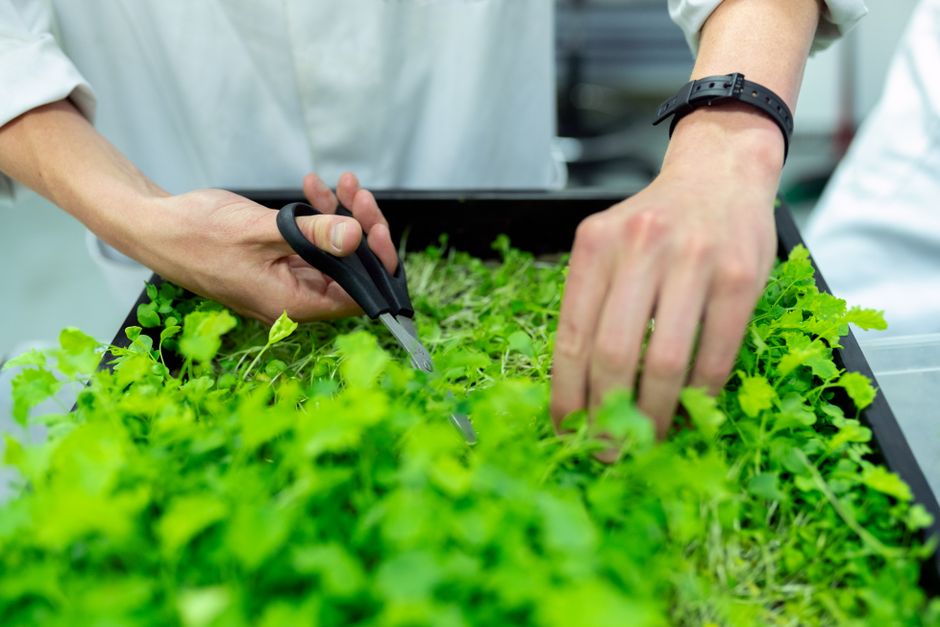
A tray feels cheap right up until it dumps a soaked flat in your hands.
I noticed the problem when I lifted a freshly watered 10×20 and the middle sagged like cardboard. Wet coco, dense mats, and a full bottom tray add up fast, and thin plastic starts to bow, twist, and slosh at the corners when I carry it.
The real frustration shows up after a few cycles. Cleanup flexes the tray again, stacked storage stresses the rims, and tiny corner cracks turn into spills. If I’m sowing often, replacing trays every few rounds stops feeling thrifty. Reuse-heavy growing is hard on plastic, so a sturdier tray can make the routine feel calmer, cleaner, and less wasteful.
My 20-second tray shortlist
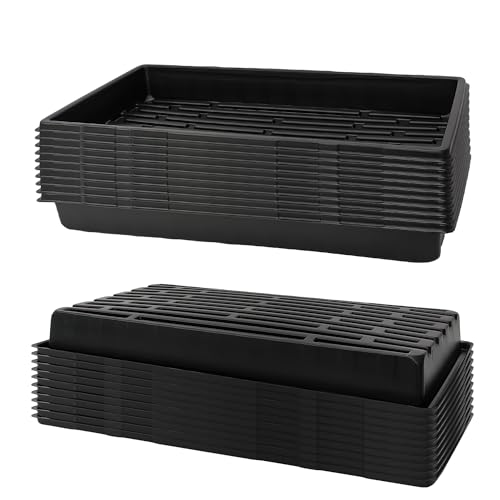


If I expect heavy rinsing, stacking, and daily moving, I lean thicker and deeper. If I care more about easy harvest cuts and a lighter tray, a shallow model can be a better fit — just with less forgiveness.
I only call a tray heavy-duty when it stays composed under real greenhouse messiness, not just when the plastic looks thick. In the same way I compare core microgreens equipment and supplies, I look at how a tray behaves loaded, wet, and handled over and over.
I watch for sidewall bowing when the tray is full of wet medium. A stiff rim matters because that’s where I usually grab, lift, and rotate the tray.
Corners tend to reveal weakness first, especially during washing or when trays are nested. Strong corners usually separate more cleanly and feel less likely to crease.
The real test is after repeated sow, water, harvest, wash cycles. Some trays feel sturdy on day one but soften, twist, or crack much sooner than expected.
Thickness helps, but it isn’t the whole story. Ribbing, plastic quality, and tray shape can matter just as much.
I’ve also been using a smaller stainless setup at home. I cover the build quality, reservoir design, and how it performs in everyday use in my stainless steel microgreens tray review.
Two trays can look similar on paper and behave very differently in use. I’ve had slightly thinner trays outlast bulkier ones simply because the rim was better reinforced and the corners handled stacking more gracefully.
Extra-thick choice for loaded-tray confidence
01
Designed to resist cracking under repeat harvests
If I were regularly carrying fully watered flats from rack to sink and back, this is the kind of tray I’d pay extra for. RooTrimmer’s extra-thick 1020 build is aimed at growers who want less flex in hand and fewer surprise failures after repeated washes, stacks, and harvests.
The no-hole design also fits microgreens setups where I want a cleaner, more contained tray. To me, this feels more like a buy-once, use-often option than a bargain tray.
- Noticeably stiff under wet load
- Corners inspire more confidence over repeat cycles
- 20-pack helps justify the upfront spend
- Higher entry price
- No drain holes won’t fit every setup
- Bulkier than thin starter trays
RooTrimmer makes the strongest case when trays get handled hard, not just left sitting on a shelf. I wouldn’t call it cheap, but for regular growers moving loaded flats, the added stiffness and lower chance of corner fatigue can feel worth the premium.
SOLIGT: sturdy 1020 trays without the premium jump
High customer trust at mid-range price
When I want something tougher than entry-level flats but not the most overbuilt tray available, this is the kind of set I consider. SOLIGT’s 10-pack lands in that practical middle lane: reusable no-hole 1020 trays meant for regular seed starting and microgreens use.
It fits growers who run several trays at a time and want a more durable everyday option without stretching the budget too far.
- Noticeably sturdier than flimsy basic trays
- 10-pack keeps durability-per-dollar appealing
- No-hole design helps contain water and media
- Strong buyer confidence: 4.5/5 from 468 reviews
- Likely less rigid than the most overbuilt trays
- No drainage holes if that setup is not your style
- Product details are fairly light beyond ‘extra thick’
- Mid-range price is higher than starter flats
Yield Lab budget 10-pack for hobby batches
Large review base at budget price
If I were buying several trays at once for small home runs, this is the kind of pack I’d consider first. Yield Lab’s standard 1020 no-hole trays suit test grows, starter setups, and growers who want more tray count for less upfront cost.
- Low upfront cost
- Ten trays in one pack
- Standard 1020 no-hole size
- Handy for side-by-side tests
- Lightweight feel under load
- Less reassuring for rough moves
- Corners may dislike hard impacts
- Aggressive scrubbing can wear them
Shallow tray for easier close cutting
Shallow profile for closer microgreen cuts
The Sunblaster Double-Thick Shallow 1020 Tray is the one I’d consider when harvest feel matters as much as lifespan. Its low 1.25-inch profile is clearly geared toward microgreens growers who want a tray shaped around fast, tidy cuts rather than broad, all-purpose garden use.
- Shallow wall helps low, clean cuts
- Double-thick tray feels steadier
- No-hole design suits bottom watering
- Less useful beyond microgreens
- Lower media volume can dry faster
- Single-tray price feels a bit steep
If I cared most about harvest comfort and presentation, this is the tray I’d move up my list. The shallow shape can make close cutting noticeably easier, but that same specialization means it’s less versatile once I step outside microgreens-style growing.
Shallow white tray for bright greenhouse benches
BPA-free option for greenhouse or indoor use
I’d look at the SUNPACK Shallow Heavy-Duty White Seed Tray if I wanted a low-profile tray for microgreens and I was growing in a greenhouse, sunroom, or other bright space. The 1-inch depth keeps the tray close to the bench for easy cutting, while the lighter color may run a bit less heat-absorbing than black plastic in direct light.
I wouldn’t treat the white finish as a miracle feature, but in warm, sunny setups, small practical details like that can be nice. For me, this feels like a niche-but-useful pick for growers who already know they prefer shallow trays and want a sturdier tray in a lighter color.
- Shallow profile suits microgreens
- Light color makes sense in bright spaces
- Heavy-duty angle for repeat use
- Standard 10×20 footprint
- Very tray-specific use case
- White shows stains faster
- Smaller review base
- Not much depth for other tasks
A few tray assumptions I’d correct
Durability only matters in context.
If I’m mostly growing on a bench, a sturdy midweight tray can be plenty; constant carrying, stacking, and washing call for heavier rims and corners.
Drainage should match your watering setup.
Hole trays work well for nested bottom-watering, while solid trays catch runoff and keep benches cleaner.
Small size differences can matter.
I’ve learned to check actual dimensions when pairing trays with inserts, domes, blackout covers, or tight rack shelves.
Depth affects growing style more than strength.
Shallow trays make close cutting easier; deeper trays hold more medium. Survival usually comes down to plastic quality and rim support.
Small handling habits can add a lot of tray life
-
Support the whole tray when it’s full
When I move a wet tray, I lift from underneath with two hands instead of grabbing one corner. That seems to cut down on corner whitening and hairline cracks.
-
Separate stacked trays gently
If trays nest tightly, I loosen the stack with both hands rather than twisting one edge free. That little twist is where rims and corners seem to get stressed first.
-
Go easy on heat
Very hot wash water and long stretches on a hot bench can soften plastic enough to leave a slight bow. Lukewarm cleaning and cooling trays in the shade tend to be kinder.
-
Clean without hard scraping
I’ve had better luck with a soft brush than with digging roots off using a rigid scraper. Deep scratches don’t break a tray right away, but they can age it faster.
-
Store them flat
A level shelf helps more than I expected. If a stack sits crooked or has weight on one edge, even a sturdy tray can slowly warp between harvests.
If I were buying for constant sow-and-harvest cycles, I’d spend more on the Extra-Thick 1020 Heavy-Duty Microgreen Trays. They’re the pair I’d trust most for soaked media, frequent moves, washing, and repeat harvests. If I wanted durability without as much of a price jump, the Solid 1020 Heavy-Duty Seed Starting Trays look like the practical middle ground.
For lighter use, trial runs, or a tighter budget, the Affordable 10×20 Plastic Microgreen Propagation Trays still make sense. If close cutting is the main goal, I’d lean toward the Sunblaster Double-Thick Shallow 1020 Tray. For bright greenhouse benches, the SUNPACK Shallow Heavy-Duty White Seed Tray feels like a sensible niche pick.
I’d prioritize wet-load stiffness first, then depth. A tray that stays rigid in your hands usually saves more frustration than a specialized shape that flexes.

I appreciate that you actually called out the Yield Lab set as more of a hobby/test-grow option instead of pretending every cheap tray is secretly commercial grade lol.
That said, for someone doing maybe 6 trays at a time on a windowsill, would you still pick the Affordable 10×20 Plastic Microgreen Propagation Trays over just buying two or three heavier trays and using them longer? Sometimes “budget” ends up costing more when stuff cracks.
You mentioned true 10×20 fit as one of the assumptions people get wrong, and I’m glad you did. That mismatch is annoying when trays *almost* nest right and then bind up during stacking.
Curious why the Sunblaster shallow tray made it in but not any of the generic shallow black trays all over Amazon. Were they too inconsistent from batch to batch, or just not clearly better than the Sunblaster and SUNPACK picks?
I’ve had that exact issue with generic shallows. First order was fine, second order from the same listing felt way flimsier. So I kind of get why a reviewer would skip them unless the consistency is proven.
Maybe this is me being cheap, but I wanted a clearer “under X dollars, buy this” conclusion 😂
Between the Solid 1020 Heavy-Duty Seed Starting Trays and the Affordable 10×20 Plastic Microgreen Propagation Trays, where’s the line where you’d stop recommending the cheaper set? Is it basically: hobby = fine, anything with repeat harvests and lots of handling = don’t risk it?
No mention of Epic trays? Not complaining, just honestly asking. When people say “extra thick” that’s one of the names I expect to see every time.
Also thanks for pointing out that shallow trays are great for close cutting but less versatile. A lot of reviews act like shallow automatically means better for everything, which… no 😅
The part about thickness alone being misleading was spot on. I’ve bought “heavy duty” trays before that were thick-ish but still flexed like crazy once the medium was soaked.
One thing I wondered though: why no comparison to mesh-bottom trays or the newer slotted ones some growers use for airflow? Even if you prefer no-hole trays overall, it would’ve been nice to hear why they didn’t make your shortlist.
I liked the “20-second shortlist” format, but I kind of wanted one more category: best pick for people who bottom-water constantly and drag trays around wire shelving all day.
That’s where my cheap trays usually die, not during the grow itself. Corners chip, rims split, and then suddenly my “deal” becomes a trash pile.
Maybe the Extra-Thick 1020 Heavy-Duty Microgreen Trays are the obvious answer there, but if so I wish the article leaned even harder into that use case.
I grow in a bright greenhouse and the white SUNPACK tray caught my eye, but I’m still not sure why I’d choose white over black unless heat is a real issue.
Do you think the white tray earned a spot mainly because of visibility/bench brightness, or because the plastic itself is actually holding up better? I’ve seen white trays that got brittle faster, so I’m a little skeptical.
Mainly bench visibility, brightness, and grower preference rather than an automatic durability advantage. I included it because some growers really do prefer lighter-colored trays in bright spaces, especially for workflow and seeing debris during cleanup.
I wouldn’t assume white means stronger. For lifespan, I’d still prioritize wet-load stiffness, corner/rim strength, and how the tray handles stacking and repeated washes.
Surprised Bootstrap Farmer wasn’t in the shortlist. If the whole point is surviving wet load + repeat moves, that brand is usually the first one people bring up.
Was it left out because of price, availability, or because you were trying to keep the list to trays that are easier to find in simple 10-packs?
Mostly price-to-value and keeping the shortlist tight. I wanted options that covered a few clear use cases without turning the article into a huge catalog.
Bootstrap-style trays absolutely belong in the heavy-duty conversation, but for this post I focused on trays that gave a more distinct spread across premium, mid-range, budget, and shallow formats.