
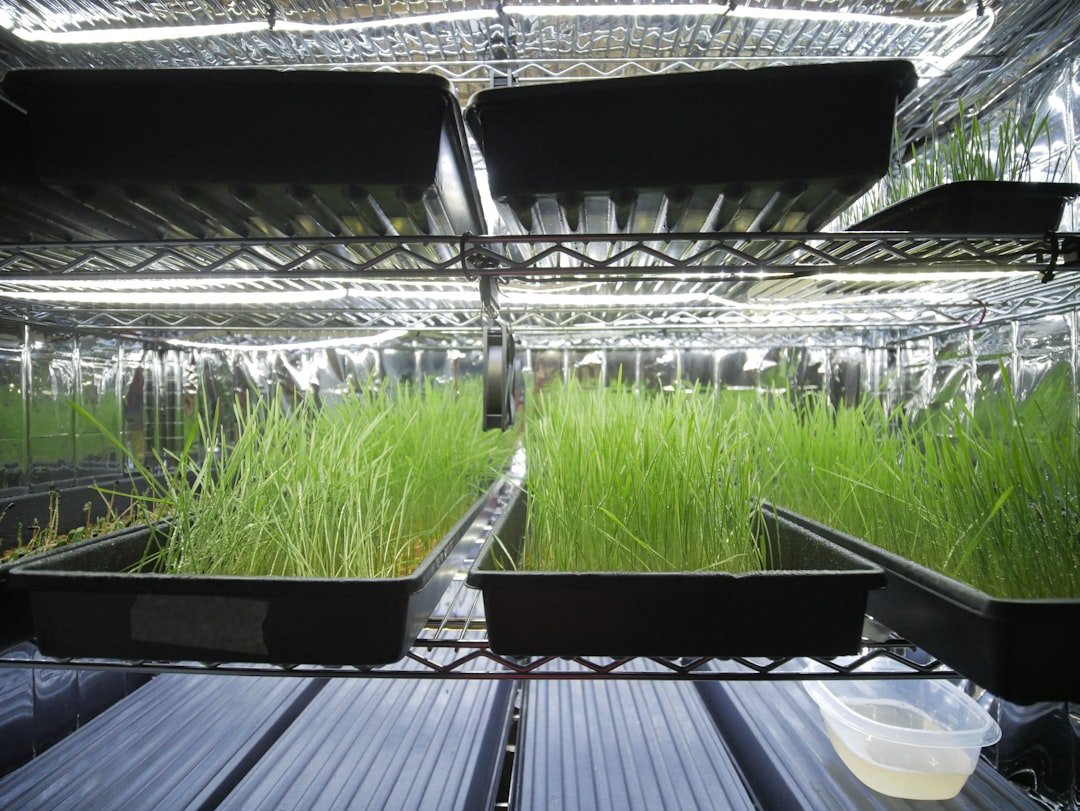
A fan can help, but it isn’t an automatic upgrade.
I’ve stood over a damp tray, spotted a fuzzy corner, and wondered whether a fan would solve it—or just dry the whole thing out by morning. That back-and-forth is pretty normal with microgreens.
In my experience, a fan is less a must-have than a useful adjustment. It can help when the room feels still, trays sit close together, or the surface stays wet for a long time. But if my space already has decent air movement, extra airflow can make shallow trays lose moisture faster than I want. I think of it as a setup judgment call, not a gadget rule.
Can passive airflow be enough?
Do microgreens actually need a fan?
Not always. In my experience, they need gentle air movement more than a specific piece of equipment.
How can I tell if my room already has enough airflow?
If covers and tray edges do not stay wet for long, and the area does not smell stale, passive airflow may be enough. I also look for moisture clearing after watering instead of hanging around.
When can I usually skip a dedicated fan?
A small setup often does fine without one when humidity is fairly low, shelves are open, and trays are not crowded together. Even normal room activity or a lightly moving vent can help.
When does a fan become more useful?
I find it more helpful when shelves are packed tight, the room feels damp, or lights add noticeable warmth. Persistent condensation and slow-drying surface moisture are common signs.
When a fan starts to feel necessary
How can I tell passive airflow isn’t keeping up?
I start noticing a damp smell, slow-drying tray surfaces, or little beads of moisture that hang around longer than expected. If one corner of the rack feels stuffy while the rest of the room seems fine, that’s usually a clue the air is pooling there.
Do packed shelves change the equation?
Usually, yes. When trays sit close together, humid air gets trapped between levels, and the center of a shelf can stay much more stagnant than the aisle side.
What about blackout periods or humidity domes?
Covered trays naturally hold extra moisture, so they can create a mini greenhouse effect. I wouldn’t count on the cover itself to manage that moisture; once covers come off, gentle room airflow often helps the surface dry more evenly.
Does heat from lights make a fan more useful?
It can. Even efficient lights add some warmth, and warm, humid pockets tend to linger around dense shelves and close ceilings if the air is still.
Can a fan handle mold problems on its own?
Not really. Airflow can lower mold pressure by reducing stale moisture, but it works alongside clean trays, decent spacing, careful watering, and generally tidy grow habits.
If I’m seeing condensation on lids, shelf posts, or tray edges, I treat that as a sign to check the whole setup. A fan may help dry the air, but sanitation, tray washing, and avoiding soggy conditions still matter just as much.
How gentle should the airflow be?
Should the fan point right at the trays?
I usually avoid a direct blast. What works better in small grows is light movement across the area, not leaves whipping around.
How can I tell the fan is too strong?
If the surface dries unusually fast, lightweight stems lean hard, or edges look stressed before the rest of the tray, I back off. A constant flutter is more than I’m aiming for.
What does “just enough” airflow look like?
I’m looking for a room that feels less stuffy, with covers and shelves drying off instead of staying damp. The greens can stay mostly still.
Do I need a bigger fan if problems continue?
Not always. In my experience, placement and speed fix a lot before fan size does, especially on a hobby rack.
-
Move it farther away
I start by increasing distance so the air softens before it reaches the trays.
-
Lower the speed
If there’s still obvious leaf movement, I drop to the lowest setting that keeps the space from feeling stagnant.
-
Angle it past, not at, the greens
Pointing the fan alongside shelves or toward a wall can create circulation without a harsh stream.
-
Watch one tray for a day
I check drying speed, stem posture, and whether condensation clears. That usually tells me if the change helped.
-
Only then try bigger changes
If conditions still stay damp, I might add more room ventilation or rethink spacing before upgrading equipment.
Small adjustments are usually easier on microgreens than a stronger fan.
A quick way to decide
How can I tell, today, if my tray might want more airflow?
I do a fast check: foggy lids, a damp smell, slow-drying soil, or stems that stay wet for hours all hint at stale air. If the tray looks fresh and dries at a steady pace, I usually leave it alone.
When is it reasonable to skip the fan for now?
If your room already feels airy, there is no condensation, and the surface is not staying soggy, passive movement can be enough. In a simple setup, adding gear too early can solve nothing and make watering fussier.
What should I adjust before blaming airflow?
I think of airflow as one part of indoor gear that supports healthier microgreens, not a cure-all. Tray spacing, removing covers on time, light heat, and how heavily I water often change the results just as much.
What is the lowest-risk way to test a fan?
I like a short, indirect trial rather than an all-day blast. If the tray smells fresher and dries a bit more evenly without leaning or crisping, that is a decent sign the fan is helping.
Use the smallest useful change
- Check moisture first
- Tweak spacing and covers
- Test gently, then compare
For me, the clearest answer is not fan or no fan but what is the tray doing right now? If moisture lingers, air feels trapped, or the setup is crowded, a gentle fan can help. If the tray already stays balanced, leaving things alone can be the smarter move.
Airflow matters, but it sits beside watering, spacing, covers, light, and room conditions. A small test usually tells me more than adding gear on instinct.

I’m a little skeptical of the “just check the tray” advice, not because it’s wrong, but because beginners don’t always know what they’re looking at.
Like, is a tiny bit of condensation under a cover normal or already a warning sign? When stems lean, how much leaning is too much? I learned mostly by messing up a lot of pea trays, which is a very expensive teacher at current seed prices.
That’s a fair criticism. “Check the tray” sounds simple, but it takes a little experience to interpret the signals.
A small amount of condensation under a cover isn’t automatically a problem, especially during germination, but persistent heavy moisture, stale smell, or slow surface drying after uncovering are stronger warning signs. For leaning, a slight one-direction bend can happen from light or airflow, but if stems are visibly pushed over, constantly moving, or drying faster on one side, the fan is probably too much.
Totally agree with this. Experienced growers say “you’ll know” and I’m like… no, I absolutely did not know 😅 A couple photo examples of too-much vs just-enough airflow would help beginners a ton.
One thing I’m still unsure about: if a room already has an HVAC vent nearby, does that count as airflow or can it be misleading?
Mine feels breezy to me, but the trays in the back corner still seem to stay wetter longer than the front ones. Makes me wonder if “air movement in the room” and “air movement around the plants” are two different things.
I appreciated the part about doing a quick tray check instead of treating the fan like some holy object 😂
People online love giving one-size-fits-all rules, but my setup changes a lot through the year. Winter = no issue. Late spring = suddenly the lids are sweaty and the rack feels warmer from the lights.
Do you think timing the fan to only run during the brightest part of the day works well, or is that usually too inconsistent?
Timed airflow can work very well, especially if your problem is tied to light heat building up during part of the day. It doesn’t have to run nonstop if the room conditions don’t call for it.
I’d still watch the trays rather than relying only on the timer. If the surface stays damp for too long, covers collect moisture, or the canopy feels still and muggy, increase runtime. If trays dry too fast or the crop keeps fluttering, reduce it.
How far away would you keep a fan if the stems are already a little thin? I tried a small desk fan and the sunflower tray started leaning like it was in a music video.
I get the point about indirect airflow, but there’s a fuzzy middle area between “stale air” and “tiny hurricane” that I’m still trying to find.
This was helpful because most guides act like a fan is mandatory no matter what.
My trays are on an open wire shelf in a pretty dry room, and honestly they seem fine without one most weeks. I do notice trouble only when I leave the blackout cover on a little too long and everything feels damp underneath. So I guess in my case it’s less about buying more stuff and more about not creating a swamp 😅