
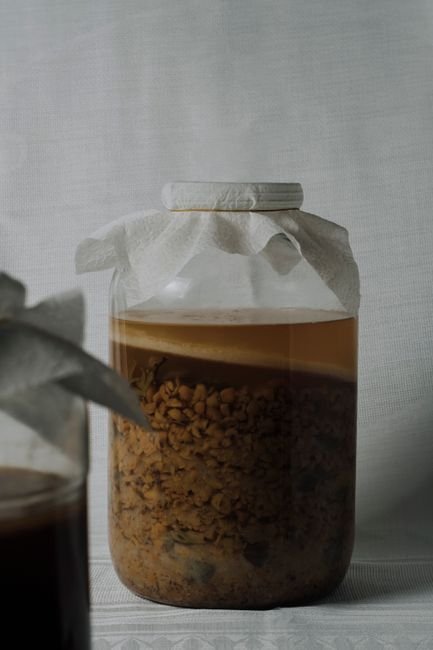
A fizzing jar can look alarming long before it’s actually risky.
You set a jar on the counter, notice a few bubbles, and suddenly every scary warning you’ve ever heard rushes back. I get that reaction. A lot of advice lumps fermenting, vinegar pickling, and home canning into one big danger category, even though they are not the same process.
That’s where the confusion starts. The useful question is not simply, “Can fermented foods cause botulism?” It’s which conditions make botulism possible in the first place. In broad terms, the concern centers on the wrong mix of low acidity, little oxygen, and poor handling—not just on the fact that a food sat in a jar.
Not every “ferment” carries the same risk
Plain answer: yes, botulism is possible in some fermented foods, but it is rare in properly acidified vegetable ferments like sauerkraut or kimchi. When I read home-preservation guidance, the bigger concern usually shows up in low-acid, oxygen-poor foods that never get acidic enough.
What gets confusing is that people often use ferment as a catch-all word. In practice, these foods do not all behave the same:
- Lacto-fermented vegetables become acidic as the microbes do their work.
- Oil-packed garlic, herbs, or peppers can stay low-acid and low-oxygen.
- Improperly canned foods are a separate, more common botulism context than a bubbling crock of cabbage.
So the label matters less than the conditions. If a food is acidic, salty, and actively fermenting as intended, that is a very different risk profile from a sealed, low-acid product.
I’ve noticed people hear “anaerobic” and stop there. Botulism depends on the combination of low acid, low oxygen, and favorable handling conditions—not simply the fact that microbes are involved.
The labels I try not to mix up
Fermentation
Salt and time let helpful microbes make acid inside the food. In vegetable ferments, that rising acidity is part of why botulism risk is usually low.
Vinegar pickling
Here, the acid is added up front from vinegar rather than produced by microbes. Safety depends on the food staying acidic enough, not on whether it bubbles.
Home canning
Canning is a heat-and-seal process, not a flavor category. If low-acid foods are canned incorrectly, they can end up in the kind of low-oxygen, low-acid setting botulism is associated with.
Low oxygen
A sealed jar alone does not make something dangerous. The bigger issue is low oxygen combined with low acid, moisture, and poor processing or storage.
Acidity
This is the detail I see people skip. Ferments and pickles are usually safer because they become acidic; plain sealed vegetables are a different situation.
Why acid matters
Botulism starts when C. botulinum grows in low-acid, low-oxygen food and makes toxin. In active lactic ferments, salt-tolerant microbes lower pH. That acid barrier usually blocks the organism, though fermentation itself is not magic.
How acid changes the risk
Edible Alchemy gives a clear, plain-language look at how botulism relates to low-acid foods and why acidifying ferments changes the picture.
Where the risk actually clusters
When I look at actual botulism concern, I try not to spread it evenly across every jar, crock, and bottle. It’s rare overall, but the cases that do happen tend to bunch up around a narrower set of conditions: low-acid foods, limited oxygen, and storage that gives the organism time to grow.
Lower relative concern
These usually worry me less because the process itself pushes the food acidic:
- Classic vegetable ferments like sauerkraut, kimchi, and brined pickles
- Yogurt and kefir, which are acidic and not the usual botulism scenario
- Sourdough and other ferments that are exposed to air and not stored as sealed low-acid foods
That does not make them immune to all spoilage problems, but botulism is not where most of the risk sits.
Higher relative concern
This is where I pay closer attention:
- Low-acid vegetables or meats packed in oil or sealed tightly
- Garlic-in-oil or herb-in-oil mixtures, especially homemade versions kept for a while
- Improperly canned low-acid foods such as vegetables, meat, or seafood
- Ferments that never acidify as expected but are still stored anaerobically
A useful way I sort it in my head is: “Did this become acidic, or did it just become sealed?” Sealing alone does not make food safer; in some low-acid cases, it can create the exact environment botulism likes.
So yes, “rare” is fair—but rare does not mean random. The risk is not spread evenly across all fermented foods. It tends to cluster in low-acid, oxygen-poor, longer-held foods, especially when the method depends on assumptions rather than a reliably acidifying process.
What I don’t trust as a safety check
Botulism toxin does not reliably change smell, taste, or appearance.
Bad odors can point to spoilage, but no odor is not a clean bill of health. That’s one reason I don’t treat a normal smell as proof.
Bubbles only show gas production; they do not prove enough acid has formed.
I like seeing active fermentation, but bubbling alone does not tell me the pH, salt balance, or whether a low-acid sealed food is in a risky zone.
Visible mold can signal a problem, but it cannot diagnose or rule out botulism.
Mold may mean contamination or failed preservation. But botulism can occur without visible mold, and mold itself points to a different issue more than a specific one.
What I pay attention to in a home ferment
-
Start with a method that has a track record
I’m much more comfortable with familiar vegetable ferments than improvised “jar experiments.” A recipe that specifies ingredient ratios, vessel type, and expected timing usually leaves fewer safety gaps.
-
Match the salt level to the style
Salt does not make every ferment automatically safe, but it helps steer microbial activity in the right direction. Too little can make the process less predictable, especially in wet vegetable ferments.
-
Allow time for acid to develop
Fresh produce starts out less acidic than the finished ferment. The safer pattern is the one where lactic acid bacteria get time to lower pH before the food is stored long term.
-
Keep the food below the brine
When vegetables float above the liquid, they are more exposed to air, drying, and surface growth. I’ve found simple weights or folded leaves help keep the active part of the ferment evenly submerged.
-
Be more cautious with low-acid or rich mixtures
The easy vegetable model does not translate neatly to everything. Garlic, peppers packed in oil, and ferments involving meat or seafood deserve extra scrutiny because they can stay low-acid while also limiting oxygen.
I mentally separate simple salted vegetables from low-acid, oil-heavy, or animal-based ferments.
The second group can behave very differently from sauerkraut or kimchi-style jars because the usual safety pattern—salted produce acidifying in brine—may be weaker, slower, or less reliable. That does not mean every such food is unsafe; it means the margin for error can be smaller, and casual substitutions matter more.
The quick filter I remember
- Reliable acidification changes the risk picture for vegetable ferments.
- The bigger warning signs are low-acid ingredients, early airtight sealing, oil-heavy mixtures, and animal ferments.
When I want a fast gut check, I use one question: did this start as a classic salty vegetable ferment, and did it become clearly acidic? If yes, my botulism worry drops a lot. Sauerkraut, kimchi, and other brined vegetables are much less concerning once they reliably turn tangy.
My attention goes to the real red flags instead: low-acid foods, airtight storage before acid develops, oil-heavy mixtures, and meat or fish ferments. That is where botulism concern tends to cluster—not in every jar that happens to bubble.

Maybe I’m overthinking this, but the “acidification filter” seems a little too neat? Like, useful yes, but people hear a shortcut and then stop paying attention.
For example, if vegetables are *supposed* to acidify but someone skimps on salt, uses warm temps, and half the stuff is floating above the brine, is that still “generally low risk,” or have they now wandered into the danger zone? I know you said established methods matter most, I just worry readers will remember the catchy rule and forget the conditions.