
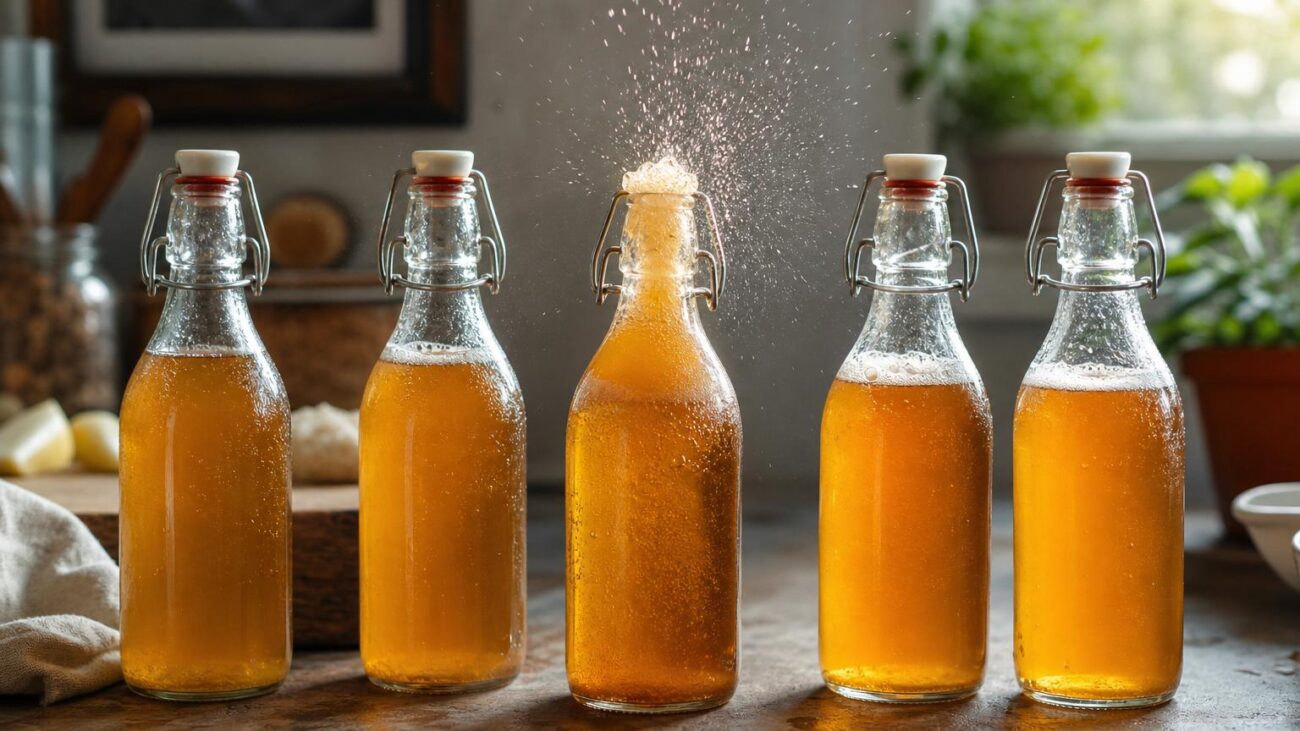
A lively brew feels great—right until it’s time to trap the bubbles.
I always feel the tension at bottling: the kombucha smells bright, the fruit is in, and now I’m asking glass, gasket, and latch to handle the fizzy part. That’s where a bottle can make me feel calmer—or a lot less so.
Good swing-tops help mostly by feeling consistent: thicker glass, a seal that closes cleanly, and a shape I don’t mind washing and reusing. No bottle makes carbonation foolproof, but the right one can make second ferment feel less like a gamble and more like a normal kitchen routine.
- Smaller bottles can feel easier to manage.
- A snug wire bail matters as much as the glass.
- Wide enough openings make cleanup less annoying.
The fastest bottle matchups

![8 Pack [1 L / 33 fl. oz.] Swing Top Glass Bottles w/ Airtight Stopper Lids – Flip Top Brewing Bottle for Fermentation, Kombucha, Mead, Vinegar, Beer, Kefir, Wine, Soda – With 8 Extra Seals & 2 Pourer](https://m.media-amazon.com/images/I/41TgCK69CoL._SS500_.jpg)


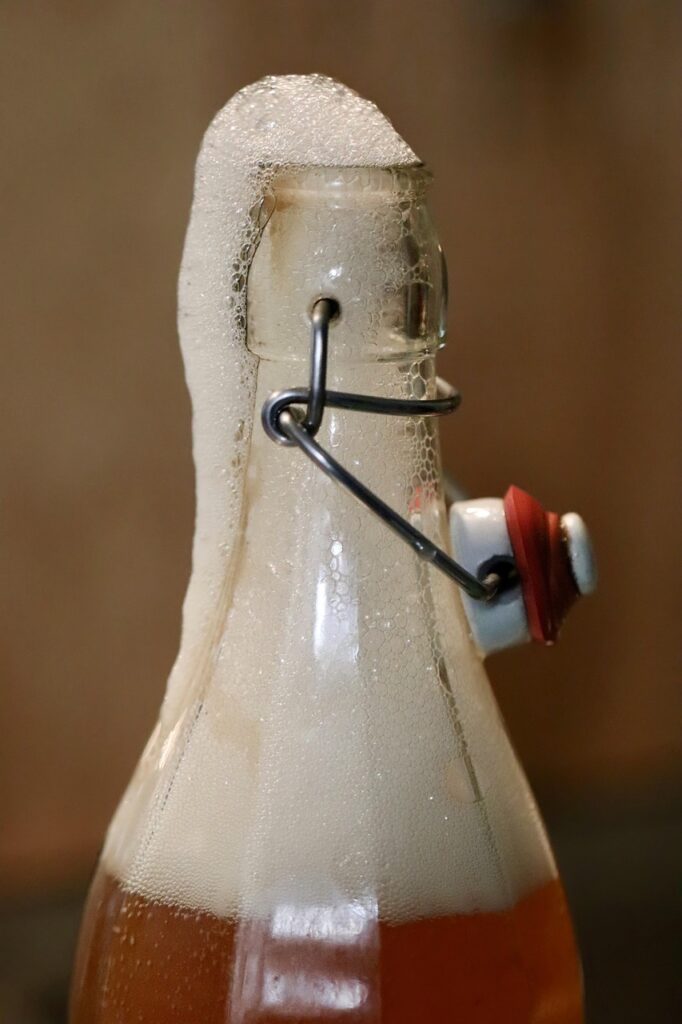
Even sturdy flip-tops can build pressure quickly. Chilling before opening and leaving reasonable headspace can help make carbonation feel more predictable.
Bottle traits I actually check
-
A seal that closes the same way every time
For fizzy kombucha, repeatable closure matters more than big durability claims. I pay attention to whether the swing top clamps down evenly and feels snug.
Look forWire bail sits straight and snaps shut firmly.AvoidLoose latch, uneven pressure, or a cap that shifts. -
A gasket that looks fresh, not flimsy
The gasket does a lot of the leak-prevention work. Dense rubber or silicone that sits flat tends to inspire more confidence than thin, stretchy rings.
Look forFlat, well-fitted gasket with no cracking.AvoidDry, warped, or obviously thin seals. -
Glass and shape that feel practical
I like bottles that feel solid in hand, but shape matters too. Straighter bodies are usually easier to fill, clean, and store.
Look forSubstantial feel and a simple, easy-to-brush shape.AvoidAwkward curves, narrow shoulders, or slippery grip. -
A size that fits how you drink
Bottle size changes the whole routine. Around 16 ounces works well for single servings, while 1-liter bottles can make batch days feel simpler.
Look forCapacity that matches daily pours or sharing.AvoidOversized bottles you rarely finish once opened.
When I compare bottles, I trust the closure more than the listing copy. A clean snap, a decent gasket, and a practical shape usually tell me more than bold durability wording.
What bottles can’t do on their own
It mostly holds pressure more reliably.
Fizz still comes from fermentable sugar and time, not from the glass itself.
Timing changes both fizz and pressure.
An extra day at room temp can shift a batch from quiet to very lively.
Too much headspace can weaken carbonation.
Less liquid and more empty air often means slower pressure buildup; too little space can still get messy.
Temperature also changes carbonation speed.
Warmer bottles usually build pressure faster, while cooler ones can lag in the same bottle style.
I try not to treat any swing-top as a fizz machine. When a batch feels flat or extra punchy, I usually look at sugar, fruit, fill line, time, and room temperature before I blame the bottle.
Most versatile 16-ounce swing-tops
01
Pressure-safe seals for reliable kombucha carbonation
If a friend asked me for one easy kombucha bottle set to start with, this is the one I’d mention first. The Otis 16-ounce bottles land in the size I reach for most: big enough for a satisfying pour, small enough to chill quickly and open without committing to a full liter at once.
That makes them especially handy for routine second ferments, flavor testing, and packing a bottle for later. If you love large-format batches or mostly serve a crowd, you may feel better served by 1-liter options instead.
- 16 oz size is easy to portion and rotate
- Swing-top closure suits repeat second ferments
- Set includes labels for tracking flavors or dates
- Widely reviewed, so expectations are easier to gauge
- Not ideal if you prefer fewer, larger bottles
- Six-bottle set can feel small for bigger batches
- Clear glass offers less light protection than amber
For most people making kombucha at home, this set hits the easiest balance of size, seal style, and day-to-day convenience. Sixteen ounces is just a very usable bottle: it chills fast, helps with portion control, and makes second-ferment experiments feel low-drama.
If your routine leans toward bigger pours or fewer bottles per batch, I’d look at a larger format. For regular weekly brewing, though, this is the set I’d feel most comfortable recommending first.
Compact two-pack for small batches and trials
I’d treat this JOBVERT two-pack as a gentle starter option for anyone who wants to see how their own second-ferment routine behaves before buying a bigger set. Two 16-ounce swing-top bottles give you enough room to test timing, flavor additions, and carbonation levels without turning the experiment into a full-batch commitment. It makes the most sense for small trial runs, occasional bottling, or a first kombucha setup where I’m still learning my preferences.
- Low-cost entry
- Easy trial size
- 16 oz format
- Airtight flip tops
- Only two bottles
- Limits batch bottling
- Hand wash only
1-liter swing-tops for bigger bottling days
Big capacity pack with spare seals and pourers
If I were bottling larger kombucha runs and wanted the filling session to move faster, this AOZITA 1L set would be high on my list. It gives you eight large swing-top bottles, so you can pack away a decent batch without lining up a small army of 16-ounce bottles on the counter. For brewers who think in bigger pours, shared servings, or fewer caps to fuss with, the larger format makes a lot of day-to-day sense.
- Eight 1L bottles cover a good-size batch
- Fewer bottles to wash, fill, and cap
- Includes spare seals and pourers
- Dishwasher-safe glass helps with cleanup
- Less flexible once a bottle is opened
- Large bottles can feel bulky in the fridge
- Bigger pours may flatten before you finish them
Durable, BPA-free glass built for fermentation
If I wanted more room per bottle without jumping to a big case, this 4-pack would make sense. The 32-ounce size lands in a practical middle ground: enough capacity to cut down on filling time, but not so oversized that it feels like dedicated party-batch gear.
I’d look at these for smaller brewing setups that still produce enough kombucha to make 16-ounce bottles feel a little fussy. They also fit the person who wants a few larger bottles in rotation, not a whole shelf full of them.
- Four larger bottles for about $20
- Fewer fills per batch
- Swing-top format suits carbonation
- Dishwasher-safe glass
- Less convenient once opened
- Bigger pours than many people want
- Only four bottles included
Amber swing-tops for darker storage
Light-blocking amber glass protects brews
If I were bottling kombucha in a bright kitchen or keeping a few bottles around a bit longer, this 10-pack would make sense. The amber glass adds some light protection, and the 16.5-ounce size still feels easy to chill, pour, and share.
To me, this is more of a targeted choice than an everyday default. If you like seeing sediment, bubbles, and fill level at a glance, clear glass is still easier to live with.
- Amber glass helps limit light exposure
- 16.5 oz size is easy to chill
- 10-pack suits modest bottling days
- Harder to monitor sediment and fizz
- Extra protection doesn’t replace good storage
- Less appealing if you prefer clear glass
Bottle size questions I hear a lot
Is 16 oz enough for most home brewers?
Usually, yes. I find 16-ounce bottles easiest to chill, easy to fit in a crowded fridge, and convenient when I want one serving at a time.
When do 1-liter bottles make more sense?
They help on bigger bottling days because there are fewer bottles to fill. I like them most when a bottle will be shared or finished soon after opening.
Are 32 oz bottles a good middle ground?
Often, yes. They reduce filling work without being quite as committing as a full liter once opened.
How do flavor experiments affect size choice?
If I’m splitting a batch into several flavors, smaller bottles give me more flexibility. Larger bottles work better when I want fewer, simpler variations.
Should beginners start with fewer bottles first?
A small set can help you learn your routine without buying a full case right away. It’s less efficient, but it can feel easier to manage at first.
Before I choose a bottle size, I run through four things:
Batch size: bigger brew days usually favor bigger bottles. Fridge space: tall bottles can be awkward even if the volume looks appealing. Drinking speed: larger bottles feel better when they’ll be finished quickly. Flavor splitting: more flavors usually means more smaller bottles.If two options still seem close, I lean toward the one that feels easier to chill, wash, and actually finish.
The picks I’d feel good recommending
- Otis Classic 16oz: easiest everyday choice for single pours and mixed flavor batches.
- 1L Swing Top 8-Pack: most useful when I’m bottling larger batches and sharing.
- ZEBEIYU 32oz: nice compromise when I want fewer fills without going full liter.
For most people, I’d start with the Otis Classic 16oz Swing Top Glass Bottles Set because the size is easy to live with day to day. If your bottling sessions are bigger and you usually open bottles to share, the 1L Swing Top Bottles 8-Pack with Extras is a more streamlined fit.
If you want fewer bottles to fill but still want something more manageable than a liter, the ZEBEIYU 32oz Swing Top Glass Bottles 4-Pack makes sense. For brighter kitchens, the Amber 16.5oz Swing Top Bottles 10-Pack adds light protection, while the 2-Pack 16oz Swing Top Bottles with Airtight Lid is a gentle starting point. I’d trust the bottle that matches my routine and comfort level more than one promising dramatic fizz.

I liked that you separated “what bottles can’t do on their own” from the actual bottle picks. A lot of roundups act like buying thicker glass magically fixes overcarbonation, which… no 😅
That said, why wasn’t there a cheap non-swing-top option at all? Some people doing second ferment on a budget use reused GT’s bottles or basic beer bottles with caps. Feels like the list leaned pretty hard into swing-tops only.
Fair point. I kept this one focused on swing-tops because they’re the format most readers asking me about kombucha bottles want for repeat use, easy sealing, and less extra gear.
I didn’t include reused commercial kombucha bottles or crown-cap beer bottles mainly because they become a different comparison: capper tools, cap quality, bottle sourcing, and more variation in bottle condition. For strict budget brewing, reused bottles can absolutely work, but I wanted this article to stay apples-to-apples.
I appreciated the part about bottle size affecting serving pace. That gets ignored a lot.
I actually prefer the 32 oz format for ginger batches because I don’t want to wash a million bottles, but after opening one, yeah, you kind of commit to drinking it fast or it goes flat-ish. Curious why you included the ZEBEIYU 32oz set but not more 750 ml style bottles? To me those are the real middle ground.
750 ml really is the sweet spot IMO. Big enough for batch days, small enough that you don’t feel rushed once it’s open.
I’m guessing there just aren’t as many decent options sold consistently, because I had trouble finding them last time too.
The 2-pack starter set makes sense for testing carbonation habits, but I’m surprised you didn’t mention any super budget pick for people who only bottle like 1 small batch a month. Not everyone needs an 8-pack with pourers and spare seals lol.
If you had to choose under $15, would you still point people to the 2-pack, or would you tell them to hunt locally at thrift stores instead?
Can I be slightly grumpy for a sec? Amber glass is nice for light filtering, sure, but losing visibility on sediment and bubble activity is a bigger downside than some guides admit.
So I’m wondering why the amber 16.5 oz bottles made the cut over just recommending clear bottles kept in a cabinet. Especially since your own article says visibility matters day to day. Was it mostly because people asked for a darker-storage option?
Thanks for calling out headspace and temperature instead of pretending the bottle does all the work. I’ve seen too many “exploding bottle” stories blamed on the glass alone.
Question though: why Otis as the default 16 oz pick instead of a larger value pack from another brand? Was it mainly the seal consistency/gasket quality, or just price at the time you wrote this?
I’m shopping for something around that everyday-pour size, but if the cheaper packs are 90% as good, I’d probably live with that.