
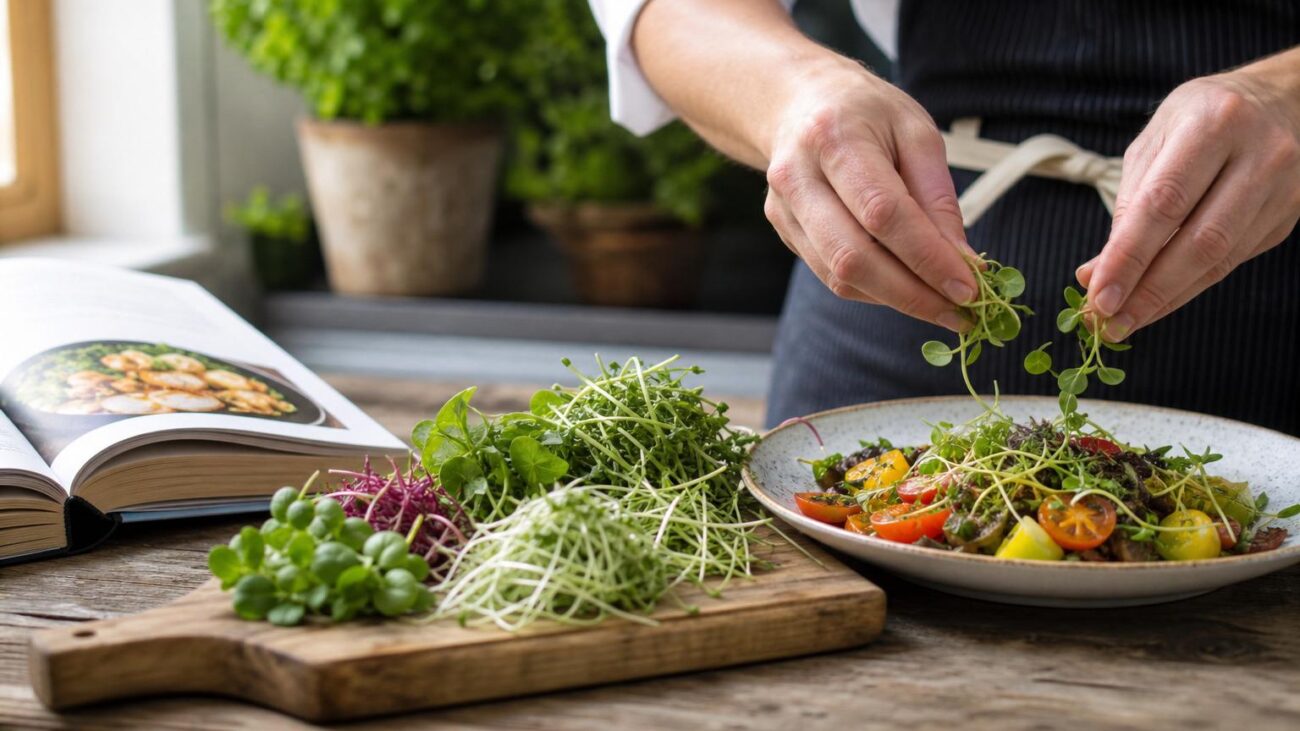
Tiny trays can create a surprisingly urgent dinner problem.
I’ve cut a fresh handful of pea shoots or radish greens at 5 p.m., feeling very efficient, then hit the familiar wall at dinner: now what? A small harvest can feel awkwardly in-between—too little for a full salad, too delicate to forget in the crisper, and somehow easy to repeat in the same two places, like eggs or avocado toast.
That’s the part I didn’t expect when I started growing microgreens. They’re fast to grow, but turning them into actual meals takes more imagination than a garnish habit. If I don’t have a plan, I either use them the same way again and again or watch them lose their snap a day later. The gap isn’t harvesting; it’s knowing how to cook before freshness turns into waste.
Which microgreens cookbook fits your actual problem?


I weighed these books by one simple question: would I actually reach for this when a tray is ready right now? I cared much more about everyday usefulness than glossy presentation.
-
Real harvest fit
I looked for recipes that can absorb small, frequent cuttings instead of assuming a big farmers’ market haul.
-
Repeatable home cooking
I gave more credit to books with quick lunches, sides, and weeknight ideas than to special-occasion plating.
-
Clear guidance
I favored books that make it easy to match a microgreen to a meal, so less ends up wilting in the fridge.
Buying signs that actually help you use more trays
-
Recipe pace
If your harvests pile up fast, the book needs plenty of low-effort uses you can repeat without planning a whole dinner.
Look forShort ingredient lists, fast assembly, flexible add-insAvoidMostly ambitious weekend dishes -
Microgreen-specific cues
The most helpful books say which greens work where, instead of treating all microgreens as the same garnish.
Look forSwap notes or pairing ideas by varietyAvoidPretty recipes with vague topping instructions -
Format you will keep open
A useful cookbook is one you can scan while cooking. For some people that means large print; for others, compact recipes.
Look forReadable layout and easy-to-spot timingsAvoidDense pages that slow you down -
Your main bottleneck
I would choose based on the problem that keeps repeating: speed, variety, meal prep, or readability.
Look forA book matched to your sticking pointAvoidPicking only by page count or cover style
If I know I default to rushed lunches, I lean toward quick recipes. If I get bored after two trays, I lean toward variety. That usually leads to a book I actually use, instead of one I only admire.
Most balanced grow-to-kitchen guide
01
Best for health-conscious home chefs
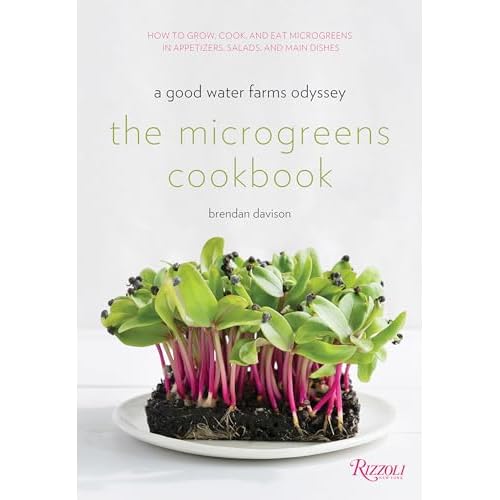
When I want one book to carry me from tray to table, The Microgreens Cookbook: A Good Water Farms Odyssey feels like the most complete fit. It pairs recipe ideas with enough growing context that the food never feels disconnected from the harvest.
I think it suits home cooks, beginner growers, and anyone trying to make microgreens part of normal lunches and dinners rather than occasional garnish projects.
- Connects harvesting and cooking in one place
- Recipe range goes beyond simple garnish ideas
- Illustrated format feels friendly and usable
- Works well for cooks who also grow
- Less appealing if you only want very fast ideas
- Some growing basics may feel familiar to experienced readers
- Not as streamlined as a pure meal-prep book
If I were choosing just one microgreens cookbook for all-around use, this is the one I would start with. It bridges growing and cooking better than most, which makes it especially handy when harvests are small, frequent, and easy to waste.
It may not be the strongest fit for readers who only want ultra-quick meal ideas, but as a rounded everyday companion, it stands out.
Quick-weeknight pick: Mini Greens, Mighty Meals
Best for quick meals
When I’m looking at a fresh tray with very little energy left, this is the kind of cookbook that makes sense. Mini Greens, Mighty Meals is a compact, 74-page collection with 20+ recipes that appears geared toward short cooking windows, not long weekend sessions.
That lower-friction approach can be genuinely useful if you harvest often and want fewer leftover ingredients hanging around. The simpler meal ideas seem well suited to getting microgreens into breakfasts, light lunches, and easy dinners before they fade. I’d treat it as a practical, cook-tonight book rather than a deep dive.
- Fast to scan
- Manageable ingredient lists
- Good for frequent harvests
- Compact, lower-cost option
- Lighter recipe depth
- Smaller recipe count
- May feel basic later
Large-print pick for easier counter reading
Large-print guide for home cooks
If I’m actually cooking with a book open beside the cutting board, readability can matter more than a giant recipe count. The Art of Cooking with Microgreens is a 79-page large-print guide that seems built for easier glance-and-cook use.
I’d point it toward home cooks who want a less crowded page, a calmer pace, and a more approachable way to work microgreens into everyday meals without feeling like they need a massive reference book.
- Large print is easier to read mid-cook
- Short length feels manageable
- Clean format reduces counter friction
- Narrower scope than bigger cookbooks
- May feel simple for advanced cooks
- Very limited review history
Wide-angle recipe collection for frequent harvests
200 recipe ideas
If I were clipping trays several times a week and getting bored with my usual sandwich-salad-egg loop, I’d look at The Ultimate Microgreens Cookbook. With 200 recipe ideas across 206 pages, it leans into range rather than restraint, so it suits cooks who want microgreens showing up in more than one or two familiar meals.
What stands out here is the sense of momentum: when one harvest is gone, there’s likely another use to try next. At roughly $15, it also feels like a relatively low-risk way to stockpile ideas. The trade-off is that a collection this large may work better as an inspiration bank than a tightly curated weeknight staple, especially if you prefer a short list of proven repeats.
- Very broad idea pool for regular harvests
- 200 recipes can reduce meal repetition
- Accessible price for a large collection
- Big selection may need more filtering
- Not every recipe is likely to become a repeat
- Less naturally streamlined for quick decision-making
A routine-first cookbook for bowls, lunch boxes, and prep containers
Everyday healthy bowls and salads
Sprouts & Microgreens — Ultra-Fresh Cooking makes the most sense to me for cooks who already batch a few basics and want microgreens to slip naturally into that system. Its focus leans toward everyday bowls, salads, brunches, and other easy repeat meals, so a harvest feels like one more flexible component rather than a separate project.
If you tend to think in assembled lunches, ready-to-go toppings, and mix-and-match parts for the week, this looks like an easy fit. I’d reach for it less as a source of impulsive “what can I make tonight?” energy, and more as a way to keep microgreens in regular rotation.
- Natural fit for batch cooking
- Built around everyday formats
- 60 recipes gives some runway
- Approachable price point
- Less geared to spontaneous dinners
- May feel repetitive for freestyle cooks
- Lunch-and-bowl focus is fairly specific
How I’d match a cookbook to the way I actually harvest
Which book makes the most sense for small trays that disappear fast?
I’d look first at Mini Greens, Mighty Meals. It seems built for quick, low-friction use: shorter length, simpler recipes, and less hunting for specialty ingredients. That usually helps when I only have a modest handful to use before it wilts.
What if I want microgreens to show up in cooked dinners, not just salads and garnish?
The Microgreens Cookbook: A Good Water Farms Odyssey looks like the stronger fit. Its broader, more illustrated approach feels more useful when I want to move beyond toast-and-egg territory into fuller meals that still make sense for home cooking.
I mainly want something easy to read on the counter. Which one sounds friendliest?
The Art of Cooking with Microgreens stands out for that role. The large-print, straightforward format may matter more than total recipe count if I’m flipping pages with wet hands and trying to cook without overthinking.
Which option gives me the biggest idea bank for frequent harvests?
If I cut trays often and get bored easily, The Ultimate Microgreens Cookbook is probably the most useful browse. With 200 recipes, it appears better suited to people who want lots of angles, even if they’ll need to sift for their personal repeat favorites.
How can I tell whether a cookbook will actually save weeknights?
I use a simple three-recipe test: can I quickly find one fast meal, one more complete dinner, and one flexible component like a dressing, pesto, or topping? If a book clearly offers all three, it’s more likely to help me use harvests before they turn into fridge guilt.
- Short, quick books help most when harvests are small and irregular.
- Large recipe counts are more helpful for frequent growers than occasional cutters.
- A counter-friendly format can matter as much as recipe ambition.
If I wanted the safest all-around pick, I’d lean toward The Microgreens Cookbook: A Good Water Farms Odyssey for its stronger bridge between growing and everyday cooking. For smaller harvests and faster weeknights, Mini Greens, Mighty Meals looks easier to act on right away. If readable kitchen format is the priority, The Art of Cooking with Microgreens seems especially practical, while The Ultimate Microgreens Cookbook makes more sense for frequent harvesters who want a larger idea pool to browse.
My simplest filter is this: open the contents or sample and find one quick meal, one fuller dinner, and one flexible component. If a book gives me those three without much digging, it’s much more likely to cut waste and reduce the usual weeknight scramble.

Curious why *The Art of Cooking with Microgreens — Guide* made the list but not some of the more chef-y restaurant-style books out there.
I get the large-print angle, and honestly that’s more useful than people admit when you’re cooking with wet hands. Still, if the article is about using every harvest, I wondered whether you skipped a few stronger flavor-combo books because they were too niche? Or just because they weren’t practical enough for weekday use?
Yes — mostly practicality. A few chef-forward titles had interesting flavor pairings, but they leaned hard into occasion cooking, specialty ingredients, or plating rather than helping someone move through regular trays each week.
This roundup was built around real-use bottlenecks: speed, readability, repeatability, and whether the recipes fit normal home cooking. That’s why the large-print guide stayed in, even with a narrower range.
I actually appreciated that choice. The fancy books look great until they ask for 11 ingredients I do not own on a Tuesday lol.
Any reason *The Microgreens Cookbook — Creative Chef and Gardener Guide* got the “most balanced” spot over a true beginner book?
I’m asking because the grow-to-kitchen angle sounds great in theory, but sometimes those combo books try to do everything and end up being weirdly mid at both halves. I kill enough momentum already when harvests pile up lol. A three-recipe test is smart though — wish more reviews did that instead of acting every cookbook changes your life.
I liked that you matched the books to actual harvest problems instead of just listing “best” anything.
But why wasn’t price called out more directly? If someone is only deciding between *The Ultimate Microgreens Cookbook: 200 Ways* and *Mini Greens, Mighty Meals*, the value question matters a lot more than page count alone. I’m basically trying to avoid buying a pretty book that gives me 3 salads and a lecture 😂
Totally fair point. I mentioned price where it materially changed the recommendation, but I didn’t rank by cheapest because the bigger issue for most readers is whether the book actually helps them use what they harvest.
Between those two specifically, *Mini Greens, Mighty Meals* is the better “use it tonight” pick, while *The Ultimate Microgreens Cookbook: 200 Ways* gives you more volume for the money if you harvest often and don’t mind filtering through more ideas.
Surprised *Sprouts & Microgreens — Ultra-Fresh Cooking Collection* wasn’t ranked higher if it’s the routine-first option.
That bowls/lunch box/prep-container angle is exactly how a lot of us eat now, especially when small harvests don’t justify making a whole “special” dinner. Was it left lower just because it’s less exciting to read, or were the recipes too repetitive after a while?
This was useful, but I still wanted one super-clear budget winner under like $15 with the least fluff.
You kind of hinted that *The Ultimate Microgreens Cookbook: 200 Ways* sits around that price, but then also said it may need more filtering for dependable repeats. So if someone is broke and tired and just wants 3 reliable ways to stop dumping trays into scrambled eggs… would you still pick that one, or go with *Mini Greens, Mighty Meals* even if it has less depth?
If the goal is strict budget + low decision fatigue, I’d lean *Mini Greens, Mighty Meals* first if you can get it at a similar price. It has less range, but it’s faster to use and easier to turn into repeats.
If the lower price on *The Ultimate Microgreens Cookbook: 200 Ways* is significantly better where you shop, it’s still a solid buy — just expect to mark a few dependable recipes and ignore the rest at first rather than cooking straight through.