
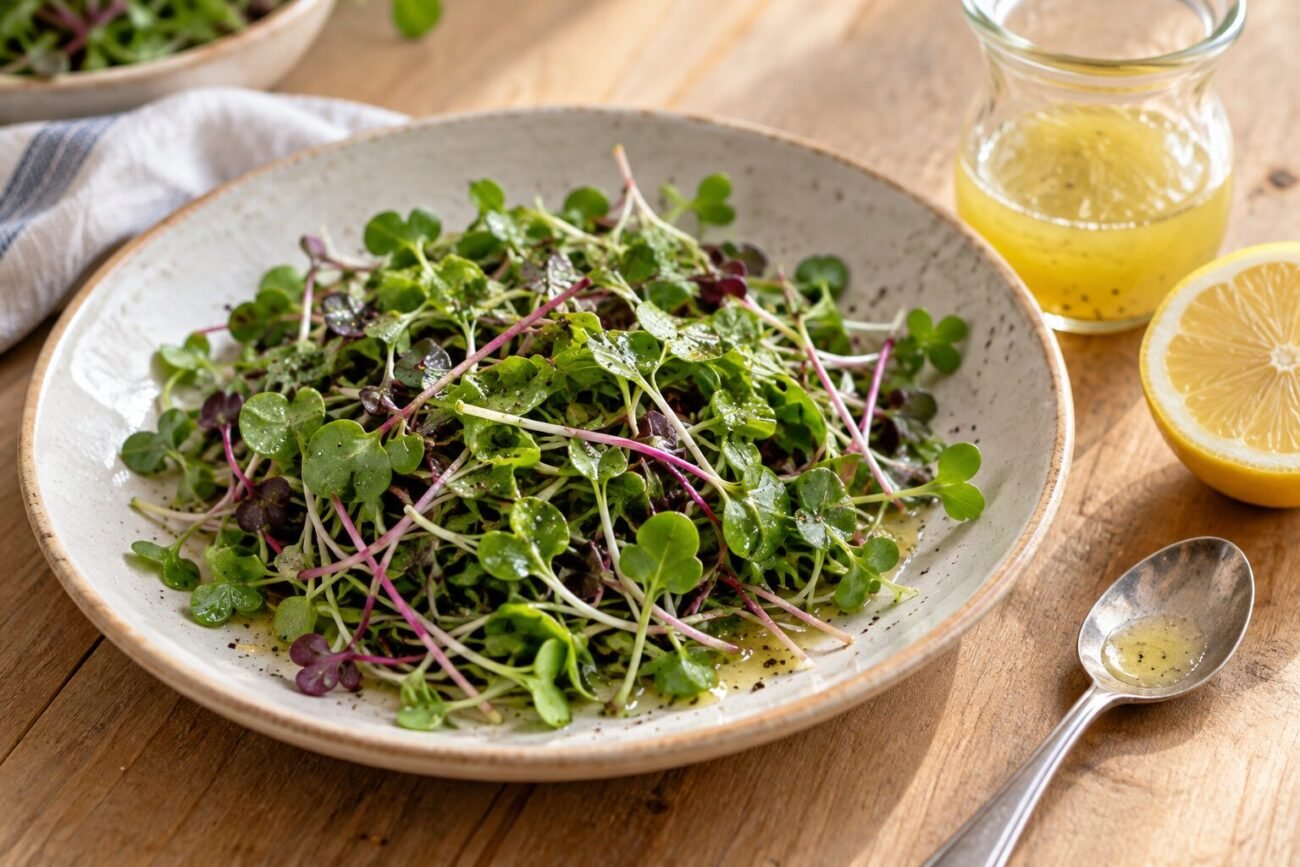
A little dressing can wake microgreens up without drowning what makes them special.
I know that pause: a small, not-cheap box of microgreens on the counter, a familiar dressing in my hand, and the worry that one heavy pour will flatten everything. I’ve done it before, and it’s disappointing fast.
What usually works for me is thinking of dressing as a light sheen, not a full coat. Microgreens don’t need to be dry; they just need enough to soften the raw edge and carry flavor. If I can still taste the greens clearly—peppery, grassy, nutty—they’re dressed just enough.
- A teaspoon can be plenty for a small handful.
- Tossing at the last second helps them stay lively.
Why regular dressing takes over
Microgreens behave differently from a bowl of mature lettuce. Their leaves and stems are thin, tender, and quick to wilt, so a dressing that feels balanced on romaine can land much heavier here.
A small handful also carries a surprisingly big flavor load. Because the leaves are tiny, more surface area gets coated per bite, and many microgreens already taste vivid on their own—peppery, mustardy, grassy, or sweet.
That is why a standard pour can feel loud so fast:
- more oil makes delicate leaves seem slick
- more acid can create a sharp first bite
- more salt or sweetness can blur the greens’ own character
When I use microgreens, I think in drops rather than spoonfuls. That lighter approach usually feels more natural once you remember how much flavor is packed into such a small, delicate portion.
I treat microgreens more like a finishing herb than a full salad base, and that keeps the dressing gentler.
How I size up a dressing
-
Bright, not sharp
A little acidity wakes microgreens up. Too much turns their delicate bite into plain sourness.
Look forGentle tang from lemon, rice vinegar, or a mild vinaigretteAvoidA puckery, mouth-tightening hit of acid -
Light body
Microgreens do better with a loose dressing that barely glosses the leaves. Heavy textures flatten them fast.
Look forThin enough to drizzle and disappear into a light sheenAvoidCreamy, sticky, or syrupy texture -
Quiet richness
Oil can soften peppery or grassy notes, but only in the background. Sweetness works the same way.
Look forA soft roundness with little or no noticeable sugarAvoidGreasy finish or a sweet first impression -
Low-volume flavoring
Garlic, mustard, cheese, sesame, and herbs can be lovely, just toned down. I want accents, not a headline.
Look forClean, short flavor that fades quicklyAvoidBig smoky, spicy, or aggressively savory notes
If I can smell the dressing before I can smell the greens, it is usually too loud. And if it pours like a sauce instead of a light vinaigrette, I expect it to coat more than it complements.
Dressing styles that tend to work
When I want microgreens to stay recognizable, I usually reach for dressing families rather than exact recipes. A few styles come up again and again because they add lift without burying those tiny leaves.
- Light vinaigrette: A simple mix of oil and a mild acid works because it coats gently and brings brightness fast. I usually keep the acid subtle here—too much lemon or vinegar can make microgreens taste sharp instead of fresh.
- Citrus-forward dressing: Orange, Meyer lemon, or a soft squeeze of lemon can flatter mild greens and sunflower shoots. The part I try to keep restrained is the aroma, especially zest; a little smells lively, but a lot can dominate the whole bowl.
- Honey-mustard, but barely: A very loose, lightly sweet mustard dressing can balance peppery greens like radish or arugula microgreens. The element to watch is the mustard heat—if it reads as mustard first, it is probably too assertive.
- Yogurt or buttermilk-style dressing: These can work when thinned well, especially with sturdier mixes or grain bowls. I keep the body light, because heavy creaminess can flatten delicate texture and make a small handful feel overdressed.
- Sesame-ginger in a quiet version: This can be nice with Asian-style salads or rice bowls. For me, the key is keeping the sesame and ginger soft, since both flavors spread quickly through tender greens.
Match the dressing to the microgreen
Match the dressing to the microgreen
I get better results when I think about the microgreen first and the salad second. A dressing that wakes up romaine can flatten a tiny handful of shoots. Once I notice whether the greens taste mild, spicy, or grassy, the choice gets much easier.
- Mild microgreens like sunflower or pea can handle a little more body. I usually reach for a soft lemon-yogurt dressing or a light vinaigrette with a drop of honey, because a touch of creaminess and sweetness gives them shape without burying them.
- Spicy microgreens such as radish or mustard already bring their own spark. Here I keep the acid lower and let cooler flavors do the work—think a thin tahini-lemon dressing, or olive oil with a small splash of rice vinegar.
- Grassy microgreens like broccoli or kale taste fresher when the dressing stays clean and quiet. If I want to soften grassy broccoli microgreens, I use mild citrus, plenty of oil, and just enough sweetness to round the edges.
My quick rule of thumb is simple: the stronger the microgreen’s personality, the simpler the dressing can be. Loud greens often need a calming partner. Gentle greens usually welcome a little more lift.
Small, late, and gentle
-
Dress at the end
I wait until everything else is plated. Even a few minutes in dressing can soften microgreens and mute that fresh snap.
-
Start smaller than usual
If microgreens are the salad, I begin with just a light drizzle and taste after one toss. If they’re a topper, I use even less.
-
Handle them lightly
A wide bowl makes it easier to lift and turn the greens without bruising them. For tiny portions, I often coat the larger ingredients first and let the microgreens sit mostly on top.
-
Treat toppers differently
On eggs, soup, sandwiches, or grain bowls, I usually dress the main dish instead. The greens may need only a trace of moisture, depending on how many microgreens I’m adding.
-
Stop before they look glossy
Once the leaves barely catch the light, I stop. When they look shiny and heavy, the dressing is usually doing too much.
If a dressing tastes right but still lands a little loud, I sometimes loosen a spoonful with a bit more oil or a few drops of water before using it. That can soften the first hit without remaking the whole batch.
When a dressing gets too loud
If it already tastes sharp, extra acid usually makes it harsher.
I’ve done this before: one more squeeze, and the microgreens disappear behind sourness. A little neutral oil or even a spoonful of water often helps more.
Creaminess can soften bite while still feeling heavy and dominant.
Yogurt, mayo, tahini, and cheese mellow edges, but they also bring salt, richness, and body. I usually thin creamy dressings before using them on microgreens.
A little sweetness rounds out acid; too much covers the greens.
Honey or maple can pull a vinaigrette back from puckery, but it doesn’t erase strong garlic, mustard, or vinegar. It just shifts the dressing in a new direction.
Thin it with a little neutral oil or water.
Use less, then add only if the greens still taste bare.
Spread it across bulkier ingredients first, and fold microgreens in last.
If it still shouts, add mild partners like cucumber, avocado, or grains so the flavor has somewhere to go.
Dress for the job
Where the greens sit
When I use microgreens as a full salad, I treat them like the main event. They need enough dressing to keep each bite from feeling dry, but I still stay light. A thin vinaigrette, citrus with a little oil, or a loosened yogurt dressing usually feels like plenty.
When I use them as a finishing accent on eggs, soup, grain bowls, or roasted vegetables, I dress much less—or sometimes not at all. In that role, they work almost as microgreens that are more than garnish, adding a fresh top note. A bold dressing can flatten that effect fast.
Rich foods usually make me simplify even more:
- With avocado, burrata, salmon, or creamy grains, lemon and a pinch of salt can be enough.
- With fried or deeply roasted dishes, a few drops of sharp vinaigrette often cut through better than anything creamy.
- If the plate already has a sauce, I usually let that do some of the dressing work.
What works with sunflower microgreens?
I reach for lemon and olive oil. It keeps the nutty flavor clear.
What about radish microgreens?
A loose yogurt-dill dressing can soften the heat. I keep it thin and barely there.
Can bottled dressing be rescued?
Usually, yes. I cut it with oil, lemon, or a spoonful of water so it lands lighter.
A few easy matches
For a fast start, I’d pair pea shoots with rice vinegar and a drop of honey, sunflower with lemon-olive oil, and radish with thinned yogurt-dill. If a bottled dressing tastes heavy, I usually loosen it before it touches the greens.
My quick test is simple: the dressing should make the microgreens taste brighter and more complete, not feel like an extra layer sitting on top.

What about using microgreens in a sandwich instead of a salad?
The article says dress for the job, which makes sense, but if there’s already mayo or some kind of spread on the bread, do you usually skip dressing the microgreens altogether? Feels like one of those cases where “dilution by ingredients” matters more than the dressing itself.
Exactly — in sandwiches, the existing spread usually counts as the dressing environment. I normally don’t dress the microgreens separately unless the sandwich is very dry overall.
If I do add anything, it’s more like a drop of acid or a tiny bit of oil on the greens rather than a full dressing. Otherwise the spread plus the dressed greens can turn into one heavy layer.
Do mild microgreens really take more body, though? That part made sense on paper, but in practice I feel like a thicker dressing just smothers them faster because they’re so tiny.
Maybe I’m being picky, but I’ve had more luck with a super sharp vinaigrette used sparingly than with anything creamy or emulsified. Curious if the difference is about *quantity* more than style.
I liked the breakdown of acid/body/richness/aroma because that explains why some dressings taste “too much” even when I barely use any.
One thing I still wonder about: for sunflower microgreens, would you lean more toward a restrained lemon vinaigrette or something slightly nuttier? They already have that nutty thing going on, so I can’t tell whether matching it is smart or whether that doubles down too much.
Sometimes pairing by similarity works, sometimes it just gets muddy.
For sunflower microgreens, I usually start with restrained lemon vinaigrette because the brightness helps define their nuttiness rather than blur it. A nutty dressing can work, but I’d keep it very light in aroma and body so the flavors don’t stack into something flat.
If you want to echo the nutty note, even a few seeds or nuts in the salad can be safer than making the dressing itself too nut-forward.
Agree with this. I tried sesame on sunflower greens once and it wasn’t bad, just weirdly “all one note.” Lemon gave me way more contrast.
I’m still a little confused about the “creaminess can still dominate” point.
If I do a yogurt-based dressing that’s pretty tangy but thin, is the problem mostly the dairy flavor or the physical coating? I ask because spicy radish microgreens seem like they *should* like something cooling, but every creamy dressing I try makes the whole bowl taste like the dressing and not the greens.
The part about “small, late, and gentle” was honestly the most useful bit for me. I kept treating microgreens like baby spinach and then wondering why they turned limp in like 2 minutes 😅
Do you ever *pre-dress* the rest of the salad and then add the microgreens totally plain on top, or do you still give the greens a tiny touch of dressing separately?
Yes, pre-dressing the base salad and adding microgreens at the end is often the safest move. If the microgreens are acting more like a garnish or topper, I usually leave them plain or give them only the lightest misting.
If they’re meant to be part of the flavor of the salad rather than just a finish, I’ll toss them separately with a very small amount so they don’t feel dry next to everything else.
I do this all the time. Plain on top works better than people think, especially if the main salad already has enough vinaigrette floating around to catch a few leaves.