
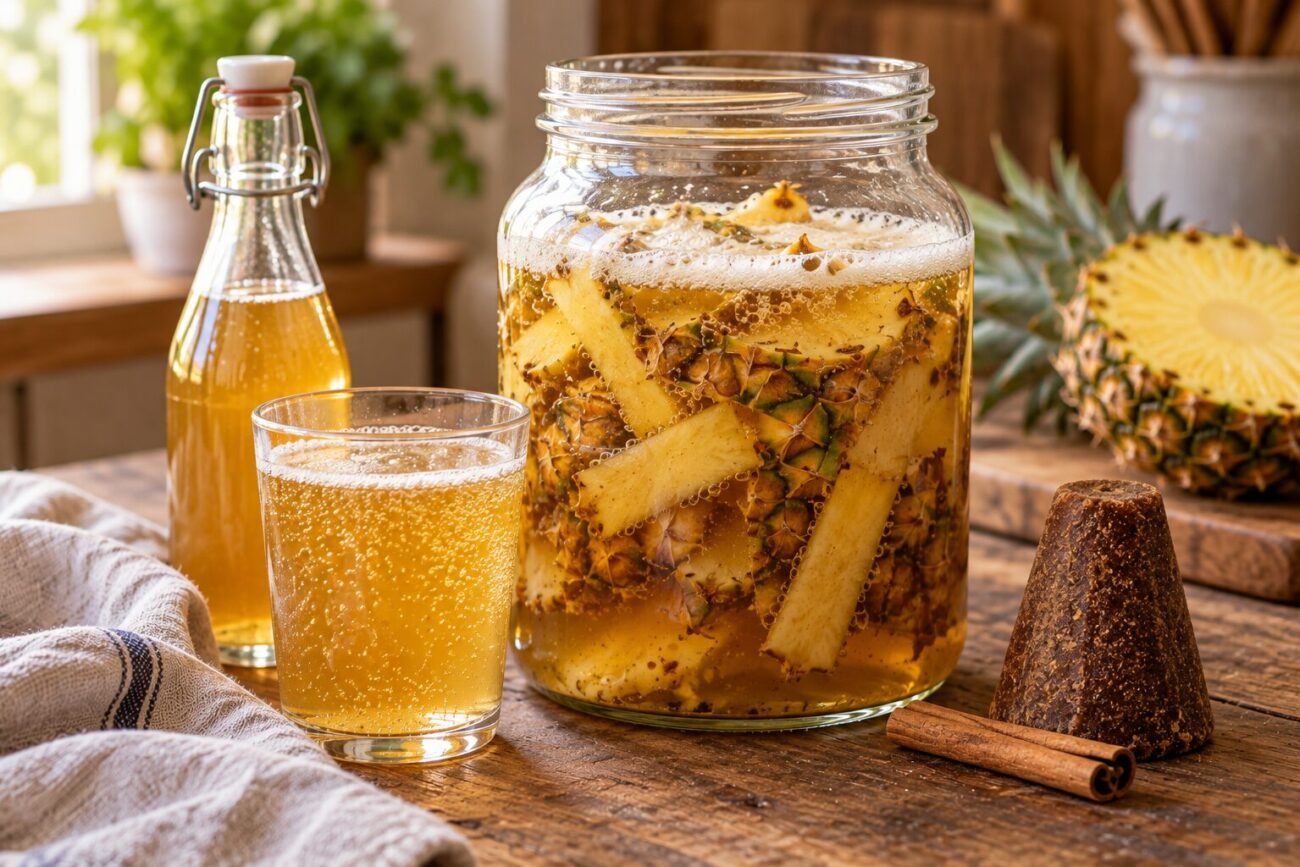
Good flavor with no bubbles is a very normal annoyance.
Ever had a batch taste bright and good, then pour like soda that gave up? I’ve been there, and it’s maddening because the flavor says “success” while the fizz never shows.
Flat tepache usually comes from a few small misses: the room was cool, the pineapple skins were scrubbed too clean, the sugar ran low, or the first ferment went long enough to use up most of the easy fuel. None of that means you failed at it. It’s usually a timing-and-conditions problem, and that’s very fixable.
The four levers behind the fizz
Tepache bubbles are usually about four variables working together, not one magic trick. I think of them as: live yeast, some sugar left to eat, enough warmth, and a sealed second ferment to trap the gas. Once those line up, fizz gets much more predictable.
- Live yeast: the natural yeast on the peels does the work.
- Remaining sugar: if fermentation runs too long, there may be less fuel for bubbles.
- Warmth: a cozy room helps activity move along.
- Sealed bottles: this is what turns fermentation into carbonation.
That sounds technical, but tepache is still one of the easier fermented drinks to start with. It’s a forgiving first ferment: you’re mostly giving the yeast a head start, then bottling while it still has a little energy and sweetness left.
The ingredient and gear choices I actually pay attention to
-
Start with peels that still have life on them
I look for a ripe pineapple with fragrant skin and no moldy spots. If it is very waxy or heavily scrubbed clean, fermentation can start a little slower.
-
Sugar matters more than extra spices
Piloncillo, brown sugar, or plain white sugar can all work; the key is giving the yeast enough to eat. Cinnamon and clove add flavor, but they will not rescue a weak batch.
-
Use water that will not fight the yeast
If my tap water smells strongly chlorinated, I use filtered water or let it sit first. Chlorine can sometimes slow the early bubbles.
-
Pick bottles made to hold pressure
This is the gear choice I take most seriously. Swing-top beer bottles or clean plastic soda bottles are usually safer for fizz than decorative glass containers of unknown strength.
-
Leave a little space and check pressure often
I fill bottles with some headspace, especially on warm days. Firm plastic or a very hard glass bottle can be a sign to chill and release pressure carefully.
Fancy add-ins are optional; sound bottles and a steady setup usually do more for carbonation.
How I prep pineapple peels for fermentation
I want the peels clean enough to trust, not scrubbed so hard that I wash away the wild yeast clinging to them.
Here’s what I do:
- Rinse the whole pineapple under cool running water.
- Trim off the top and bottom.
- Cut away any moldy, slimy, or dark mushy spots on the skin.
- Peel as usual, keeping some flesh attached because that extra sugar can help.
What I don’t do is soak the peels in vinegar, use soap, or scrub aggressively with a brush. That can leave me with peels that look pristine but ferment more slowly.
A few dry brown “eyes,” light scuffs, or rough patches are usually fine once the questionable parts are cut away. If a spot looks wet, fuzzy, or smells off, I toss that section without overthinking it.
I watch the first ferment, not the clock
I usually start checking tepache after 24 hours, but I don’t treat that like a deadline. The jar tells me more than the calendar does.
What I look for each day
- Day 1: mostly sweet, very little happening, maybe a few bubbles on the surface
- Day 2: light fizz, a yeasty-fruity smell, foam or tiny bubbles when I stir
- Day 3: noticeably tangier, less sugary, more active bubbling
I give it a gentle stir once a day and taste a spoonful. I’m aiming for lightly sweet, lightly tart, and clearly alive. If it still tastes like pineapple water, I let it go longer. If it starts leaning sharp, funky, or cider-like, I move on to bottling.
Temperature changes the pace
A warm kitchen can move fast. Around 75–80°F, I’ve had batches feel ready in about 36–48 hours. In a cooler room, closer to 68–70°F, the same mix can take 3 days or a bit more.
That’s why I like using taste and bubbles together. Tepache tends to fizz better when I catch it before the first ferment goes fully dry.
If I see steady bubbles, smell fresh pineapple with a little tang, and still taste some sweetness, that’s usually my bottling window.
I bottle when it’s tangy, not bone-dry
The bottling window matters more than I expected. If my tepache tastes bright and tart but still a little sweet, that’s usually the sweet spot. That leftover sugar gives the yeast something to work on after I cap the bottles, which is what creates the fizz.
If it tastes fully dry, flat, and sharp, carbonation can be weaker unless I add a little more sugar. If it’s still very sweet and barely tangy, I usually wait longer because the flavor can feel unfinished.
How I bottle for better carbonation
I keep it simple:
- Strain well through a fine mesh strainer so peel bits and spice pieces don’t keep floating around in the bottle.
- Use pressure-safe bottles, like swing-top bottles rated for carbonation or clean plastic soda bottles.
- Leave about 1–2 inches of headspace. Too much air can slow pressure buildup; too little can get messy fast.
- Seal tightly right away so the carbon dioxide stays trapped.
Once bottled, I leave them at room temperature for a short second ferment and check them regularly. When I get the timing right at bottling, the difference is noticeable: the tepache tends to pour livelier, with finer bubbles and a cleaner pineapple snap.
Glass bottles can build pressure quickly. If I’m unsure how active a batch is, I often use a plastic soda bottle for one tester because it gets firm as pressure rises.
Catch the fizz, then chill
I treat the second ferment as a short window, not a fixed deadline. Once the bottles are sealed, I check them every day for a stronger hiss, steadier bubbles, and a taste that has turned a little less sugary but not sharp.
What I watch most:
- one tester bottle opened once a day
- a firmer bottle feel
- bubbles that rise quickly after pouring
The fridge moment is pretty narrow. If the tester opens with a lively psst and the tepache still tastes bright and lightly sweet, I chill the whole batch. Cold helps lock in carbonation and slows the yeast before the drink turns drier than I want.
A bit more alcohol can develop during this stage because the yeast is still eating sugar, especially in warmer rooms. In a short second ferment, it usually stays modest; if you’re curious about other low-alcohol sweet ferments, the same tradeoff shows up there too.
If a bottle turns very hard or gushes when opened, fermentation is moving quickly. Chilling it right away can slow things down, though it may continue slowly in the fridge.
A few common tepache fixes
Why is my tepache still flat?
The usual culprits are a cool room, peels scrubbed too clean, not much sugar left, or bottling after the first ferment went too dry. If it still smells and tastes pleasant, I usually revisit the usual flat-tepache fixes before giving up.
What if it turned more sour than I wanted?
That often means the first or second ferment ran a bit long, especially in a warm kitchen. I just chill it earlier next time; for the current batch, serving it over ice or with sparkling water can soften the sharpness.
Why is it staying sweet without much carbonation?
That usually points to sluggish yeast, often from cold temperatures, chlorinated water, or a very short first ferment. If the flavor is good, another day at room temperature sometimes helps, especially if the bottle seal is tight.
What about a sulfur or rotten-egg smell?
A faint sulfur note can happen with stressed yeast and may fade after a little time or once chilled. A strong drain-like or persistent rotten smell is more concerning, especially if the flavor also seems off.
When is a batch not worth saving?
I discard mine if I see fuzzy mold, unusual colors on the surface, ropey slime, or a deeply unpleasant smell that does not improve. Flat, too sour, or too sweet can often be adjusted; visible spoilage is the line I do not try to push.
What helped me most was changing one variable per batch and jotting down what happened. That turns a lucky fizzy bottle into something I can usually repeat.

This actually fixed my flat tepache problem 🙌
I was definitely overdoing the peel washing before. I used to scrub them like I was prepping for surgery, then wondered why nothing happened lol. This batch I did the light rinse, left a bit more flesh on, bottled while it was still a little sweet, and I got a real hiss for the first time.
Also appreciate the part about watching the first ferment instead of blindly waiting 3 days. My kitchen runs cool, so that note saved me from bottling way too early.
Appreciated the part about single-variable tweaks because I am 100% the person who changes sugar, spice, jar, room, bottle, AND timing all in one go… then acts shocked when I learn nothing 😂
Also thanks for mentioning chlorine. I switched from straight tap to filtered water and the sulfur-y weirdness I got once hasn’t come back.