
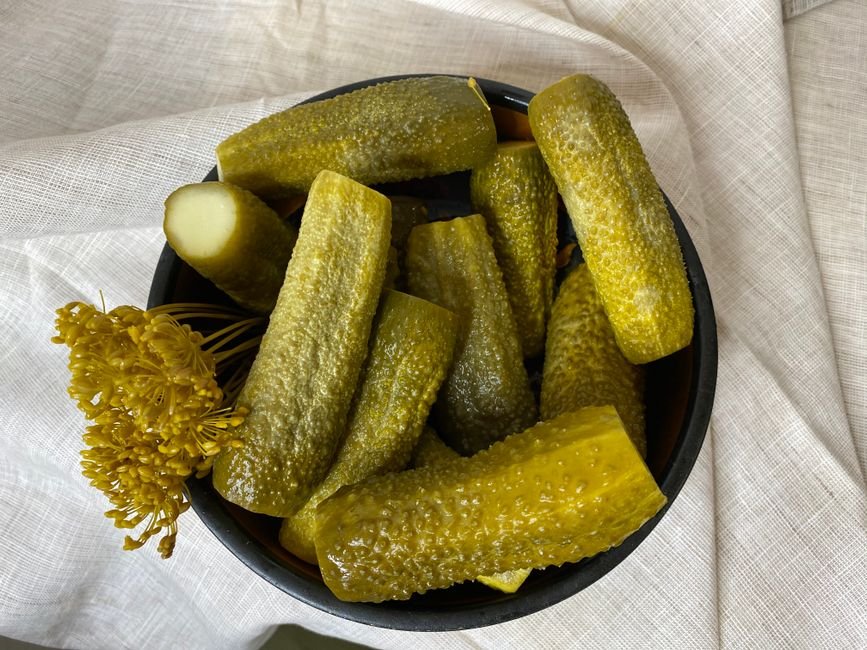
That deli snap lives in a very narrow sweet spot.
Ever pull a pickle from the jar hoping for that cool, garlicky crunch, only to get a sharp vinegar bite or a fully sour pucker instead? I’ve done that enough times to learn that half-sour isn’t a vague middle ground—it has a clear personality: lightly tangy, fresh-tasting, salty, and still very crisp.
Cloudy brine can be normal, but mushy cucumbers usually mean the balance went off somewhere. The comforting part is that this style is fairly doable once you know the target and stop chasing either a quick vinegar pickle or a long, deep ferment.
What I look for in a true half-sour
Fresh cucumber flavor
The cucumber should still taste green and juicy, not fully transformed into a sharp, fully sour pickle.
Gentle tang
You get a light fermented zip rather than a strong vinegar bite or deep puckery sourness.
Garlic-and-dill aroma
When I open the jar, I expect a clean, savory smell with dill leading and garlic close behind.
Real crunch
A good half-sour snaps when bitten. The center stays firm instead of turning uniformly soft.
The first time I made half-sours, the hazy brine worried me more than it should have. In home vegetable fermentation, cloudiness can be completely normal; it often comes from active bacteria, salt, spices, and tiny bits from the cucumbers.
What matters more is the overall picture: a fresh, tangy, garlicky smell and firm pickles usually point in a good direction. Thick slime, off odors, or cucumbers that feel mushy all the way through can mean the batch drifted off course.
The setup is probably easier than you think
-
Start with a clean jar
I usually use a quart-size glass jar with a lid. Nothing fancy is required as long as it’s very clean.
-
Use small, fresh cucumbers
Firm pickling cucumbers give me the most reliable crunch. If they’re soft or tired before they hit the brine, they rarely improve later.
-
Make a basic salt-water brine
For half-sours, salt and water do most of the work. Non-iodized salt is helpful because it tends to keep the brine cleaner and the flavor more straightforward.
-
Add a few aromatics
Garlic and dill are usually enough for that deli-style smell and flavor. Black peppercorns or coriander can be nice, but I don’t pile in too many extras.
-
Keep the cucumbers submerged
This matters more than owning special gear. A small weight helps, but I’ve also used a little bag of brine in a pinch.
A kitchen scale can help if I want more repeatable brine, and a fermentation weight makes submerging cucumbers easier. But for a first batch, a jar, salt, water, and fresh cucumbers are plenty.
Start with cucumbers that still feel alive
Crunch starts before the brine does. In my kitchen, older cucumbers almost never turn into lively half-sours; they just taste tired. I look for small, firm pickling cucumbers with thin skins and few seeds—something close to the crunchier cucumber varieties for fermented pickles, not oversized slicers.
A few details help right away:
- Choose cucumbers that feel heavy for their size, with no soft spots or wrinkling.
- Try to keep them similar in thickness so they ferment at about the same pace.
- Skip waxed cucumbers if you can; brine tends to move better on unwaxed skins.
Before they go in the jar, I give them a cold rinse and trim a very thin slice from the blossom end. That end can carry enzymes that soften pickles over time. If the cucumbers seem a little tired from the fridge drawer, a 20-minute ice-water soak can help them perk back up.
None of this is fussy, but it adds up. Fresh, cold cucumbers with a tiny bit of prep usually give me a much better shot at that deli-style snap.
Leave the stem end alone, but shave off the blossom end. It is a small habit that can help protect texture during fermentation.
Measure the brine, then trust it
I treat the brine as the one part I don’t improvise. For a reliable half-sour, my baseline is 1 tablespoon non-iodized salt per 2 cups cold water. That gives me a clean, deli-style salinity without pushing the pickles too quickly toward fully sour.
If I blank on the numbers, I check the salt brine ratio first before I add garlic, dill, or anything else. Aromatics can drift a little and still taste good. Salt is the part that makes the whole batch behave predictably.
Before the brine goes into the jar, I stir until the salt is fully dissolved. That matters more than it sounds:
- the cucumbers get an even salinity from top to bottom
- I avoid salty pockets sitting at the bottom of the jar
- the batch starts fermenting in a more consistent way
- the flavor is easier to repeat next time
If the water looks clear and no grains are scraping around on the bottom, I know I’m there. That tiny measuring step is what turns half-sours from a lucky experiment into something I can make again with the same crunch and gentle tang.
For a larger batch, keep the same proportion: 1 tablespoon salt for every 2 cups water.
Pack the jar so nothing floats
When I fill the jar, I aim for stable and snug, not picture-perfect. Tight packing helps the cucumbers ferment at a similar pace, and it makes it easier to keep everything under the brine. If the cucumbers fit upright, I use that layout first; if not, I stack them firmly without crushing them.
A few small details seem to matter a lot:
- Pack closely: fill gaps with smaller cucumbers, garlic, or dill so the main pieces do not drift.
- Leave headspace: about 1/2 inch at the top gives the brine room to move as fermentation starts.
- Keep every piece submerged: anything poking above the liquid can soften or discolor faster.
I pour in the brine slowly, then tap the jar gently on the counter to release trapped air bubbles. If a cucumber still wants to rise, I use a small fermentation weight, or a little bag filled with extra brine. That part has saved more batches for me than fancy tools ever have.
The jar may not look styled, but if the cucumbers stay under the surface with a little breathing room above, I usually get a more even, cleaner half-sour.
It can help to remove one cucumber rather than force the lid down too close to the brine. A bit of headspace usually works better than an overstuffed jar.
Check daily
Taste from day two: fresh, salty, garlicky. By day three, light tang shows. Haze and a few bubbles are normal; slime, off smells, or softness suggest warmth or weak brine—see simple crunch-saving fixes.
Half-sour cues
Brad shows the cloudy brine and crunchy early stage I look for.
Chill them and learn from the first jar
Once they taste right to me, I move the jar to the refrigerator. Cold storage slows fermentation a lot, even though it may not stop it completely, so the flavor changes more gradually from that point on.
In my experience, the texture is usually at its peak right when the pickles first hit that half-sour stage, then stays very good for several more days in the fridge. After that, they often get a little tangier and a little softer, which some people still like.
I treat the first finished jar as my baseline for the next batch:
- too salty: reduce the salt slightly
- not tangy enough: leave it out a bit longer before chilling
- too garlicky or not dilly enough: adjust the aromatics in small amounts
I like to jot down the date, salt ratio, and the day I refrigerated them. Those tiny notes usually teach me more than chasing a perfect batch on the first try.
