
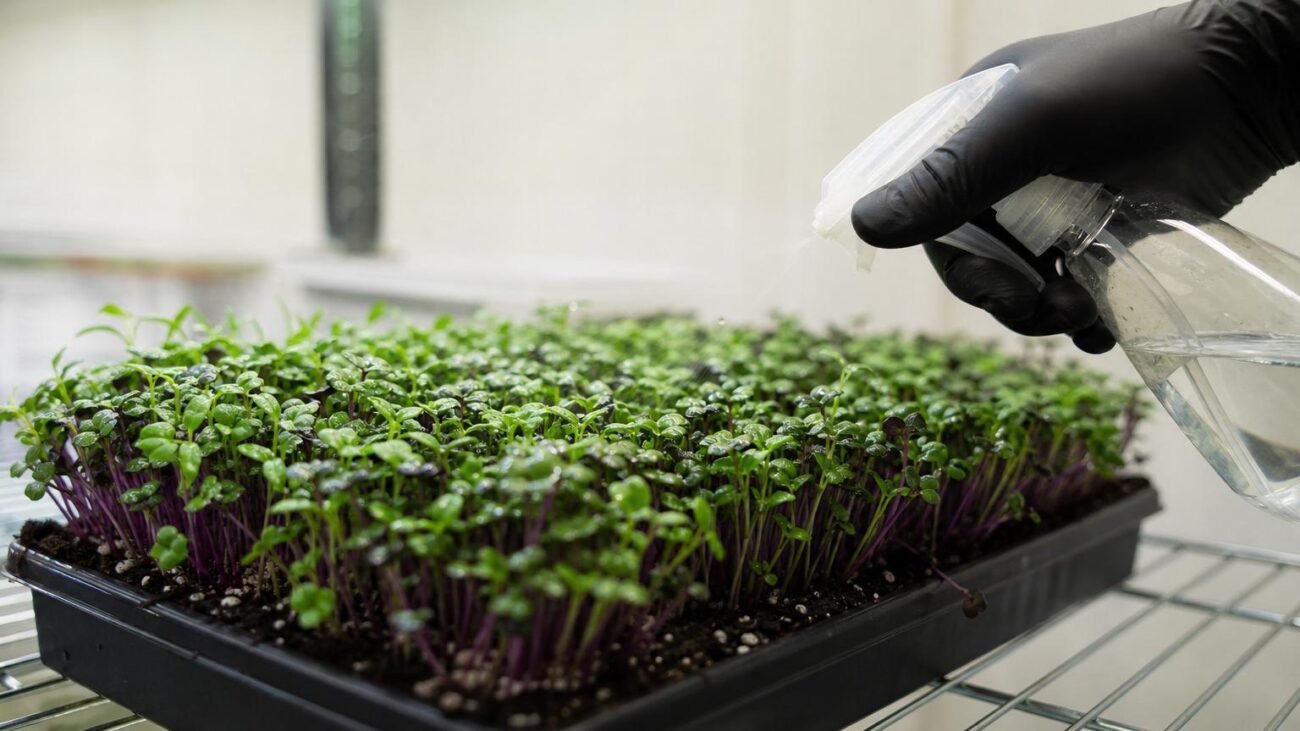
A fuzzy patch is a decision point, not a rescue challenge.
When a tray is hours from harvest and a white puff shows up, panic can push a bad call. If fuzz is moving through stems, the crop smells sour, or any patch is wet or slimy, the safer move is discarding the tray; sprays do not undo rot.
If growth stays on the mat, tray rim, or a tiny dry patch near seed hulls, some growers treat it as cleanup: cut wide of the spot and sanitize tools plus nearby food-contact surfaces. Only then does shopping matter, and mild ready-to-use products usually make more sense than strong concentrates.


When a tray may still be in bounds
A food-safe spray only fits a narrow case: a small, early patch of dry surface fuzz on a tray that still looks vigorous, smells fresh, and shows no slime or stem collapse. It is not a blanket pass for doubtful greens. Before any treatment, confirm that the fuzz really is mold.
Root hairs or mold?
Root hairs are normal plant growth. They form a bright white halo close to the roots and often fade from view after a light mist.
Mold usually acts differently:
- it bridges between seeds, hulls, or the surface medium
- patches can look circular, cottony, or slightly gray
- it tends to stay visible after misting
If the fuzz is moving onto stems, spreading quickly, or carrying a sour or musty smell, this guide no longer applies. That tray is harder to treat as harvestable.
Does white fuzz always mean mold?
No. Root hairs can look fluffy, especially on thirsty trays. Misting and location usually tell more than color.
Where does mold often begin?
Around seed hulls, crowded spots, or wet surface pockets. It rarely forms an even halo along every root.
Can a tray smell fine and still have a small mold patch?
Yes. Early surface growth may appear before odor shifts, so a close look still matters.
When is it outside this guide?
Once fuzz reaches stems, slime appears, or spread no longer looks localized. At that point, keeping the tray becomes harder to justify.
Gray, green, or pink growth deserves extra caution. This section only covers light white surface fuzz caught early.
When a tray is no longer worth saving
Choose the reset
Some trays move past cleanup. If growth carries a sour or swampy smell, turns slick, or starts collapsing seedlings at the stem line, the safer call is to discard and start over. The same goes for fuzzy growth that has moved up into the canopy or touched leaves and stems meant for harvest.
A reset also makes sense when signs match a bad-smelling tray that is better tossed, because sprays cannot meaningfully clean contaminated tissue.
- Sour odor or slime: often points to deeper contamination
- Damping-off: stems pinch, thin, or fall over
- Canopy spread: growth is no longer limited to the surface
- Direct contact with greens: harvest quality becomes questionable
If mold, slime, or rot is on cotyledons, leaves, or stems, restarting is usually the cleaner option. Fresh seed, a washed tray, and better airflow can help the next round begin stronger.
What matters in a near-harvest spray
-
Edible-crop labeling
The label should clearly allow use on edible plants, herbs, or greens.
Look forEdible crops named or impliedAvoidHouseplant-only or ornamental wording -
Simple active ingredients
Short ingredient lists tend to leave fewer surprises on tender leaves.
Look forPlain peroxide, citric acid, or similarAvoidFragrance, oils, or vague additives -
Fine, controllable spray
A narrow mist helps target patches without soaking stems or the canopy.
Look forAdjustable trigger, light outputAvoidHeavy stream or drippy nozzle -
Easy dilution and light residue
Clear mixing directions and a clean finish matter more than harsh kill claims.
Look forSimple ratios, dries cleanAvoidSticky film or strong scent
Safe-sounding sprays that can backfire
Many mold sprays are made for tile, grout, or drains, not edible plants.
Fragrance, solvents, or lingering antimicrobials may be acceptable on hard surfaces but a poor match for harvestable greens.
Food-contact sanitizer rules are not the same as spraying living greens.
Near harvest, these products can mark delicate tissue and raise residue or rinseability concerns on the edible surface.
Natural ingredients can still be harsh on microgreens.
Clove, thyme, cinnamon, and similar oils may burn cotyledons or leave a strong taste and aroma.
Neem products are usually aimed more at pests and often leave a visible film.
That coating can cling to the part being eaten, changing texture and flavor while doing little for a mold patch.
The shortlist was screened for actual tray use, not broad disinfecting language. Only options with clear labels, low-residue potential, and manageable small-batch mixing stayed in consideration.
-
Clear enough to trust
Preference went to plain directions, identifiable ingredients, and labeling tied to produce or food-contact use rather than vague sanitizing claims.
-
Clean finish on delicate crops
Products moved up when they seemed less likely to leave oily film, strong scent, or flavor changes on tender stems and cotyledons.
-
Practical for small grows
Simple dilution, reasonable shelf life after opening, and a gentler reputation on sensitive varieties helped narrow the list.
Ready-mixed hypochlorous acid for small, late-stage patches
Ready-to-use hypochlorous acid tends to fit the last-minute use case well: quick spray, no mixing math, and little lingering smell around harvest.
The tradeoff is that convenience does not automatically mean stronger control.
Opened bottles can lose punch over time, so shelf life matters more than with some concentrates. Cost per use is usually higher because water is already in the bottle. Results are often limited to light surface knockback; dense fuzz, wet stems, or canopy spread usually signal that the tray is beyond a spray’s help.Food-grade peroxide can stretch farther across several trays
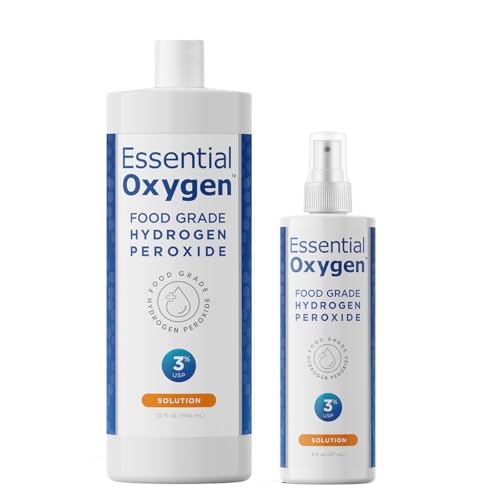
Food-grade hydrogen peroxide tends to work best near harvest when contact stays light and targeted. A fine mist on the affected surface is usually more workable than soaking stems, leaves, or the top layer of media.
With concentrates, the value comes from accurate measuring and mixing only what is needed. Overdoing either strength or volume can leave the tray too wet, which may matter more than the spray itself on dense microgreens.
Use spray sparingly
-
Isolate tray
-
Boost airflow
-
Spray media edges
-
Keep canopy dry
-
Recheck; then harvest?
Surface-only spraying
D’Earthy shows a natural vinegar remover; the useful takeaway is light, targeted application.
If mist hits harvestable greens, wash microgreens safely before deciding.
A simple harvest-side rule
If a tray is otherwise vigorous and the problem stays small, dry, and clearly off the edible canopy, the mildest spray labeled for edible crops can sometimes buy enough time for a careful reassessment.
Once odor, mushiness, seedling collapse, or continued spread enters the picture, the decision gets simpler: skip rescue, skip harvest, and start fresh. Near harvest, caution usually protects flavor, cleanliness, and peace of mind better than one more treatment.

This helped a lot because most articles just yell “throw it out” and stop there 😅
If I’m understanding right, the only maybe-salvage situation is a tiny dry patch on the surface before it gets into the stems/canopy? I’m still not super confident telling mold apart from root hairs on sunflower and pea trays. Do root hairs usually disappear after watering while mold kinda stays put?
Yes, that’s the basic idea. A tray is only in the possible-salvage category when the patch is small, early, dry-looking, and clearly limited to the surface rather than moving into stems or the canopy.
Root hairs often become less noticeable after watering and tend to appear evenly around roots, while mold is more likely to form irregular patches, bridge across the surface, or persist in a way that looks separate from normal root growth. If there’s any sour smell, slime, stem collapse, or spread into harvestable greens, I’d stop there and discard.
This was useful, but I wish more posts included actual label examples of what “edible-use labeling” looks like.
A lot of product pages are written in that vague marketing language where everything sounds gentle, natural, powerful, residue-free, kid-safe, pet-safe, moon-safe… you get the idea. As a buyer I’m less worried about hype and more about what wording on the bottle tells me it’s appropriate this close to harvest.
I appreciate the warning about “safe-sounding” sprays because I absolutely would have assumed diluted neem was fine for basically anything.
When you say a clean finish matters near harvest, do you mostly mean flavor residue, or are you also talking about visible spotting/burn on delicate greens like broccoli?
Both. Near harvest, a product can fail even if it sounds natural or gentle because it may leave flavor behind, create visible residue, or stress tender greens enough to cause spotting or edge burn.
That’s why I emphasized simple actives, label clarity for edible use, and light application. The goal is not to drench the tray or “nuke” it; it’s to avoid making the tray less harvestable than the original small patch already did.
I learned this the hard way with a strong essential oil mix. Smelled like a spa… tasted like one too lol. The greens looked okay but the flavor was weird enough that I binned them.
Quick question on the hypochlorous acid part: when you say short shelf life, are we talking days after opening or like a couple months? I keep seeing ready-mixed bottles online with very different claims and it’s confusing.
Also does clear bottle vs opaque bottle matter much for HOCl?
The “use spray sparingly” part was probably what I needed to hear.
I think beginners (me included) want the spray to be the whole fix, when the real problem is usually airflow, moisture, or crowding. If I do a light mist on one small patch, how long would you wait before deciding whether harvest is still on the table? Same day reassessment, next day, or not worth stretching it?
That’s a good way to frame it: spray is support, not the main correction. I’d usually reassess after the tray has had time to dry down under better airflow rather than making the harvest call immediately based on a wet surface.
In practice, that often means checking again later the same day or the next day, depending on how close you are to harvest. If the patch stays minor and clearly off the edible canopy, salvage may still be reasonable. If you see spread, softening, odor, or stem involvement, the answer changes quickly.
I’m still fuzzy on the “direct contact with harvestable greens” cutoff. Do you mean actual visible touching, or just same tray = whole tray is done?
Not trying to be dramatic, but some advice online makes it sound like one microscopic issue means burn the farm down 😂