
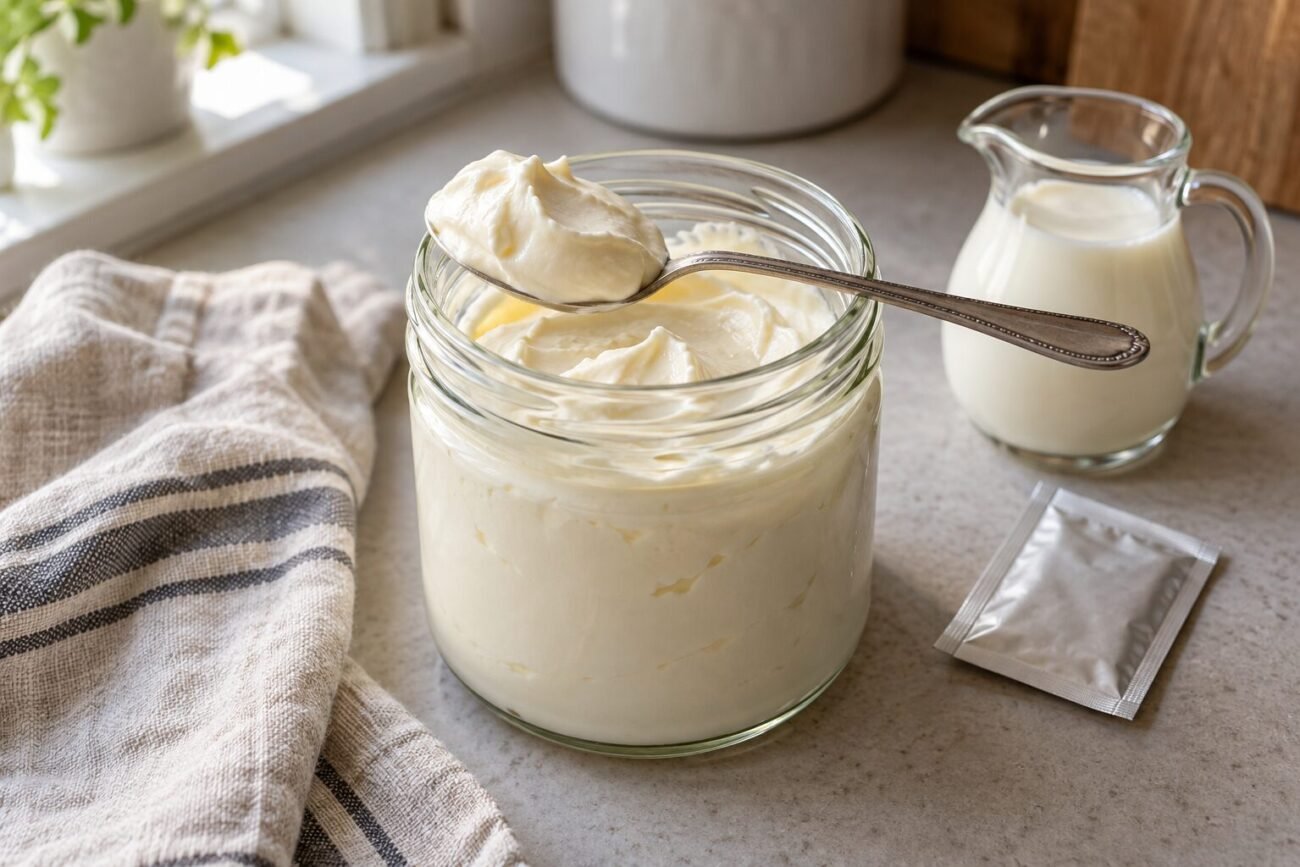
Sometimes the missing piece isn’t your cream — it’s the culture.
You chill the cream, keep the jar clean, give it enough time — and it still comes out pourable one week and nicely spoonable the next. I’ve had batches like that, and it’s frustrating because nothing seems obviously wrong.
What finally made this feel less random for me was realizing the starter culture does a lot of the quiet work. Different cultures can nudge thickness, tang, and how consistently the cream sets from batch to batch. So if your technique is decent but the results are flat or unpredictable, the culture is often the hidden variable — and that’s actually good news, because it means the problem is usually tweakable, not mysterious.
My fast shortlist


What I look for in a dependable culture
-
Steady mesophilic behavior
For thick sour cream, I trust cultures that ripen calmly at ordinary room temperature instead of feeling fussy or unpredictable.
Look forConsistent set across a normal kitchen-temp rangeAvoidCultures that seem to swing from thin to over-tart fast -
Flavor that matches the goal
Some cultures lean buttery and mild, while others push a sharper tang. Dependable also means the flavor lands where you expect.
Look forA clear flavor style: mild, rich, or tangierAvoidVague cultures that can taste flatter or harsher than expected -
Direct-set or heirloom reuse
Direct-set packs are usually simpler batch to batch. Heirloom starters can be economical and satisfying, but they ask for a bit more attention over time.
Look forA format that fits your patience and routineAvoidChoosing heirloom only for savings if you want low effort -
Made for sour cream, or broadly useful
A purpose-built sour cream culture can feel more forgiving for thickness. Broader cultured-cream options can still work well if their track record with heavy cream is solid.
Look forGood results specifically with cultured creamAvoidGeneral cultures with little evidence of thick sour-cream texture
My hobbyist lens was simple: Will this culture set cream thickly without drama, and will it taste like what I hoped for? I also gave extra credit to starters that seem forgiving in a regular home kitchen.
I weighted cultures that are more likely to produce a spoonable set, not just tangy cream.
I favored options that seem steadier without needing unusually precise timing or temperature.
I separated dedicated sour-cream choices from crossover cultures, since versatility and reliability are not always the same thing.
Texture-first pick: Cultures for Health Crème Fraîche Starter
01
Fast cultures—ready on your counter in ~12 hours
If I care most about a thick, plush set, this is the culture I reach for first. Even though it is sold as a crème fraîche starter, that label does not rule it out for sour-cream-style batches; in practice, cultured cream can land very close to the same spoonable, stable texture many people want.
I think it fits readers who want richness and consistency more than a sharp, old-school tang. The main tradeoff is style: the flavor usually stays milder, and the final character depends a lot on the cream or half-and-half you start with.
- Very thick set
- Direct-set format
- Fast countertop culture
- Rich cream texture
- Consistent batch style
- Milder tang
- Cream quality shows
- Not classic sourness
Quick take I like this one when texture is the headline. It can make a very sour-cream-like result, but the flavor usually reads softer and more cream-forward than a tangier dedicated culture.
This is my texture-led pick for rich cultured cream that sets up reliably and feels close to sour cream in the bowl. If you are happy with a gentler tang and want a cultured cream that stays thick and polished, it makes a very convincing sour-cream-style batch.
Budget-friendly heirloom pick for testing cultured cream
Versatile heirloom culture for buttermilk and sour cream
If I just want to see whether homemade sour cream fits my routine without buying a more specialized culture first, this is where I’d start. Cultures for Health’s buttermilk starter is an heirloom culture for room-temperature fermenting, and I like that it can also be used for buttermilk or cultured butter.
The trade-off is focus. Since it isn’t designed only for thick cultured cream, I’d treat it as a practical intro to the process rather than a texture-first specialist.
- Lower upfront commitment than a cream-only starter
- Versatile for buttermilk, sour cream, and butter
- Heirloom format can suit reculturing
- Often a lighter body than cream-focused cultures
- Less texture precision for thick sour cream
- Heirloom workflow can feel a bit fussier
Cream-cheese crossover pick: theMilkman Culture
Concentrated mesophilic culture for multiple batches
If I wanted one starter to cover tangy sour cream now and a cream cheese project later, this is the culture I’d consider. theMilkman sells it specifically for both uses, which makes it appealing for anyone who likes a little range from one packet.
It’s a mesophilic culture in a concentrated format, so it makes more sense to me for repeat makers than for a single test batch. I’d put it in the hands of curious home dairy tinkerers who want flexibility and decent batch yield from one purchase.
- One culture covers sour cream and cream cheese
- Concentrated packet can go a long way
- Good fit for multi-project home use
- Needs closer attention than simpler single-use starters
- Small measurements may feel a bit fiddly
- Timing and technique can affect texture more
Dedicated sour cream starter for a more classic batch
Easy, grocery-style sour cream at home
If I want a culture aimed squarely at sour cream, this one feels closer to the traditional path than a cultured-cream substitute. It’s built for cream, the flavor tends to land in that familiar deli-tub direction, and the heirloom angle gives it some reuse appeal.
I’d look at it if you want a dedicated sour cream identity without moving into a more technical cheese-making setup. It suits home cooks who like the idea of keeping a culture going, but still want a result that reads clearly as sour cream rather than crème fraîche.
- Dedicated sour cream focus
- Familiar tang profile
- Heirloom reuse potential
- Low-effort overall
- Repeatability can take attention
- Small review base
- Less flexible than general cultures
Gentle mesophilic starter for everyday sour cream
Softer, less-tart sour cream flavor
I’d reach for Positively Probiotic’s Mild Sour Cream Mesophilic Starter when I want real cultured thickness without that punchy deli-counter edge. It seems especially well matched to households that use sour cream all over the table and prefer a softer, more familiar finish. Since it’s mesophilic, the process stays in the easier room-temperature lane, which can feel more approachable for casual home batches.
- Gentler cultured flavor than classic sharp starters
- Mesophilic style feels approachable for home use
- Purpose-built for sour cream, not a catch-all culture
- Mildness may disappoint tang-chasers
- Single pack is less appealing for frequent batches
- Less versatile than broader heirloom options
Starter matters, but it is only one part of the texture equation.
In my kitchen, a culture can make a batch feel more forgiving, but cream fat level, room temperature, fermentation time, and a full chill still do a lot of the heavy lifting.
Thin batches often come from the cream or process rather than a bad starter.
Lower-fat cream usually sets looser. Too-cool incubation can slow thickening, while too-warm conditions can push texture unevenly. If you want to make sour cream that actually thickens well, those basics matter as much as the packet.
Sour cream often firms up more after extra time and a cold rest.
I have had batches look a little loose at first, then turn nicely spoonable after finishing fermentation and chilling overnight. That is why some starters seem easier: they still perform decently under average home timing and temperatures.
A forgiving culture can help, but it does not work alone. In my experience, thin sour cream usually traces back to four things:
Fat level: heavier cream tends to set fuller. Incubation temperature: too cool can stall; too warm can loosen texture. Fermentation time: stopping early often leaves a softer body. Chilling: a few cold hours can noticeably tighten the set.That is why two people can use similar starters and get different results. Some cultures simply handle average home conditions a bit more gracefully, especially when the cream, room, or timing is not perfect.
Which culture fits the kind of sour cream you want?
I’m brand new. Which one feels least fussy?
I’d start with the Cultures for Health Crème Fraîche Starter Pack. In my kitchen, it tends to land on a thick, smooth cultured cream with less drama around texture, and the milder tang is easy to like.
I want to keep a culture going instead of opening a fresh packet each time.
That’s where Positively Probiotic Heirloom Sour Cream Starter makes more sense to me. It’s built for reuse, so it suits people who want a regular sour-cream rhythm rather than a one-off batch.
I also want the option to make cream cheese.
I’d look at theMilkman Cream Cheese and Sour Cream Culture. The crossover is the real appeal here: one culture can help you make both, though I’d expect a little more technique sensitivity than with a cream-only pick.
I prefer mild sour cream, not a really sharp tang.
The Mild Sour Cream Mesophilic Starter Single Pack is the clearest fit. If I want something gentle for everyday use, this is the one I’d reach for before an heirloom culture that can taste livelier.
I just want the lowest-cost trial run.
The Cultures for Health Buttermilk Starter Culture Pack is the one I’d try first on a tight budget. It’s a practical way to test whether you enjoy making cultured cream, even if the texture may be a bit less cream-focused.
My short answer: start with the crème fraîche culture for the smoothest odds of a thick, reliable first batch. Go with the dedicated sour cream starter when a more familiar store-style flavor matters most, and choose the buttermilk heirloom if low-cost testing and reuse sound appealing.
I wouldn’t let the most technical-sounding option make the choice for me. Flavor, whether I want to keep a culture going, and how much fiddling I enjoy matter more.

Interesting that you put the Cultures for Health crème fraîche starter at the top when the article is about sour cream. I get the texture-first angle, but for people chasing that sharper deli-style tang it feels a little sideways.
Was there a specific sour cream-only culture you left out because it was inconsistent, or did the crème fraîche one just outperform everything on thickness?
I’ve used theMilkman one for cream cheese and had good results, so I appreciated seeing it here. But I think you maybe undersold how convenient the concentrated yield can be if someone makes cultured dairy every week.
On the other hand… yeah, technique sensitivity is real. My first batch was basically expensive slightly tangy cream because I got sloppy with temp.
That’s fair. For frequent makers, the yield/value can be excellent, which is why I included it as the crossover pick rather than leaving it out.
I just wanted to be clear that it rewards consistency a bit more than the easiest options, especially if someone’s primary goal is thick sour cream on the first try.
Same experience here. Once I dialed in temp and timing, it became one of my favorites, but I definitely wouldn’t hand it to a total beginner first.
The budget heirloom section was the part I needed. I always want the “best” one until I remember I’m experimenting with one quart of cream in a tiny apartment fridge 😂
Lower cost + reusable makes way more sense for a first run, even if the body is lighter.
No love for using a spoonful from a good store-bought sour cream as a starter? I know it’s not the point of the roundup, but for budget people that’s often the first thing they try.
Would’ve been nice to see a quick note on why you skipped that route.
Maybe dumb question, but why include buttermilk starter at all if you say it’s usually lighter-bodied and less cream-specific? Wouldn’t that just confuse beginners shopping for sour cream?
I like flexible cultures, but if the article is about thicker, more reliable batches, I would have expected a harder line there.
Not a dumb question. I included it because a lot of readers want a low-cost entry point and may already be considering a reusable heirloom culture rather than a single-purpose product.
It’s not my texture-first recommendation, but it’s useful to show where it fits: testing cultured cream cheaply and learning the process before buying a more cream-specific starter.
I kind of wanted one more “what didn’t make the cut” section. Not because the list is bad, just because every time I shop for cultures there are 20 things with almost the same description and 3 wildly different review sections 😅
The article did help though, especially the point that fat/temp/time/chilling can make a decent culture look bad or a fussy one look amazing on a good day.